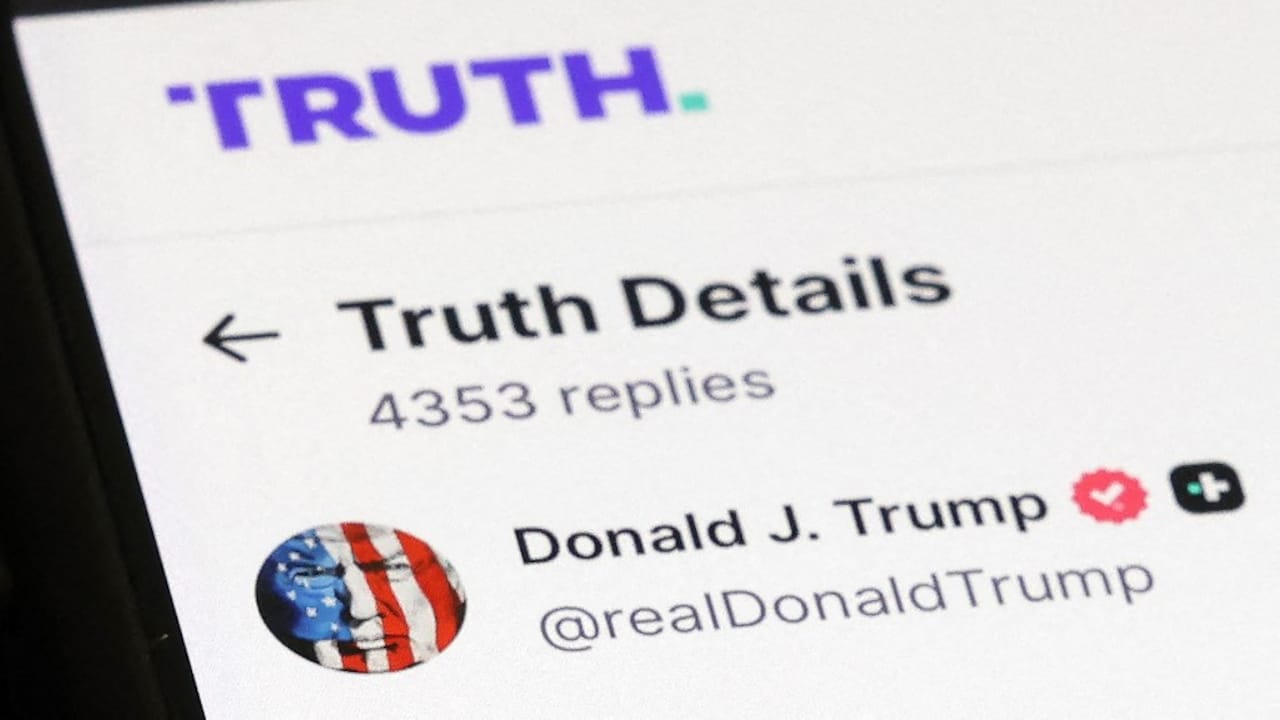
On August 1, 2026, the gap between public policy and private profit will shrink to a fraction of a second.
Trump Media & Technology Group, the parent company of Truth Social, is launching a licensed, high-speed data feed called the Truth API. This service is designed to sell millisecond-level access to the platform’s most influential accounts—most notably, the posts of President Donald Trump. For a fee that the company has not yet publicly disclosed, hedge funds, institutional investors, and high-frequency trading firms will receive the president's market-moving policy declarations before they are visible to the general public browsing the web or using the standard app.
This is not just another corporate data monetization scheme. It represents an unprecedented structural integration of presidential communication and algorithmic financial speculation, legalizing an information asymmetry where the richest market participants can buy the right to front-run the public on national policy shifts.
The Mechanics of the Millisecond Monopoly
To understand why Wall Street is willing to pay premium rates for this access, one must understand how modern trading operates. High-frequency trading firms do not rely on human traders reading text on a screen. Instead, they use algorithmic systems that scan digital communication pipelines, parse the language through natural language processing models, and execute trades in microsecond windows.
Until now, firms tracking Truth Social had to rely on web scraping, which involves automated bots refreshing public pages to pull new text. This process is clunky, prone to errors, and comparatively slow. It can take several seconds or even minutes for a scraper to detect a post, download the HTML, extract the content, and feed it to a trading model. In the hyper-competitive world of quantitative finance, a few seconds is an eternity.
The new Truth API bypasses the public internet interface entirely. It establishes a direct, machine-readable pipeline from the Truth Social databases straight to the servers of paying clients. When the president presses "post," the data packet is pushed directly to Wall Street servers in raw data formats, such as JSON, almost instantly.
The structural advantage is immense. An algorithm connected to this feed can detect a policy shift, analyze its implications for specific asset classes, and execute buy or sell orders across global exchanges before a retail investor's phone even vibrates with a push notification.
The Financial Realities of Trump Media
The launch of this data feed is born out of financial necessity. While the political implications of the product are vast, the business motivation is straightforward survival.
Trump Media has faced severe financial headwinds. Since the president took office, the company's stock has plunged more than 70 percent, cratering to around $9.63 per share. This decline has wiped out billions of dollars in paper wealth for shareholders and the Trump family, who remain the majority owners of the firm. The company’s quarterly earnings reports have painted a stark picture of a business with minimal organic revenue and massive structural overhead, highlighted by a net loss of $405 million in the first quarter of the year.
TMTG Financial Performance Context (Q1 2026 / Stock Status)
+-------------------------+-----------------------------------+
| Metric                  | Status / Value                    |
+-------------------------+-----------------------------------+
| Stock Price Trend       | Down over 70% since inauguration |
| Current Stock Price     | Approx. $9.63 per share           |
| Q1 Net Loss             | $405 Million                      |
| Largest Shareholders    | The Trump Family                  |
+-------------------------+-----------------------------------+
Traditional social media platforms survive on advertising revenue. However, Truth Social's highly polarized user base and controversial brand environment have made mainstream corporate advertisers hesitant to buy ad space on the platform. To survive, the company must find alternative ways to capitalize on its unique asset.
That asset is the communication pipeline of the executive branch of the United States government. Interim CEO Kevin McGurn made no effort to disguise this reality, explicitly framing the data feed as a high-margin, recurring revenue stream designed to monetize proprietary assets. By packaging the president’s statements as a premium B2B data commodity, the company is attempting to transform geopolitical volatility into predictable, recurring cash flow.
Monetizing Public Policy
The intersection of official state communication and private enterprise has never been this direct. Historically, major policy announcements, tariff changes, and national security updates were distributed via official channels. Press briefings, official White House statements, and wire service distributions were structured to ensure simultaneous release to the entire public. This was done to prevent market manipulation and maintain public trust.
The current system upends that doctrine entirely. The president regularly uses his Truth Social account to drop policy bombshells. These are not mere musings. They have included major declarations regarding military strategies in the Strait of Hormuz, sudden tariff implementations on key trade partners, and sweeping domestic immigration enforcement plans.
These announcements cause immediate, massive waves in global markets. When the president posts about tensions in the Middle East, the price of crude oil can swing violently within minutes. A post threatening a 20 percent tariff on an ally can immediately tank the currency of that nation and erase billions from the market caps of domestic importers.
Under the new model, the speed at which you receive these national security and economic updates is determined by your ability to pay. It creates an environment where those who cannot afford the premium API subscription are systematically trading against those who have a millisecond-level head start.
The Legal and Ethical Gray Area
Legal experts and ethics watchdogs have raised alarms over the launch of the data feed, calling it a clear monetization of public office.
Federal conflict of interest laws prohibit most executive branch employees from participating in matters where they have a direct financial interest. They cannot own businesses that directly profit from their official actions. However, the president and vice president are legally exempt from these specific conflict of interest statutes.
Historical vs. Modern Presidential Wealth Management
+-------------------------+-----------------------------------+
| Era                     | Approach                          |
+-------------------------+-----------------------------------+
| Traditional Era         | Blind trusts, asset liquidation,  |
|                         | and neutral investments           |
+-------------------------+-----------------------------------+
| Current Administration  | Retention of majority stake in a  |
|                         | publicly traded media firm selling |
|                         | early access to official policy   |
+-------------------------+-----------------------------------+
Historically, presidents abided by the spirit of these laws voluntarily. They placed their assets in blind trusts or liquidated individual stock portfolios to avoid even the appearance of impropriety. This administration has discarded that precedent. The president has retained his majority stake in Trump Media, meaning every subscription dollar paid by a Wall Street firm for the high-speed feed directly bolsters the valuation of his personal equity.
Government ethics expert Kathleen Clark of the Washington University School of Law characterized the service as a direct commercialization of the presidency. According to Clark, the setup represents a system where the head of state is selling privileged access to his own official actions to enrich his personal family business.
Beyond the President
While the president is the main draw for institutional subscribers, the Truth API is designed to package a broader ecosystem of administrative influence. The data feed is slated to cover the top ten most influential accounts on the platform.
This list includes several key figures who shape domestic and foreign policy, including Vice President JD Vance, FBI Director Kash Patel, and Health Secretary Robert F. Kennedy Jr. These individuals control massive regulatory and enforcement apparatuses. A post from the Health Secretary regarding regulatory changes for pharmaceutical companies can trigger immediate sell-offs in biotech stocks. A statement from the FBI Director regarding corporate investigations can impact corporate valuations instantly.
By bundling these accounts into a single, high-speed feed, Trump Media has created a comprehensive intelligence pipeline of the federal government's executive branch. Wall Street is not just buying access to a social media feed. They are buying a direct feed from the governing coalition, optimized for algorithmic exploitation.
The Retail Investor Left Behind
The immediate consequence of this system is the systematic disadvantage of the retail investor. For decades, the financial regulatory framework in the United States has been built around the principle of fair disclosure. Rules like Regulation Fair Disclosure (Reg FD) were designed to prevent public companies from sharing market-moving information with select institutional investors before releasing it to the general public.
While Reg FD applies to public corporations, it does not apply to the federal government or its individual officers. The presidency operates outside these market-disclosure frameworks. By using a private, family-controlled platform as the primary vector for official state announcements, and then licensing high-speed access to that platform, the administration has constructed a legal loop around the principles of market fairness.
The retail trader relying on a standard internet connection, a standard web browser, or a free mobile app is placed at an insurmountable structural disadvantage. By the time a post is rendered on a consumer screen, the institutional algorithms will have already adjusted the market prices to reflect the new reality. The public is left to trade on stale information, buying at the top or selling at the bottom of a wave generated milliseconds earlier by those who paid for the privilege of knowing first.
The commodification of presidential speech is no longer a theoretical debate about ethics or norms. It is a functional financial product with a launch date, a technical documentation sheet, and an onboarding pipeline for the world's most sophisticated trading desks. The ultimate cost of this high-speed access will not be borne by the hedge funds paying the subscription fees, but by the wider investing public who must trade in a market where the word of the president is a premium, licensed commodity.