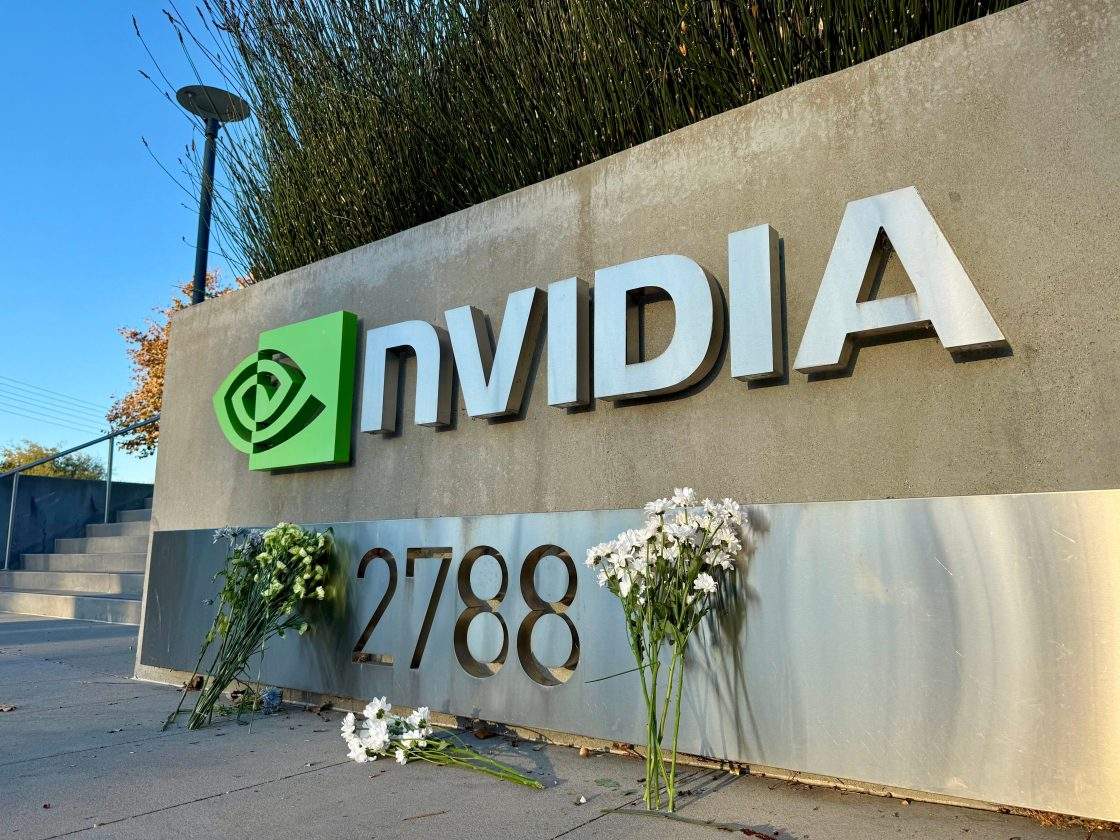
Two trillion dollars evaporated from Nvidia’s market cap in just six weeks, yet the company just printed $115.8 billion in single-quarter revenue. Read that again. Most investors are treating the November 17 earnings report like a typical tech beat, completely missing the bizarre corporate civil war playing out behind the scenes.
On November 12, co-founder Jensen Huang resigned effective immediately after The New York Times exposed extramarital affairs—including one with a former tech executive whom U.S. intelligence suspects of being a Chinese spy. Five days later, interim CEO Colette Kress stepped onto the earnings stage, delivered a 103% year-over-year revenue jump, and watched the board flatly reject calls to bring Huang back.
The financial press focused on the shiny quarterly numbers. That's a mistake. While the Q3 fiscal 2027 report proves Nvidia's hardware monopoly doesn't immediately crumble without its leather-jacketed founder, the real story is how a $3.8 trillion juggernaut tries to survive a simultaneous SEC probe, tighter export controls, and an open revolt from Silicon Valley billionaires.
The $115.8 Billion Paradox Behind Nvidia's Earnings
Let's look at the actual math first. Wall Street expected roughly $109.1 billion in revenue for the third quarter of fiscal 2027. Nvidia cleared that bar by more than $6.5 billion, posting $115.84 billion in sales and $65.3 billion in net income. Adjusted earnings per share hit $2.68, more than doubling the $1.30 reported in the year-ago period.
It gets crazier.
Adjusted gross margins actually expanded to 74.9%, beating analyst estimates of 74.1% despite rising memory costs and aggressive production ramps. For 17 consecutive quarters now, the chipmaker has topped Wall Street's revenue expectations.
When you break down where that cash came from, one division practically ate the entire company:
- Data Center Dominance: This segment brought in $107.6 billion, representing a 110% jump from last year and accounting for roughly 93% of Nvidia's total revenue.
- Cloud and Enterprise: AI cloud, industrial, and enterprise sales surged 195% year-over-year to $47.5 billion. Interestingly, that was one of the lone line items to miss consensus estimates of $48.4 billion.
- Forward Guidance: Kress projected fourth-quarter revenue at $130 billion (give or take 3%), crushing the $125.25 billion Wall Street anticipated. She even bumped the fiscal 2028 revenue growth target up from 70% to 75%.
So why isn't the stock at all-time highs? Because a 4% after-hours bounce barely puts a dent in an 11% slide since Huang walked out the door. Since peaking in early October, Nvidia has shed roughly $2 trillion in valuation. Markets reward past quarters with a quick pop, then immediately price in multi-year chaos.
Why the Board Slammed the Door on Its Founder
If you've watched Silicon Valley governance over the past decade, you know boards usually cave when a visionary founder gets into trouble. Not this time.
Following Huang's resignation on November 12, an intense pressure campaign kicked off almost instantly. A high-level Nvidia employee circulated an internal petition demanding his reinstatement. Outspoken tech figures like Elon Musk publicly backed bringing him back. Even President Donald Trump weighed in on November 16, stating he wouldn't oppose Huang's return.
Yet ahead of the November 17 earnings call, The Wall Street Journal reported that Nvidia's board wasn't even considering reinstating him. Instead, directors elevated senior director Jones to become the company's first independent board chairman and hired executive search firm Heidrick & Struggles to hunt for a permanent replacement.
Honestly, the board had very little room to maneuver. This wasn't a simple HR headache over a workplace romance with a subordinate, though that violation of the company's code of conduct was bad enough. The national security angle changed everything.
The Espionage Fallout and Regulatory Heat
When The New York Times linked Huang to Alice Huang—a former tech executive suspected by U.S. intelligence agencies of operating as a Chinese spy—Nvidia ceased to be just a semiconductor company. It became a geopolitical flashpoint. Beijing flatly rejected the espionage claims, calling them baseless.
Washington didn't buy the denial. Within days, the fallout multiplied across three fronts:
- The SEC Investigation: The Wall Street Journal revealed that the U.S. Securities and Exchange Commission opened an investigation into Nvidia following Huang's abrupt exit.
- Congressional Subpoenas and Testimony: Both Huang and Nvidia general counsel Tim Teter agreed to testify before the U.S. House Foreign Affairs Committee on December 1 and December 2, respectively. Bipartisan lawmakers are demanding answers about chip smuggling loopholes and how much access the alleged operative had.
- New Export Chokeholds: On November 16, the U.S. government rolled out strict new data center export rules designed to block Chinese firms from accessing American AI chips remotely, placing intermediaries in Singapore and Malaysia on a tight leash.
To show regulators it takes national security seriously, the board announced a brand-new governance committee dedicated solely to export controls and security compliance. Bringing Huang back during that exact earnings week would have been akin to daring Washington to kneecap their supply chain.
Can Colette Kress Actually Run a $3.8 Trillion Hardware Giant
Here's the question every institutional portfolio manager is wrestling with right now. How much of Nvidia's dominance is baked into its silicon and software moat, and how much required Jensen Huang's personal force of will?
Colette Kress has served as Nvidia's CFO since 2013. She knows the numbers cold, and her personal stake in the company—even after losing an estimated $300 million in net worth during the scandal's fallout—keeps her heavily aligned with shareholders. On the November 17 call, she projected calm. "Our leadership has stood up so strongly over the last week," she told analysts. "We've got this."
She also made a point to highlight that executives from Taiwan Semiconductor Manufacturing Co. (TSMC), the foundry partner that actually fabricates Nvidia's chips, were physically in Nvidia's offices and "fully engaged" in keeping production on track.
That detail matters more than people realize.
At its current scale, Nvidia isn't a scrappy design startup anymore. It's a massive supply-chain and manufacturing logistics machine. Speaking at a Semafor conference in Silicon Valley the day before earnings, Amazon Executive Chair Jeff Bezos offered a blunt assessment of the succession crisis. "If you don't bring Jensen back, I would not hire an outsider," Bezos warned. "Nvidia is too complicated."
Bezos is right, and experienced tech operators know why. An external CEO coming from a traditional software or consumer hardware background would spend 18 months just learning how Nvidia manages CoWoS packaging bottlenecks at TSMC or coordinates liquid-cooled rack deployments for hyperscalers.
The Vera Rubin Bottleneck
Nvidia's next-generation Vera Rubin architecture is currently ramping up to replace Blackwell. Analysts remain bullish on 2027 and 2028 precisely because hyperscalers like Microsoft, Meta, and Alphabet have already locked in massive capital expenditure budgets for Rubin systems.
However, notice one subtle warning sign buried in Kress's Q4 guidance. While revenue is projected to hit $130 billion, fourth-quarter adjusted gross margin guidance dropped to a range of 71.0% to 72.0%—down noticeably from Q3's 74.9%. New architecture ramps always squeeze margins early on, as manufacturing yields take time to optimize. Managing that margin recovery without the founder who personally bullied suppliers and engineers through previous transitions will be Kress's toughest test.
What Investors and Tech Leaders Should Watch Next
If you're holding Nvidia stock, managing AI infrastructure budgets, or simply trying to read where the broader semiconductor sector heads into 2027, stop staring at historical Q3 revenue beats. Those orders were placed months before November's scandal broke.
Instead, track these four concrete catalysts over the next 30 days:
- December 1 and 2 Congressional Hearings: Watch how aggressively House lawmakers grill Huang and general counsel Tim Teter. If testimony uncovers evidence that sensitive product roadmaps or export-restricted silicon leaked through personal channels, expect immediate regulatory penalties that could freeze shipments to Southeast Asian data center hubs.
- Q4 Margin Stabilization: Keep a close eye on whether fourth-quarter gross margins hold near the top end of that 71% to 72% guidance. Any slip below 70% signals that supply-chain friction or TSMC pricing pressure is getting harder to manage under interim leadership.
- Internal vs. External CEO Candidates: Pay attention to leaks coming out of Heidrick & Struggles. If the board heeds Bezos's warning and promotes from within—either making Kress permanent or elevating a hardware engineering veteran—institutional investors will likely breathe a sigh of relief. An outsider pick will trigger another valuation reset.
- Enterprise AI Spending Velocity: That slight miss in the AI cloud, industrial, and enterprise segment ($47.5 billion actual vs. $48.4 billion expected) deserves scrutiny. Hyperscalers are still buying everything Nvidia can make, but if corporate enterprise adoption slows down, Nvidia's 75% fiscal 2028 growth target suddenly looks exposed.
Strip away the tabloid drama, and you're left with a fascinating stress test of modern corporate durability. Nvidia's engineering bench and CUDA software lock-in are strong enough to print $65 billion in quarterly profit on autopilot for a few months. Surviving the next three years without its founder will require proving that the machine is finally bigger than the man who built it.