Washington is dusting off the exact same playbook that has failed for twenty years. The Trump administration is reportedly weighing new penalties and elevated travel warnings against Beijing to force the release of two wrongfully detained Americans, Boston-based seismologist Youlin Chen and UC Berkeley doctoral candidate Min Zin. Mainstream coverage treats this diplomatic posturing like hardball. It is not. It is bureaucratic theater that hands the Chinese Communist Party everything it wants while leaving American citizens rotting in detention cells.
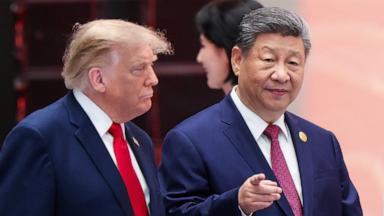
When the White House leaks that it is "weighing penalties" after Xi Jinping stonewalls direct presidential appeals at the APEC summit in Shenzhen, the press nods along as if sanctions and State Department advisories are scalpels. They are blunt clubs that miss the target entirely. Worse, they validate Beijing's core strategy.
The Illusion of Coercive Sanctions
Let us look at the actual mechanics of hostage diplomacy. Standard foreign policy wisdom claims that raising the economic or reputational cost on a state actor forces them to calculate that holding prisoners is too expensive. That logic works when dealing with transactional regimes desperate for Western legitimacy or cash. It fails completely against Beijing.
I have watched corporate risk teams and Washington advisory boards burn millions of dollars trying to map financial sanctions onto Chinese state behavior. They build complex models assuming the Ministry of State Security (MSS) cares about Treasury Department blacklists or visa restrictions on mid-level officials. They do not. In Beijing's political architecture, national security organs outrank economic ministries every single day of the week.
When Washington threatens targeted sanctions under the Levinson Act—the federal statute designed to punish foreign officials complicit in wrongful detentions—Beijing sees an asymmetric trade it will happily take every time. Think about what happens in reality:
- Zero personal exposure: The Chinese officials signing off on espionage charges against researchers like Youlin Chen—whose work focuses on detecting North Korean nuclear tests—do not hold vacation homes in Malibu or bank accounts in New York. Freezing their non-existent U.S. assets costs them nothing.
- Instant domestic propaganda: Public U.S. threats allow Beijing to frame the detentions as a righteous defense of sovereignty against Western bullying. Once a case becomes a public test of nationalist pride, backing down becomes politically impossible for Xi Jinping.
- Cheap distraction: While Washington debates which obscure bureau chief to sanction, Beijing keeps its primary bargaining chips locked away for bigger geopolitical concessions—like semiconductor export controls, tariff reductions, or quiet retreats on Taiwan.
Why Travel Advisories Do Beijing's Dirty Work
The second half of the administration's rumored response is raising the State Department travel advisory for China. Mainstream analysts treat a Level 3 or Level 4 warning as a severe punishment that starves China of tourism and foreign investment.
Stop and think about who actually benefits when fewer Americans travel to China.
The Chinese Communist Party has spent the last decade systematically walling off its domestic information environment. Foreign journalists have been expelled. Western NGOs have been legislated out of existence. Independent academic fieldwork—the exact kind of work UC Berkeley's Min Zin was conducting before his detention in June—has been criminalized under expanded anti-espionage laws.
When Washington raises travel warnings, American universities cancel exchange programs. U.S. corporations pull out mid-level executives. Independent researchers stay home. Beijing does not even have to bear the diplomatic cost of denying visas; the State Department voluntarily shuts the door for them. You cannot punish a regime that wants isolation by helping it isolate itself.
The "Wrongful Detention" Trap
To understand why this stalemate persists, you have to understand the legal fiction both sides are playing with. Under the Robert Levinson Hostage Recovery and Hostage-Taking Accountability Act, the U.S. Secretary of State designates specific individuals as "wrongfully detained". That designation shifts their case from routine consular oversight to the Special Presidential Envoy for Hostage Affairs (SPEHA).
On paper, this is a lifeline. In practice, it creates a perverse market dynamic that researchers like Danielle Gilbert at Northwestern University have documented extensively in their work on hostage diplomacy. By publicly elevating detainees into high-value diplomatic assets, Washington signals to authoritarian states that grabbing an American citizen guarantees direct presidential attention.
Consider the timeline here. Donald Trump has now raised Youlin Chen's case three times with Xi Jinping, including during Xi's September visit to Washington and again at the Shenzhen summit. Trump publicly boasted to Reuters about freeing 115 Americans from places like Belarus since returning to office in January 2025. Every time a president makes personal pleas for specific prisoners without extracting immediate consequences, the price tag goes up.
Beijing is not refusing to negotiate out of stubbornness. Beijing is refusing to engage because silence forces Washington to bid against itself.
What People Get Wrong About Chinese Detentions
If you look at how the public searches for information on Americans jailed in China, the questions reveal a massive blind spot. People assume these arrests are random street-level kidnappings, or they assume a tough-talking president can simply bully Beijing into opening the cell doors. Both premises are broken.
Are random American tourists being grabbed off the street?
No. That is a myth fueled by sensationalist headlines. Beijing almost never grabs random tourists from Kansas City. If you look at the profiles of Americans caught in the MSS net—from Youlin Chen to business executives hit with exit bans—there is a clear pattern. Beijing targets three specific groups:
- Dual nationals and ethnic Chinese scholars whom Beijing treats as Chinese subjects regardless of their U.S. passports.
- Researchers and consultants investigating sensitive supply chains, military-adjacent technology, or regional security (like North Korean nuclear testing).
- Corporate executives caught in commercial disputes where local courts use exit bans as debt-collection tools.
Pretending every traveler faces identical risk obscures the actual threat. It lets universities and corporations off the hook for sending vulnerable researchers into high-risk environments without proper counterintelligence protocols.
Why won't trade tariffs force China to release them?
Because trade wars and hostage negotiations operate on completely different clocks. Even as the administration weighs penalties over detainees, it is simultaneously navigating delicate truces on critical minerals and semiconductor disputes—such as the recent back-and-forth over Nvidia and chip export controls.
Beijing knows Washington will never blow up a multi-billion-dollar mineral supply agreement or risk a market crash to free two academics. Threatening economic penalties while actively negotiating trade truces tells Xi Jinping that the threats are pure bluff.
How Washington Actually Gets People Out
If public threats, Levinson Act sanctions, and travel advisories are dead ends, what actually moves Beijing? History gives us the exact blueprint, and it has nothing to do with public posturing.
Look at how previous high-profile releases actually happened. When Beijing freed American citizens in late 2024, or when Canada finally got Michael Kovrig and Michael Spavor back after more than a thousand days in Chinese custody, it did not happen because of a State Department press release or a symbolic sanction on a provincial official. It happened through cold, quiet, transactional quid pro quos.
In the Canadian case, Beijing held two innocent men until the U.S. Justice Department dropped its extradition request for Huawei executive Meng Wanzhou. In late 2024, releases followed quiet, unpublicized prisoner swaps involving Chinese nationals held in U.S. custody.
Beijing operates on strict reciprocity and face-saving ambiguity. If Washington wants Youlin Chen and Min Zin home, leaking threats to ABC News before the president even finishes his Asia trip is operational malpractice.
The Unconventional Playbook That Works
If the White House wants results rather than headlines, it needs to invert its entire approach:
- Stop talking about the cases in public. Every press leak hardens Beijing's posture. Move the entire track back into silent intelligence-to-intelligence channels—the same backchannels used during the Cold War—where neither side has to perform for domestic nationalists.
- Target things Beijing actually values, not symbolic officials. Instead of sanctioning mid-level police bureaucrats, link quiet consular progress directly to tangible regulatory friction in the U.S.—such as tightening scrutiny on Chinese state-affiliated research partnerships, delaying approvals for Chinese corporate subsidiaries, or enforcing strict reciprocity on Chinese diplomatic travel inside the United States.
- Build a real prisoner swap inventory. Authoritarian regimes only trade when you hold someone they want back. With the Justice Department actively prosecuting corporate espionage and foreign agent cases across the U.S., Washington holds legitimate legal cards. Use them quietly at the negotiating table instead of pretending moral outrage will unlock a cell in Beijing.
- Mandate institutional liability for universities and firms. Stop letting American institutions send scholars and analysts into China under vague academic exchange agreements while offloading the rescue bill onto the U.S. taxpayer. If an institution sends a researcher into a known counterintelligence trap without clearance, make them pay for the legal and diplomatic fallout.
The Honest Downside of Quiet Transactionalism
Let us be brutally clear about the flaw in this contrarian approach. Trading concessions—or swapping convicted spies and sanctions-evaders for innocent scholars—creates a moral hazard. It rewards bad behavior. It tells Beijing, Moscow, and Tehran that grabbing an American citizen is a reliable way to get their operatives out of federal prison.
That is a real, ugly cost. Anyone pretending otherwise is lying to you.
The alternative, however, is watching innocent Americans spend years in solitary confinement while Washington congratulates itself for issuing press releases and tweaking travel advisories. Foreign policy is not an exercise in moral purity; it is the management of terrible choices.
Stop leaking empty threats to the press, shut down the public posturing, and start negotiating like a country that actually intends to bring its citizens home.