The assumption that the United States and Iran are on an unavoidable path to total military devastation has repeatedly proven wrong. Even after the targeted strikes of Operation Epic Fury earlier this year and the historic death of Supreme Leader Ali Khamenei, the expected regional firestorm did not happen. Washington and Tehran instead chose the diplomatic off-ramp of the Islamabad Memorandum. The simple truth is that neither country can afford the consequences of an unrestricted war, forcing both governments to rely on calculated brinkmanship rather than outright destruction.
This persistent reluctance to engage in full-scale combat is not driven by sudden goodwill or diplomatic breakthroughs. It is the result of cold, hard strategic mathematics. For the United States, a total war in the Middle East represents a massive distraction from pressing strategic concerns in Eastern Europe and the Indo-Pacific. For Iran, a direct war with a global superpower would mean the immediate end of the ruling system. The current posture of localized clashes and sudden ceasefires is a calculated choice by two adversaries who understand the exact limits of their power.
The Illusion of Imminent Collapse
Every time missiles fly in the Persian Gulf, observers predict the end of the fragile regional order. This dramatic narrative ignores the deep survival instincts of the Iranian leadership. The country is economically battered by years of international sanctions, domestic protests, and the physical destruction of key military sites. Yet the clerical establishment has managed to survive.
Survival requires keeping conflict at a manageable temperature. Direct war with the United States would result in the rapid destruction of Iran's conventional military, its nuclear facilities, and its economic lifeblood. Tehran understands this reality. When the United States and Israel launched large-scale strikes on Iranian nuclear and command centers on February 28, the response was carefully calibrated. Hundreds of drones and missiles were fired across the region to satisfy the domestic demand for retaliation, but the barrage was designed to be intercepted. This was a theatrical show of force, not a declaration of total war.
The subsequent negotiations in Pakistan proved that the supreme objective of the Iranian state is preservation, not ideological martyrdom. Iranian negotiators, facing immense internal instability and a damaged economy, chose to sit down with American envoys in Islamabad. The resulting memorandum of understanding showed that when existential survival is on the line, ideological purism is quickly discarded.
Washington and the Fear of Regional Chaos
The United States has its own reasons to avoid a total invasion or a sustained campaign to overthrow the Iranian government. American military planners are haunted by the lessons of Iraq and Afghanistan. A total war with Iran would make those conflicts look simple. Iran has a population of over eighty-five million people and a highly mountainous terrain that is notoriously difficult to occupy.
A sustained military occupation would break the American volunteer military. It would drain hundreds of billions of dollars from the treasury at a time when the domestic public has no appetite for foreign adventures. The political cost for any administration would be immediate and severe.
American planners also know that a completely collapsed Iranian state would create a massive power vacuum in the heart of the Middle East. Such a vacuum would likely be filled by unpredictable extremist networks, creating a permanent zone of chaos. This would force the United States to commit massive ground forces to the region for decades. To avoid this scenario, Washington prefers a weakened, contained Iran to a totally collapsed one. Keeping the threat inside a predictable box is much easier than managing a vast, lawless territory.
The Strait of Hormuz Chokepoint
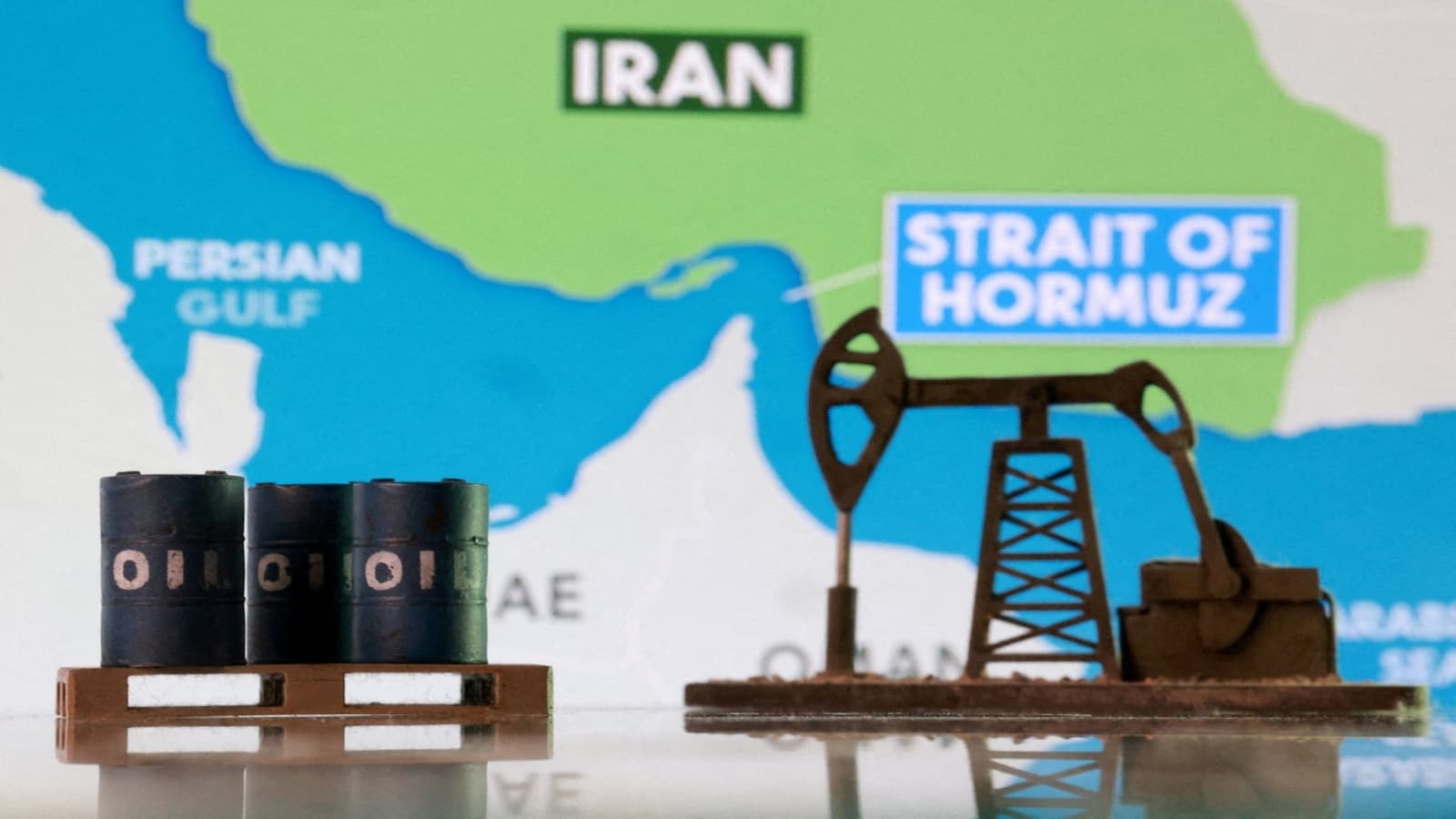
Control over the global energy supply remains the most effective weapon in Iran's arsenal. The narrow waterway of the Strait of Hormuz sees approximately twenty percent of the world's petroleum pass through its waters daily. It is a vital artery for the global economy.
                  [ Persian Gulf ]
                         │
                         ▼
             ─── Strait of Hormuz ───  <-- Iran's primary economic leverage
                         │
                         ▼
                [ Gulf of Oman ]
During the height of the fighting this spring, Iranian commanders threatened to shut down the passage entirely. They used their navy and proxy forces to harass commercial tankers, causing global shipping insurance rates to skyrocket. This action was designed to send a clear message to Western capitals. The message was that any attempt to destroy the Iranian regime would carry a catastrophic price tag for global consumers.
Even when Donald Trump declared the temporary truce over in July after three commercial vessels were hit, the subsequent military responses were localized. The American military launched targeted strikes against Islamic Revolutionary Guard Corps naval assets, but avoided striking the Iranian mainland. Both sides understand that a complete closure of the strait would trigger a global economic panic. This panic would harm the United States and its allies, but it would also invite a devastating international response against Iran. The current dance of low-level harassment and limited retaliation is a mutual recognition of this economic bottleneck.
The Limits of Regional Proxies
For decades, Iran built an extensive network of regional allies to project power beyond its borders. This network was designed to act as a shield against foreign aggression. The events of the past year have shown the limits of this proxy strategy.
The severe degradation of Hamas in Gaza and Hezbollah in Lebanon has left Iran far more exposed than in the past. When Israel launched its devastating airstrikes in late 2025 and early 2026, Tehran realized that its forward deterrents were failing. The proxy shield was cracking under intense military pressure. This vulnerability did not make Iran more reckless. Instead, it forced the leadership to realize that they could no longer rely on external forces to fight their battles.
The Houthis in Yemen have also shown a desire to protect their own domestic gains. While they did launch sporadic strikes toward Israel during the height of the conflict, they have also sought to maintain their own ceasefires to avoid direct American destruction. This independent streak among proxies makes Tehran hesitant to rely on them for an existential fight. Iran cannot guarantee that its regional allies will follow it into a suicidal war against a superpower.
The Hidden Channels of Communication
Publicly, Washington and Tehran exchange harsh rhetoric and promises of mutual destruction. Privately, they maintain a highly active network of communication to prevent accidental escalation. These channels run through neutral third parties, including Oman, Switzerland, and Pakistan.
During the tense days of April, when a single miscalculation could have triggered a wider war, these backchannels were highly active. Diplomatic messages were constantly exchanged to clarify red lines and explain military movements. When the United States targeted Iranian facilities, it often signaled its targets indirectly beforehand, allowing personnel to evacuate. This minimized casualties while allowing Washington to destroy military infrastructure.
This quiet diplomacy is why the war did not spiral out of control. It is a highly practical way to manage a conflict when both sides want to avoid a total war but must satisfy their domestic audiences with aggressive actions. The Islamabad talks were the public manifestation of these long-standing, quiet communications.
The Nuclear Bargain as a Transaction
The future of Iran's nuclear program remains the central point of contention. Senior Iranian officials have publicly stated that they have the technical capability to build nuclear weapons, but are held back by domestic religious decrees. They also warn that this stance could change if the state faces an existential threat.
The United States has made it clear that a nuclear-armed Iran is unacceptable. However, the path to preventing this outcome is shifting away from military strikes toward a transactional framework. The five preconditions set by the American administration focus on transferring enriched uranium out of the country in exchange for the release of frozen financial assets. This shows that both sides view the nuclear program as a bargaining chip rather than a cause for war.
Iran uses its nuclear progress to force the United States to negotiate and ease economic pressure. The United States uses its economic power and targeted military capabilities to keep Iran's nuclear ambitions within certain bounds. It is a dangerous game of leverage, but it is ultimately a transactional one. Neither side wants to initiate a war that would guarantee the rapid nuclearization of Iran or a desperate pre-emptive strike by the United States.
The current state of tense equilibrium is likely to continue. There will be more skirmishes in the shipping lanes, more targeted strikes, and more fiery speeches from both capitals. Yet the structural realities remain unchanged. The United States cannot afford the chaos of a collapsed Middle East, and the Iranian regime cannot survive a direct war with the world's most powerful military. As long as these two realities hold, the red lines will remain in place, and both nations will continue to choose the safety of the brink over the certainty of mutual destruction.