The salt in the wind tastes different when you know the horizon is clear.
Stand on the southern tip of India, where the mainland finally surrenders to the Indian Ocean, and you can feel the immense weight of the water. It stretches downward toward Antarctica, outward toward Africa, and eastward toward the Malacca Strait. Millions of tons of cargo move across this blue expanse every single day. Oil tankers, container ships, fishing vessels, and gray hulls cutting through the whitecaps. For decades, those who watch the sea from the shore have lived with a quiet, nagging anxiety. They know that geography is destiny. And geography placed a dagger right at India's southern soft underbelly.
That dagger is Sri Lanka.
Just twenty-two miles of water separate the two nations. A narrow, shallow strip of history and mythology. But in the cold calculus of modern geopolitics, distance is measured not in miles, but in vulnerability. If an adversary were to secure a foothold on those green shores, the implications would be catastrophic. Radar installations, listening posts, naval refueling stations. A hostile flag flying over Colombo would mean a knife held permanently against India's throat.
For years, that fear was not theoretical. It was a recurring nightmare in defense planning rooms across New Delhi. Ships came and went. Investments poured in from distant capitals. Whispers grew louder in diplomatic corridors.
Then, the political earth shifted.
Anura Kumara Dissanayake stepped into the presidency of Sri Lanka. A leader born from a movement of fierce economic and political restructuring, carrying the weight of a nation desperate to rebuild itself from financial ruin. The world watched with bated breath. Western analysts muttered about alignment shifts. Regional rivals calculated their moves. Everyone wanted to know which way the island would lean.
The answer arrived with a clarity that caught many by surprise.
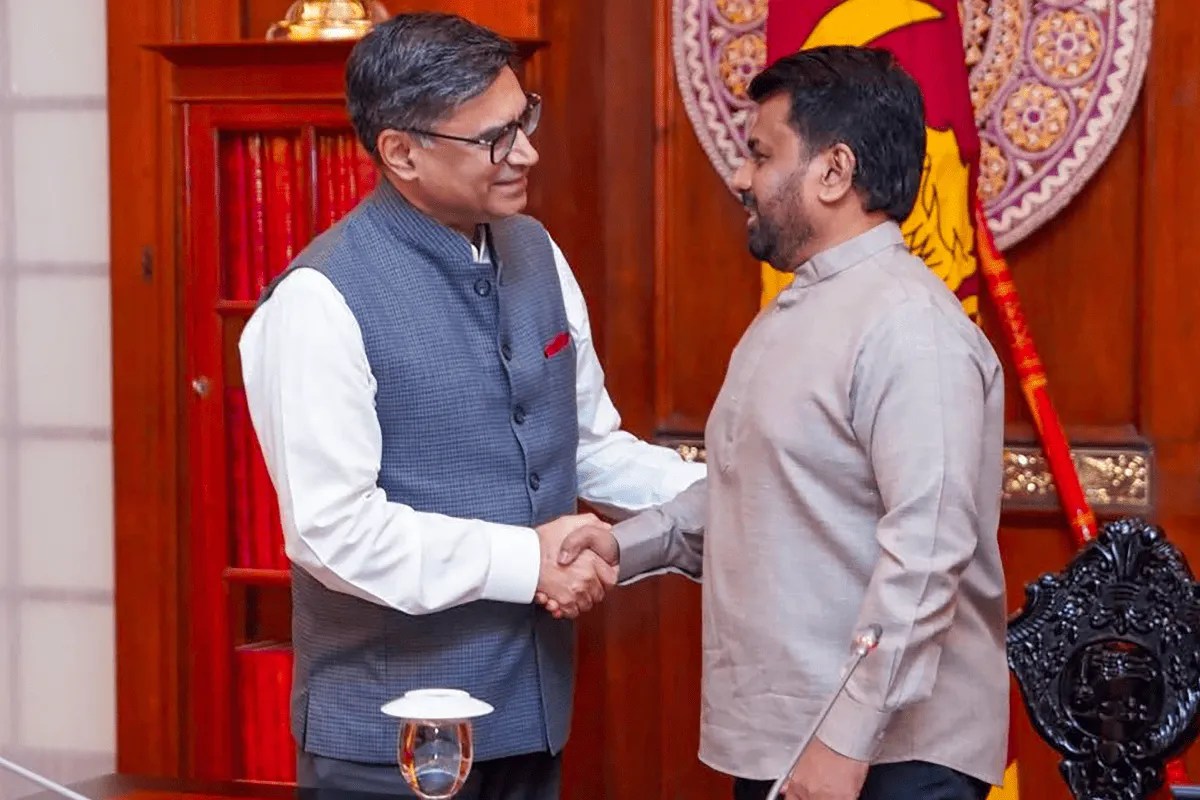
President Dissanayake made a solemn, unyielding commitment. The soil of Sri Lanka will never be permitted to serve as a staging ground against the security of India.
Let that sink in.
It is easy to read those words as standard diplomatic boilerplate. The kind of phrase that gets typed up by a tired press secretary, stamped with an official seal, and forgotten by the time the evening news cycle ends. But treaties and assurances are rarely just paper. They are the result of intense calculations about survival, geography, and mutual destiny.
Consider what happens next when a small island nation navigates the crushing gravity of superpowers. Sri Lanka is rebuilding. Its ports need commerce, not conflict. Its people need stability, not the chilling shadow of proxy wars. To invite foreign military influence onto its soil would be to trade short-term financial relief for long-term subjugation. Dissanayake understood this basic truth. He looked at the map. He looked at history. And he chose the path of regional trust.
Trust, however, is a fragile creature.
I remember talking to an old fisherman in Rameswaram years ago. His skin was the color of driftwood, weathered by decades under a merciless sun. He pointed across the Palk Strait with a scarred thumb. He told me that storms in the ocean always start as a ripple you can barely see. You think it is just a trick of the light on the water. By the time you feel the wind shift, the waves are already towering over your mast.
National security works the same way.
When a nation promises that its territory will not be weaponized against its neighbor, that is not the end of the story. It is the beginning of a test. A test of implementation, of constant vigilance, of quiet intelligence-sharing, and of resisting the immense gravitational pull of global powers dangling checkbooks with strings attached.
India's response to this assurance has been equally telling. Instead of relying purely on suspicion, New Delhi has leaned into economic integration, humanitarian aid, and infrastructural partnership. When Sri Lanka faced its darkest economic hour, it was India that extended billions of dollars in lifelines. Food, fuel, medicine. Not delivered with the arrogant swagger of an empire, but with the pragmatic urgency of a neighbor who knows that a burning house next door eventually threatens your own roof.
This is the invisible architecture of modern peace. It is not built on missile silos and deterrence alone. It is built on shared supply chains, joint naval exercises, energy grids, and the dull, unglamorous work of diplomatic reliability.
When Dissanayake asserts that his country's soil is off-limits to hostile actors, he is drawing a hard boundary. He is telling the world that the Indian Ocean belongs to the nations that live around it, not the empires that sail through it.
Yet, doubts linger. They always do.
Skeptics will point out that governments change, political winds shift, and economic desperation can force a nation's hand. What happens if a future administration faces a debt trap so deep that sovereignty becomes a luxury it can no longer afford? What happens when foreign loans come due and the only currency left to pay is strategic compliance?
These are valid fears. To pretend otherwise is to be dangerously naive.
The security architecture of the subcontinent is an ongoing negotiation with chaos. Every single day, intelligence analysts in New Delhi and Colombo monitor communication cables, track foreign research vessels creeping into regional ports, and measure the temperature of diplomatic cables. They know that a single miscalculation could turn the blue expanse of the Indian Ocean into a theater of confrontation.
This is why Dissanayake’s guarantee matters so intensely. It provides a baseline. A diplomatic floor beneath which relations cannot fall without explicit betrayal. It gives both nations the political space to cooperate openly, without the constant, paralyzing paranoia of a dagger at the back.
Look out over the water from the southern coast today.
The cargo ships are still moving. The horizon is still vast, indifferent, and blindingly bright. But the watcher on the shore can breathe just a little easier. The promise has been made. The line has been drawn in the sand and across the water. Now comes the harder part: holding it, together, as the rest of the world watches and waits.