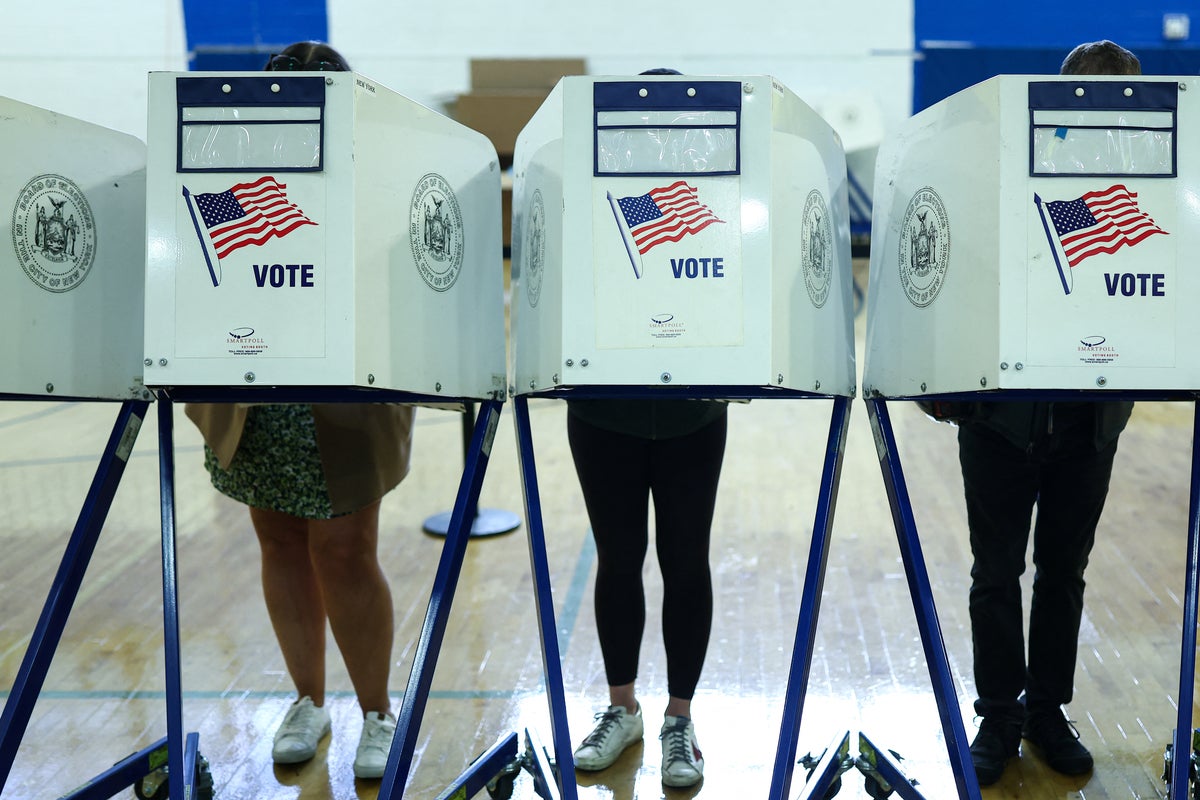
The air inside the precinct smelled of cold coffee, floor wax, and the quiet, heavy dread of things about to go wrong.
It was October. The morning light filtered through dusty blinds, casting striped shadows across metal desks where piles of provisional ballots sat waiting like unexploded ordnance. Outside, the autumn wind whipped dry leaves across the concrete. Inside, the phone rang. Nobody wanted to answer it.
Every election carries its own mythology. We tell ourselves stories about sacred duties, about ink-stained fingers and stickers bearing proud declarations of civic virtue. But underneath the pageantry lies an immense, fragile machinery of steel, paper, and human error. When trust frays, the machinery groans.
Consider what happens next.
In the corridors of federal power, decisions are made that ripple down into these windowless municipal basements. Months before the midterms, the Department of Justice announced a massive mobilization. The plan was stark: the largest deployment of federal election monitors in history. Hundreds of personnel dispatched across dozens of jurisdictions.
Why? Because the president said the elections were rigged.
That sentence hangs in the air like ozone before a lightning strike. It splits a room instantly. To one side, the deployment is a necessary shield, an armor plating of accountability guarding the ballot box against phantom thieves. To the other, it is a heavy-handed federal boot on the neck of local sovereignty, an intimidation tactic dressed up as oversight.
Both reactions miss the texture of the reality on the ground.
Walk into a polling station in a contested county on a Tuesday morning. The volunteers are rarely political operatives. They are eighty-year-old retired librarians named Martha, nursing sore hips on folding chairs. They are college students working for minimum wage, trying not to panic when the signature scanner jams for the third time in ten minutes. They are exhausted, underpaid, and deeply protective of the tiny patch of democracy assigned to their care.
Now, imagine a stranger walking in with a federal badge pinned to their lapel.
Fear. It enters the room silently.
The mechanics of voting are deceptively simple from a distance. You walk in. You verify your identity. You mark a paper or tap a screen. You drop your ballot into a box. But zoom in close enough, and every single step is a potential point of friction. A signature that doesn't quite match the one on file from a decade ago. A machine that refuses to read a crumpled ballot. A line that stretches down the block into the freezing rain.
These are the moments where elections are actually won or lost. Not in prime-time speeches or cable news panels, but in the gritty, unglamorous friction between citizen and state.
History shows us that suspicion is a contagious disease. Once planted, it roots deeply into the cultural soil. In past decades, federal oversight under the Voting Rights Act was deployed with surgical precision, aimed primarily at protecting historically disenfranchised communities from localized suppression. Those interventions had names, court orders, and decades of legal precedent behind them.
This new deployment felt different. It arrived not as a quiet legal remedy, but as a loud political weapon.
The rhetoric surrounding the midterms transformed the routine administration of democracy into an existential martial art. Every misplaced thumb drive became a conspiracy. Every line delay became a manufactured plot. When the Department of Justice stepped into that fray, they weren't just checking boxes on a compliance sheet; they were stepping onto a live battlefield where every word, every badge, and every observation report was weaponized by opposing political camps.
Let us be honest about why people are terrified.
Power is concentrating, and trust in the arbiters of that power is evaporating. When citizens no longer believe that the referee is neutral, the game itself begins to tear at the seams. If you think the system is rigged to steal your voice, you will tolerate almost any measure—no matter how invasive—to secure it. And if you think the system is fair, any intervention designed to "protect" it looks suspiciously like an attempt to break it.
We are caught in a feedback loop of our own making.
Down in that precinct, Martha doesn't care about federal press releases or presidential late-night posts. She cares about whether the toner cartridge in printer number two is going to last until seven o'clock. She cares about the young mother with a sleeping toddler who forgot her ID and is desperately trying to find a utility bill in her digital wallet.
When federal monitors walk through that door, clipboard in hand, they don't see the complexity of Martha's day. They are looking for anomalies. They are hunting for the grand narrative of corruption they were sent to find.
And that is the core tragedy of our current political moment. We have become so obsessed with watching each other for betrayal that we have forgotten how to cooperate for survival.
The monitors will leave when the polls close. The ballots will be hauled away in tamper-evident bags under police escort. The cable news anchors will parse the exit polls until their voices go hoarse.
But Martha will wake up the next morning, sweep up the stray bits of "I Voted" stickers from the linoleum floor, and wonder if any of it actually brought us closer together, or if we just built higher walls around our mutual distrust.