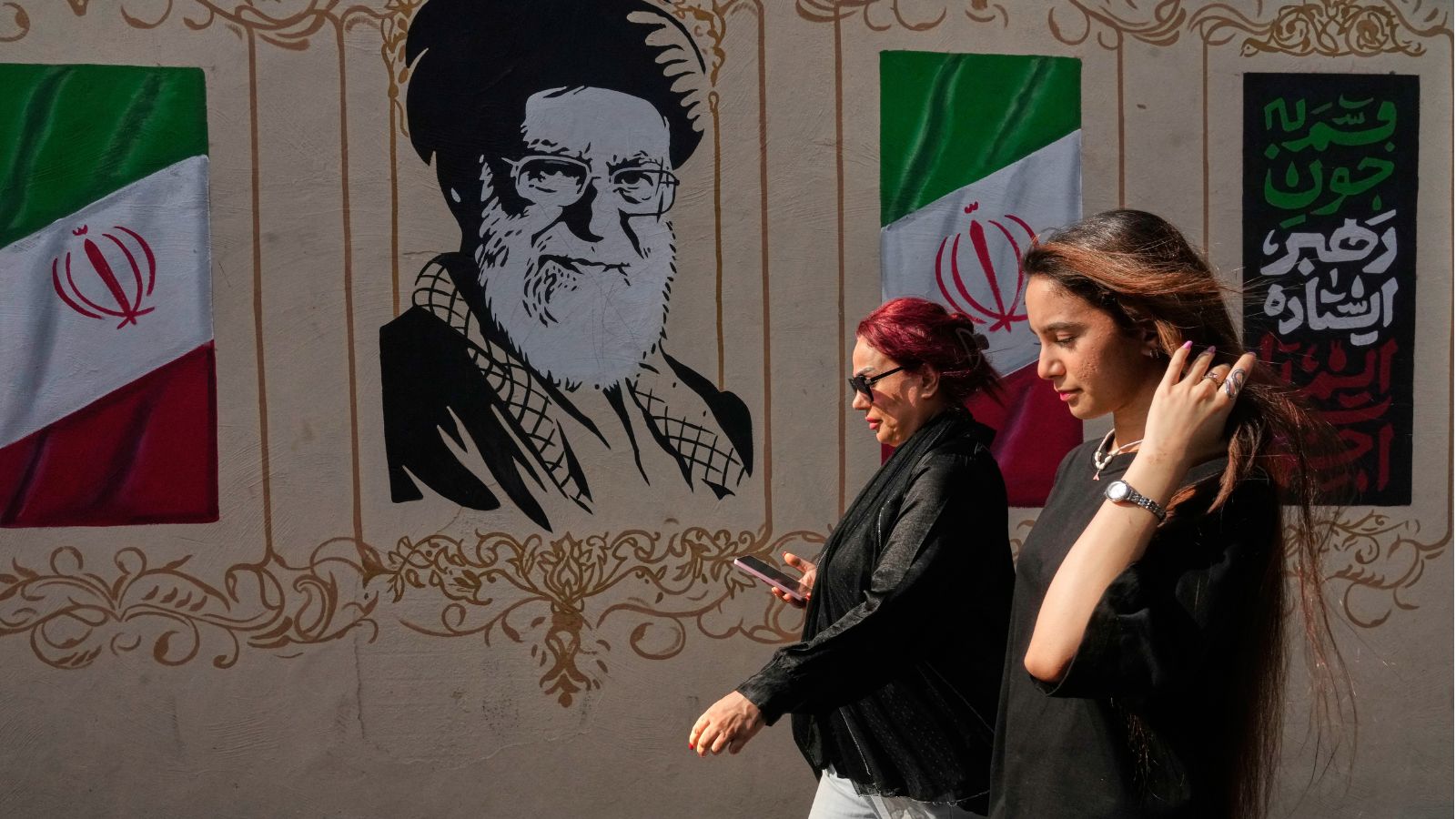
The smell of burning diesel and bruised pomegranates always lingers in the alleys of Tehran just before dusk.
I remember standing in a crowded bazaar years ago, watching an old apothecary weigh dried saffron on a brass scale that had outlived three governments. The metal was worn smooth by grease and decades of nervous palms. Today, that scale tells a different story. It measures survival against a ledger written five thousand miles away, in a language the apothecary doesn't speak, dictated by a man who has never smelled the dust of the Iranian plateau.
When foreign capitals speak of economic warfare, they use sterile metrics. Gross domestic product shrinkage. Currency devaluation rates. Oil export barrels reduced to absolute zero. It sounds clean. Clinical. Like a surgeon removing a tumor from a map. But on the ground, the scalpel is rusted, and the patient feels every twitch.
Consider the math of a broken currency.
When the rial collapses, a carton of eggs stops being groceries and starts becoming an arithmetic puzzle that exhausts a household before the coffee even boils. A retired teacher in Isfahan told me last autumn that his monthly pension vanished into the cost of heart medication within forty-eight hours of hitting his account. The rest of the month became an exercise in quiet geometry: which meals to skip, which winter coats to pawn, which debts to hide from family pride.
Washington calls this maximum pressure. The official strategy is simple in its brutality: squeeze the state's revenue streams until the government capitulates at the negotiating table or breaks under the fury of its own citizens. Block the oil. Freeze the assets. Cut the banks from the global swift network. Make every transaction a labyrinth of grey-market smuggling.
Tehran looks back across the smoking wreckage of sanctions and issues a flat, defiant refrain. Economic warfare will fail.
That is the official line broadcasted on state television between solemn patriotic anthems and grainy footage of missile tests. It is a posture of granite. But granite cracks under thermal shock. The leadership insists that self-reliance will build an economy immune to external shocks, a doctrine they term resistance economics. They point to domestic manufacturing, illicit oil transfers through midnight tanker turnoffs in the Persian Gulf, and new trade pacts with eastern partners as proof of invulnerability.
They are half-right. And entirely blind.
Sanctions do not cause governments to collapse overnight; they cause societies to hollow out from the inside.
To understand what is happening inside Iran right now, you have to look past the podiums in Tehran and the press briefings in Washington. You have to look at the kitchen table. Imagine a thirty-year-old software engineer named Dariar, a hypothetical composite of a dozen young professionals I have spoken with over encrypted messaging apps. Dariar speaks fluent English, listens to Western indie rock, and watches foreign tutorials to keep his coding skills sharp. He lives with his aging parents because rent consumes triple his monthly salary.
Dariar isn't plotting a revolution. He is too tired for revolutions. His daily energy is entirely consumed by the logistical nightmare of buying a single graphics card or transferring fifty dollars to a sick aunt abroad through a chain of shady hawala brokers. When politicians boast about defeating economic warfare through digital currency experiments or underground trade routes, Dariar feels a cold numbness. He knows the state will survive. He just isn't sure his youth will.
This is the central paradox of modern sanctions. They are designed to target the palace, but they invariably hit the marketplace.
History is littered with the bones of this strategy. From Cuba to Venezuela, sweeping trade bans have rarely produced the clean political transformations envisioned by foreign policy architects. Instead, they produce survival economies. They empower black-market barons and intelligence agencies who control the smuggling tunnels, while crushing the middle class—the very people most likely to push for moderate, outward-looking reform.
When you make it impossible for an ordinary citizen to buy foreign books, travel, or protect their savings from inflation, you do not weaken the hardliners who rule them. You trap them. You force them to look inward, to depend entirely on state-subsidized bread, and to view the outside world not as a land of opportunity, but as an active assailant.
Yet, Tehran's insistence that the pressure will completely fail ignores the profound psychological erosion wearing down its populace. The government can survive by tightening the screws of internal security, shifting blame entirely to foreign malice, and finding alternative buyers for its crude petroleum in the shadows of the global economy. Ships still slip away from dark ports at midnight, their transponders dark, carrying discounted crude to refineries that ask no questions.
Money finds a way through the cracks, always. But it arrives stained, expensive, and heavily taxed by corruption.
The apothecary in the bazaar I visited years ago is likely gone now, his shop inherited by a son who spends more time checking smartphone exchange-rate apps than mixing herbal remedies. The brass scale remains, catching the fading light of an Iranian evening. Outside, the city hums with its chaotic, stubborn rhythm—a million people refusing to stop living, refusing to yield their dignity to an invisible war fought with ledgers and laws.
The strategy in Washington assumes that endurance has a breaking point, and that the state will eventually wave a white flag. The strategy in Tehran assumes that pride is stronger than hunger, and that the nation can outlast the malice of its enemies.
Both are gambling with lives they will never have to live.
As the sun dips below the dusty horizon, casting long shadows across the ancient bricks, the real war continues in silence. It is not fought with explosions, but with the quiet, devastating sound of a door closing on another deferred dream, waiting for a dawn that refuses to break.