The coffee in Steve Jobs' old office always went cold before he finished it.
Tim Cook knew this. He knew it because for fifteen years, he sat across from the ghosts of design manifests, supply chain architectures, and a corporate culture that treated ordinary consumer electronics like secular religion. When Cook took the reins in August 2011, the world held its breath. Skeptics whispered that the lightning had struck its final tree. They said an operator could never be an innovator. They said the magic died with the turtleneck.
Fifteen years later, the weather has changed entirely.
Walk into Apple Park today, past the ring of glass that feels less like a corporate headquarters and more like a minimalist monastery, and the atmosphere shifts. The air conditioning hums at a precise, calculated frequency. The light hits the brushed titanium just right. And John Ternus is sitting at a desk that no longer smells like coffee, because Ternus doesn't drink it. He drinks iced tea, and he listens more than he speaks.
Transitions at the top of the world's most valuable companies are rarely gentle. They are usually bloodbaths or corporate coronations drenched in PR spin. But the changing of the guard from Tim Cook to John Ternus feels different. It feels quiet. And that quietness should terrify anyone who bets against Cupertino.
To understand why Ternus matters, you have to understand what Cook actually built.
For a decade and a half, the narrative surrounding Tim Cook was that he was the accountant who kept the train running on time. It was a comfortable caricature for lazy commentators. They forgot that the man didn't just manage a supply chain; he engineered a global nervous system. When Cook took over, Apple was shipping roughly one hundred million iPhones a year. By the time he handed over the ledger, that number had multiplied into a staggering, planetary scale. He turned a hardware company into a trillion-dollar services juggernaut, wrapping over a billion people in a digital embrace of iCloud, Apple Music, and Apple Pay.
Cook is a master of friction. He spent fifteen years finding the microscopic sand in the gears of global manufacturing and washing it away.
But friction isn't the enemy anymore. Boredom is.
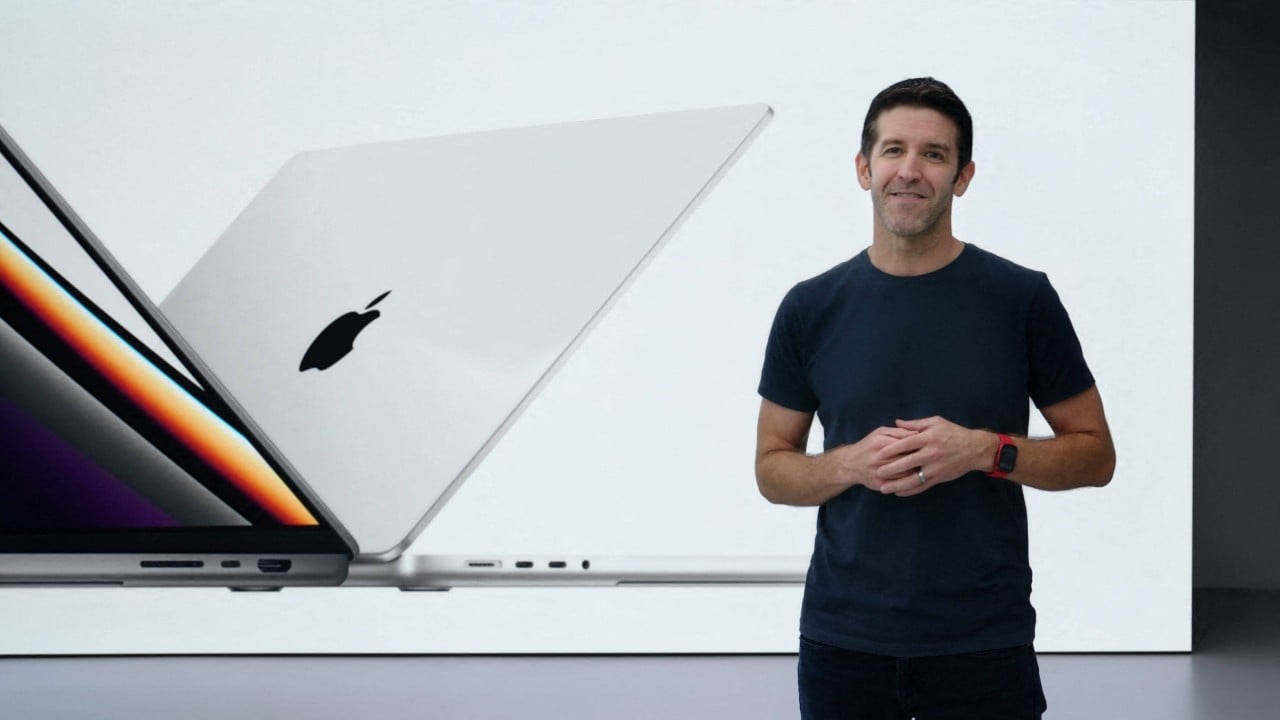
Enter John Ternus. If you watched the recent keynote events, you might have missed him entirely. He doesn't stride across the stage with the evangelical fervor of Jobs, nor does he project the steady, steely calm of an operations veteran like Cook. Ternus looks like the guy who fixed your Wi-Fi router in college and stayed to explain how packet switching works just because he thought it was neat.
As the former head of Hardware Engineering, Ternus is the architect of the physical. He is the man who oversaw the transition to Apple Silicon—that seismic shift that made Intel chips look like steam engines next to a bullet train. When the M1 chip arrived, it didn't just improve battery life; it altered the physics of personal computing. Fans stopped spinning. Laptops became thin as notebooks. And the industry scrambled to catch up to a ghost.
Ternus didn't invent the silicon out of thin air, of course. (Let us be clear: corporate innovation is always a relay race, never a solo sprint). But he orchestrated the deployment. He is an engineer's engineer. When he talks about thermal envelopes or display stacking, his eyes light up with a boyish enthusiasm that contrasts sharply with the austere corporate legal disclaimers running across the bottom of the screen.
Consider the human cost of this succession. Tim Cook is sixty-five. He navigated the company through trade wars, global pandemics, antitrust crosshairs, and a cultural shift toward privacy that made enemies out of Silicon Valley peers. He kept the ship steady while steering it through a hurricane. Stepping down isn't an admission of defeat; it is the ultimate luxury of a custodian who stayed long enough to see the garden bloom.
And what does Ternus inherit? A garden that is breathtakingly complex, yet dangerously overgrown.
The smartphone era is mature. Everyone has a slab of glass in their pocket, and unless it folds, bends, or reads your mind, upgrading every two years feels like an unnecessary tax. Apple knows this. That is why the past few years have been a desperate race toward spatial computing and ambient intelligence.
The Apple Vision Pro was not a commercial blockbuster out of the gate; it was a lighthouse. It was a multi-thousand-dollar prototype shipped to the world, a signal flare saying: This is where the physics are going. Ternus was deeply embedded in making that heavy, glass-and-aluminum visor wearable. He knows its flaws better than anyone. He knows that nobody wants to wear a ski mask to answer an email, just as he knows that the underlying technology—micro-OLED displays, eye-tracking sensors, spatial audio—is the primordial soup of the next computing paradigm.
This is where Ternus's background becomes a superpower.
When you have an operator at the helm, the questions are about margin, yield, and logistics. When you have an engineer at the helm, the questions are about constraints, materials, and possibility. Can we make the battery last forty hours? Can we shrink the neural engine until it fits inside a pair of smart glasses that look like ordinary Ray-Bans? Can we build hardware that disappears entirely?
We are standing on the precipice of a post-screen world. It won't happen tomorrow. It won't happen with a single keynote. It will happen through a thousand tiny compromises made on factory floors in Shenzhen and research labs in Cupertino.
Ternus now holds the pen.
There is a vulnerability to all of this that Apple rarely admits. The company is too big to fail, yet too influential to drift. If they miss the turn on artificial intelligence—if their on-device processing model can't outpace the cloud-heavy brute force of competitors—they risk becoming a very expensive luxury watchmaker. They risk irrelevance in the software layer.
Yet, watching Ternus step into the light, you get the sense that he isn't trying to out-Steve Steve, or out-Tim Tim. He is simply doing what engineers do when faced with a broken problem. He is taking it apart to see how it works.
The glass crown is heavy. It cuts into the temples. It reflects the faces of a billion users who expect perfection as a baseline and magic as an afterthought.
Tim Cook built the machine that conquered the world. John Ternus has to figure out what the world does next.