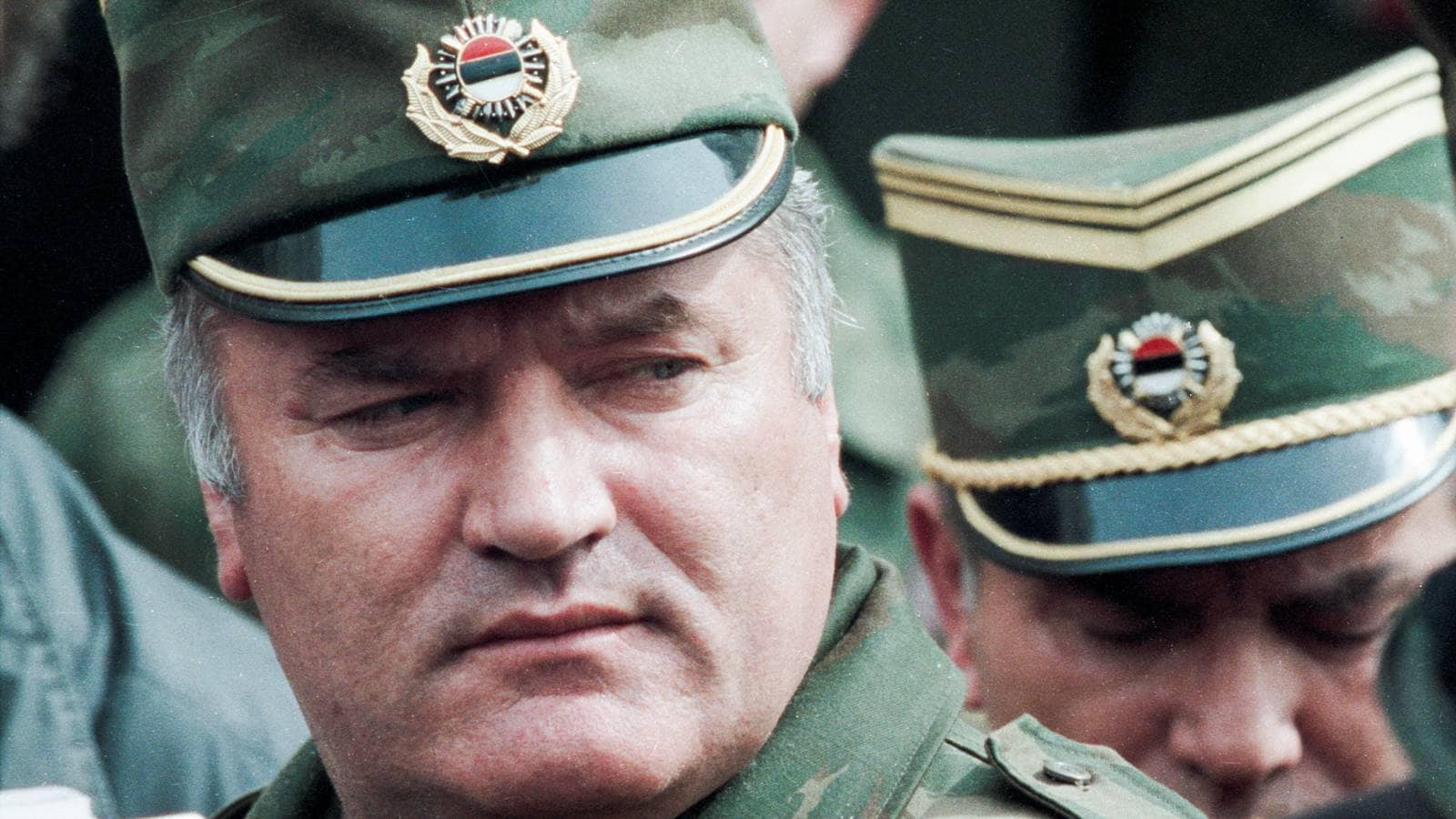
History does not always arrive with the roar of artillery. Sometimes, it slips away quietly in a sterile room, wrapped in the hum of medical monitors and the heavy blanket of unrepenting years. Ratko Mladic is gone. The man once known to terrified thousands as the Butcher of Bosnia breathed his last breath away from the hills of Sarajevo, away from the blood-soaked earth of Srebrenica, leaving behind a ledger of grief that no courtroom verdict could ever fully balance.
For decades, his name was a curse whispered across coffee tables in fractured apartments from Tuzla to Mostar. To understand the sheer gravity of his death, you have to understand what it feels like to live in a town where every empty chair at a family dinner has a name, and every name belongs to someone stolen by a war machine that Mladic proudly engineered. Building on this idea, you can also read: Structural Mechanics of Himalayan Flash Flood Response and Relief Capital Allocation.
I remember the chill of a winter morning in the Balkans years after the guns fell silent, watching an elderly woman sweep snow from a doorstep that should have been crowded with grandchildren. She did not scream when his name flashed across the television screen. She just stopped sweeping. The broom remained frozen in her hand. That is what impunity does to a society. It turns people into statues of enduring memory.
Mladic commanded the Army of Republika Srpska during a brutal disintegration of a nation in the early nineteen-nineties. He orchestrated the siege of Sarajevo, a four-year campaign of terror where snipers treated civilians walking for water like game birds. More infamously, in July 1995, his forces overthrew the United Nations safe area of Srebrenica. In less than a week, over eight thousand Muslim men and boys were systematically murdered and tossed into mass graves. Analysts at NPR have also weighed in on this situation.
When the International Criminal Tribunal for the former Yugoslavia finally caught up with him after sixteen years on the run—living under a false name in a sleepy Serbian village—the world breathed a collective sigh of relief. Justice, we were told, was blind. Justice was patient. Justice was inevitable.
Yet, walking through the streets of Sarajevo today, you realize that legal accountability and human closure speak two entirely different languages. A life sentence handed down in a glass-walled courtroom in The Hague in 2017 cannot resurrect a single father, cannot warm a single cold night, cannot undo the deliberate tearing apart of a multicultural society that thought it had learned how to live together.
Mladic spent his final years behind bars, appealing convictions, complaining of ailments, acting the victim of the very system that showed him infinitely more mercy than he ever afforded his victims. He never offered a genuine apology. He never bowed his head in remorse. To the very end, he played the defiant soldier protecting his people, a self-delusion that insulated him from the monstrous reality of his actions.
His death closes a chapter, but it does not close the book.
Consider the mothers of Srebrenica, now gray-haired and frail, who still walk to the Memorial Center in Potočari every July. They do not care about the obituary notices or the political analyses on cable news. They care about the missing bones still being unearthed in hidden ravines. They care about the fact that denial of genocide remains a popular political currency among certain leaders in the region today.
When a man like Mladic dies without confessing, the burden of truth shifts entirely onto the survivors. They become the keepers of the flame in a world that grows increasingly eager to forget uncomfortable pasts.
We look for neat endings in modern conflicts. We want tribunals to wrap up historical trauma with a neat bow, locking away the villains so we can sleep better at night. But history is messier than a courtroom docket. It lingers in the concrete pockmarked by shrapnel. It echoes in the haunting calls to prayer bouncing off valley walls. It rests heavily in the silence of survivors who survived not because they were stronger, but simply by accident.
The general is dead. The cell in The Hague is empty. But the hills surrounding Sarajevo still remember every shell, every order barked into a radio, and every life snuffed out by a ideology that believed human beings could be divided by the sound of their names.
The snow falls softly on the old graveyards now. The names carved into white marble markers are cold to the touch. And the living keep walking, carrying a weight that time refuses to lighten.