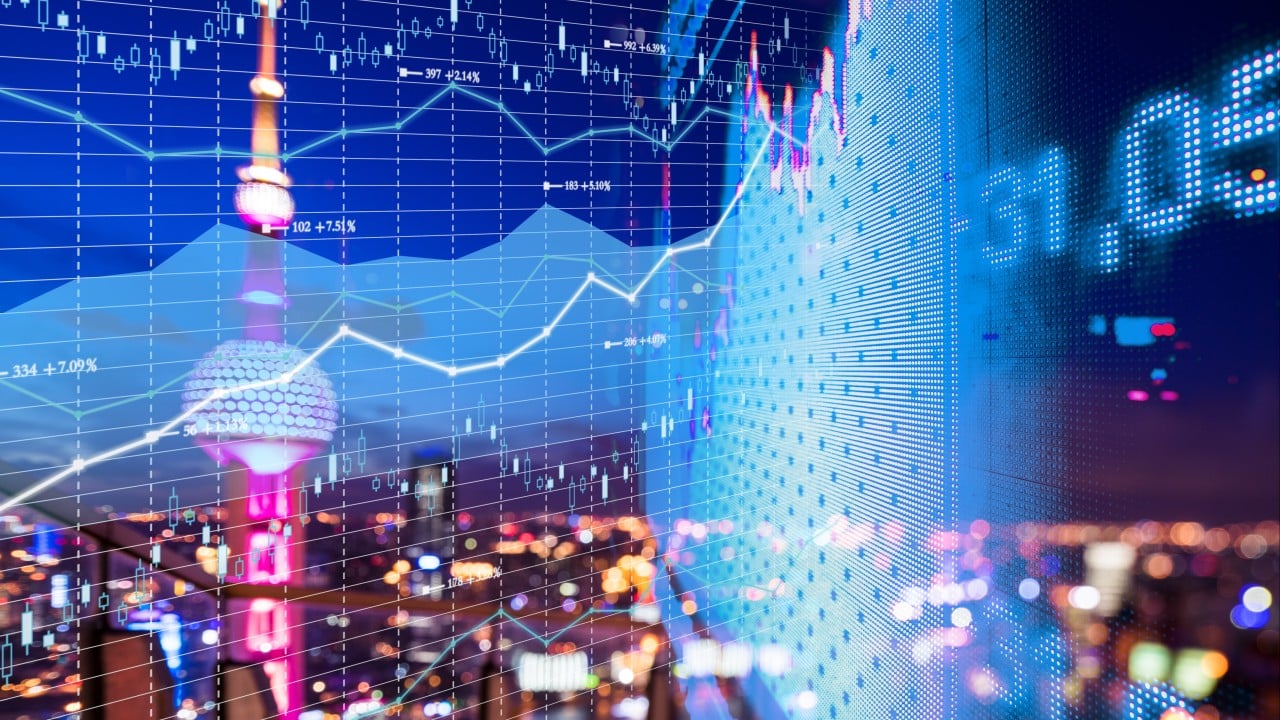
Morning arrives not with a sunrise, but with the quiet hum of a terminal screen.
In a glass tower overlooking a silent city, a portfolio manager named Elena stares at a blinking cursor. Her coffee is cold. Her shoulders are tight. Around her, a dozen other desks sit empty, yet the air is thick with anticipation. Today is not just another day on the calendar. Today is a collision point. Technology giants are about to lay bare billions of dollars in profit and loss, while thousands of miles away, whispers of geopolitical tension hang heavy over the oil supply lines of Iran. For a deeper dive into this area, we recommend: this related article.
We forget that behind every ticker symbol is a human heartbeat. We see numbers flash green or red on a screen, detached percentages climbing and falling, as if they exist in a vacuum. But they do not. They represent factories humming with life, families deciding whether to buy a new home, and millions of workers wondering if next quarter brings a promotion or a pink slip.
Consider what happens next on a day like this. For additional information on this development, extensive analysis can also be found on Financial Times.
The morning papers call it Super Thursday. A neat, tidy label for an absolute storm of economic gravity. On one side of the ledger, corporate titans report their earnings. These are not mere financial disclosures. They are scorecards of human ambition. They tell us how much software we bought, how many flights we booked, and how much faith we still place in consumer spending.
Take a hypothetical software engineer working at a major cloud computing firm. Let us call him Marcus. For the past six months, Marcus has pulled ninety-hour weeks optimizing data processing servers. Why? Because the entire valuation of his company hinges on whether artificial intelligence investments are translating into cold, hard revenue. When his CEO steps up to the microphone today to report quarterly earnings, Marcus is not thinking about stock options. He is thinking about whether his sweat equity mattered. He is thinking about whether the market will punish his team for being too slow, or reward them for pushing the boundaries of what machines can do.
Now shift your gaze eastward.
While Wall Street digests revenue beats and misses, diplomats in foreign capitals tread carefully over fragile ice. Fears of an Iranian detente—or the sudden shattering of one—send immediate shockwaves through global energy markets. Crude oil does not care about quarterly projections. It cares about security. It cares about whether tankers can move safely through narrow straits.
Elena watches the oil futures tick upward by a fraction of a dollar. To a casual observer, it is noise. To Elena, it is inflation. It is the cost of shipping tomorrow morning's groceries. It is the fuel surcharge that will soon eat into the profit margins of the very tech companies reporting earnings this afternoon.
This is the invisible web of modern economics. Nothing happens in isolation.
We try to tame this chaos with math. Analysts build intricate financial models, projecting earnings per share down to the exact cent. They look at historical data, interest rate trajectories, and consumer sentiment indices. Yet, beneath all the spreadsheets lies a profound vulnerability. We do not know what tomorrow brings. We only know what we hope for.
Hope is a strange asset class. It cannot be traded on an exchange, yet it drives every single transaction. Investors hope for stability. Corporations hope for growth. Citizens hope for a paycheck that stretches just a little bit further than it did last year.
When the Federal Reserve hints at interest rate paths, or when geopolitical friction threatens global supply chains, that hope stutters. Fear takes the wheel.
Elena remembers the crash of previous cycles. She remembers the sickening drop in her stomach when markets reacted to sudden geopolitical shocks faster than any human could process. Algorithms execute trades in microseconds, reacting to keywords in news feeds long before a person has time to read the headline. We have built a financial system that operates at the speed of light, yet we remain as emotionally fragile as our ancestors who traded spices by candlelight.
The earnings reports roll in now.
The numbers flash across the screen. Beat. Miss. Beat.
For a brief window, the room erupts into a cacophony of ringing phones and shouted analyses. Some stocks soar double digits, rewarding the bold and the lucky. Others plunge, dragging down retirement accounts and shaking investor confidence.
And yet, outside the window, the city keeps moving. People walk their dogs. Delivery trucks double-park in the drizzle. The fundamental rhythms of human life persist, entirely indifferent to whether a tech giant beat its earnings estimate by ten cents.
We look to the markets for certainty because the real world feels too messy, too unpredictable. We want a score. We want to know who is winning. But the truth is far more complicated. Every earnings report, every diplomatic standoff, every shift in monetary policy is just another chapter in an ongoing story of human adaptation.
The screen goes dark as the trading day closes. Elena shuts her laptop, rubs her tired eyes, and steps out into the evening air. The tension of the day lingers in the breeze, mingling with the exhaust of evening traffic. The numbers will reset tomorrow. The cycle will begin again.