The air in October has a particular bite to it along the shores of Lake Erie. It smells like damp leaves, woodsmoke from distant chimneys, and something older, heavier. Hope. Or perhaps the exhaustion of hope.
For generations, the faithful who pack the bleachers have worn their allegiance like heavy wool coats against the chill. They come armed with pocket schedules, worn baseball caps, and a shared memory of heartbreak that stretches back decades. When you grow up in a city where the sports calendar is written in pencil and erased by autumn, you learn a specific kind of patience. You learn how to swallow a lump in your throat and show up anyway.
Then come the Tampa Bay Rays.
To understand what happened on the field, you have to look beyond the box scores. You have to look at the geometry of desperation. On one side stood a franchise built on grit, old-school grit, and a fan base that views a championship drought not as a statistic, but as a family heirloom passed down through tears. On the other side stood the modern laboratory of baseball. Data points. Efficiency. A machine designed to strip the romance out of the game and replace it with run differentials and pitching metrics.
Baseball doesn't care about poetry. That is the first lesson every child learns here.
The innings unspooled like cheap thread. Pitch by pitch, strike by strike, the tension in the stadium thickened until you could almost reach out and touch it. Every routine fly ball carried the weight of a meteor. Every strikeout echoed like a dropped anchor.
Consider the silence that descends over fifty thousand people when a rally dies on a check swing. It is not a quiet of resignation. It is a suspension of breath.
The Rays played with the cold, unyielding precision of an algorithm. They didn't beat the home team with theatrical heroics; they dismantled them with quiet inevitability. A walk here, a well-timed double there, the turning of a double play executed with the soulless perfection of a factory machine. And yet, the men in the home jerseys fought. They scraped. They clawed at the dirt, refusing to yield the ground beneath their cleats.
In the seventh inning, a moment hung in the balance. Two runners on. The count full. The pitcher on the mound stared in for the sign, his face obscured by the brim of his cap. In the stands, an elderly man in a faded jersey clutched a transistor radio to his ear, his knuckles white. He had been here in nineteen-ninety-something. He had been here when the leaves turned brown and the season turned to ash. He knew the script by heart.
The pitch came in low and away.
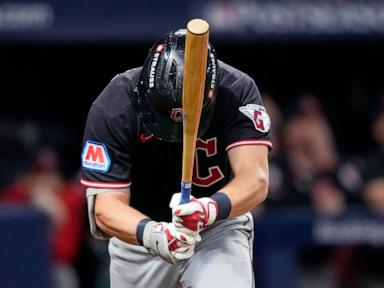
Swing and a miss.
The collective exhale of the stadium sounded like the wind off the lake sweeping through an empty alley.
Losses like this do not vanish with the final out. They linger in the traffic jams leaving the parking lots. They linger in the sports radio call-in shows late into the night, where weary voices analyze every managerial decision and missed opportunity. They settle into the collective consciousness of a region that loves its teams with a fierce, protective maternal instinct.
The drought continues. The calendar will flip to November, then December, the snow will bury the yard lines and the base paths, and the silence will settle over the empty stadium.
Yet, beneath the frozen turf, something else remains. It is the stubborn, irrational belief that next year will be different. Because in the end, it is not the winning that binds a city to its team. It is the staying. It is the willingness to walk back through the turnstiles next spring, knowing the history, bearing the weight, and hoping against hope that the story finally changes its ending.