The tea shop at the edge of Kalapani does not have a sign. It has a tin roof, three wooden benches, and a view of the jagged, snow-blind peaks where Nepal, India, and China collide. On an ordinary afternoon, the only argument here is whether the monsoon rains will arrive early. But when a prime minister speaks in Kathmandu, hundreds of miles away, the steam from the kettle suddenly feels heavier. The old men leaning against the wooden pillars stop talking about the price of lentils. They look down at the dirt road, wondering if the asphalt beneath their boots still belongs to the same country it did yesterday.
Geopolitics is often written in the sterile language of communiqués, white papers, and diplomatic summits. We treat borders like sharp ink lines drawn cleanly across a map. They are not. Along the high-altitude ridges of the Himalayas, a border is a living, breathing anxiety. It is the difference between a soldier asking for your papers or waving you through with a nod.
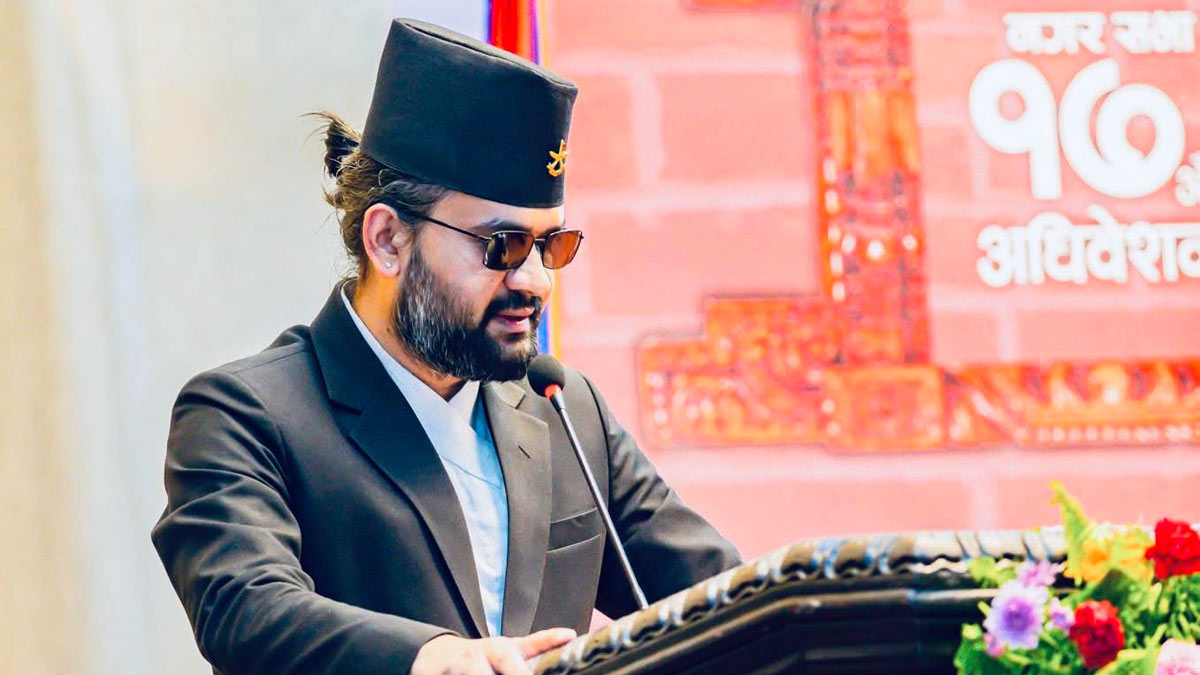
When Nepali Prime Minister Balen Shah stood before a microphone and claimed that his administration would address what he termed "encroached upon Indian territory," he did not just spark a diplomatic row. He pulled the rug out from under a delicate, decades-old scaffolding of peace.
The Weight of a Single Word
To understand why Kathmandu scrambled so frantically to contain the fallout, look at the cartographer’s desk. Mapmaking is an act of statecraft, but for the people living along the Mahakali River, it is an intimate reality. Consider a farmer named Ramesh, a composite of the many landowners navigating this fractured frontier. Ramesh owns a patch of terraced land. For generations, his family grazed cattle on the upper ridges. He pays taxes in Nepali rupees, but his cousin lives three miles east, buys sugar in Indian rupees, and watches Indian television.
For decades, the understanding between New Delhi and Kathmandu regarding disputed zones like Lipulekh, Kalapani, and Limpiyadhura was maintained through a deliberate, careful silence. It was a diplomatic agreement to disagree while senior bureaucrats quietly drank tea and parsed colonial-era treaties.
Then came the speech.
By explicitly accusing a massive, nuclear-armed neighbor of encroachment, the prime minister traded the scalpel of diplomacy for a sledgehammer. The reaction was instantaneous. In the capital, foreign ministry officials reportedly dropped everything to draft clarifications. Phone lines between the two nations went hot. The problem with using aggressive nationalistic rhetoric to fire up a domestic political base is that sound waves do not stop at national borders. They travel. They echo in the halls of power in New Delhi, where patience with regional friction is wearing thin.
The Illusion of the Open Border
The relationship between India and Nepal is unique on the planet. It is defined by the 1950 Treaty of Peace and Friendship, which established an open border. No visas. No barbed wire. Millions of Nepali citizens live and work in India, sending money back home to sustain rural villages. Indian businesses invest heavily in Nepal’s infrastructure, hydropower, and tourism.
It is a beautiful system. It is also incredibly fragile.
When a political leader weaponizes territorial disputes, the first casualty is trust. If New Delhi decides to tighten border security even a fraction—demanding stricter identification, slowing down commercial trucks, or increasing patrols—the economic shockwaves hit the poorest households first.
Think of the trucks lined up at the Birgunj border crossing. Hundreds of vehicles engines idling, loaded with perishable vegetables, medicines, and fuel. A delay of forty-eight hours does not just disrupt a supply chain; it rots the livelihoods of thousands of small-scale traders. This is the invisible stake. The high-stakes rhetoric of sovereignty directly impacts whether a family in the Terai plains can afford to buy cooking gas next month.
The official machinery in Kathmandu knows this. They are acutely aware that Nepal relies on Indian ports for almost all its third-country trade. The sudden flurry of damage control from the government was not an admission of cowardice; it was a sudden collision with economic reality.
The Ghost of 1816
Every modern argument along this border eventually traces its lineage back to a single piece of parchment: the Sugauli Treaty of 1816. Signed after the Anglo-Nepalese War, the treaty designated the Mahakali River as Nepal’s western boundary.
It sounds simple. But rivers change. They shift course over centuries. They swell during monsoons and dry up into multiple streams during the winter.
[Treaty of 1816: Mahakali River acts as Border]
       |
       v
[Centuries of River Shifting / Multiple Source Streams]
       |
       v
[India: Lipu Gad stream is boundary] <---> [Nepal: Kuthi Yankti river is boundary]
The core of the current dispute lies in a fundamental disagreement over where the river actually begins. Kathmandu argues the source is high up in the mountains, meaning the entire tract of land belongs to Nepal. New Delhi maintains that a different, lower tributary is the true boundary, placing the strategic ridge under Indian administration.
For decades, both sides managed this ambiguity. India maintained military posts in the region due to its vital strategic value overlooking the Tibetan plateau, while Nepal occasionally raised cartographic objections. The system worked because neither side pushed the other into a corner.
What changed recently is the democratization of outrage. Social media has turned complex, nuanced historical disputes into black-and-white litmus tests for patriotism. A prime minister can no longer make an off-hand comment to satisfy a local crowd without it becoming a viral headline across the subcontinent. The internal political calculus of Kathmandu—where leaders must constantly prove their independence from foreign influence—has run headfirst into India's absolute intolerance for security vulnerabilities on its northern flank.
The Price of Standing Alone
There is a deep, unsettling anxiety that runs through small nations nestled between giants. Nepal watches the growing economic and military rivalry between India and China with a mixture of hope and dread. Every diplomatic move is a tightrope walk. Lean too far toward Beijing, and New Delhi can squeeze your economy without firing a single shot. Lean too far toward Delhi, and you risk losing domestic sovereignty and the lucrative investment promises from the north.
By stoking the flames of the border dispute, the administration threatened to snap the tightrope entirely.
The frantic backtracking from the prime minister's office in the days following the remark reveals a sudden realization of isolation. No foreign power was going to step in to mediate a localized cartographic dispute. The issue had to be solved bilaterally, and the terms of that bilateral relationship are heavily tilted in one direction.
Back at the tea shop near the border, the sun begins to dip behind the white peaks, casting long, dark shadows across the valley. The old men finish their tea and count out their coins. They do not hate their neighbors across the river; their lives are too intertwined for that. Intermarriage, shared festivals, and mutual survival in a harsh landscape have created a bond that political speeches cannot easily break.
But the anxiety remains. They know that when leaders play chess with maps, it is the people living on the edges of the board who get knocked over first. The tin roof rattles as a cold wind blows down from the high passes, a quiet reminder that the mountains do not care about the lines humans draw in the dirt, even if men are willing to break worlds to defend them.