Glass does not bleed, but it remembers.
Walk down the quiet corridor of a containment facility after midnight, and you can hear the faint, rhythmic hum of negative pressure ventilation fighting to keep the outside world safe from whatever rests on the stainless-steel bench inside. To the casual observer, it is just a room. To the virologist who spends twelve hours a day breathing through a filtered respirator, it is a borderland. On one side lies human history, full of fragile immunities and bustling cities. On the other side sits an ancient predator, frozen in a vial, waiting for a single moment of human fatigue.
We tend to think of history as something massive, something driven by empires and oceans. But sometimes, history hinges on a clumsy gloved hand, a misread gauge, or a cough in the dark.
Consider what happened behind closed doors in Russia, where the World Health Organization recently turned its analytical gaze toward a tragedy that felt entirely too familiar. A laboratory worker, swallowed by the silent machinery of biological research, lost their life. And with that single death, an old ghost woke up. The shadow of the plague—the black death that once emptied medieval European towns and turned cathedrals into morgues—flitted across the desks of international health monitors.
People gasped. Whispers traveled along fiber-optic cables from Geneva to Moscow. Could an ancient scourge, beaten down by modern sanitation and antibiotics, be stirring once more in a high-security container?
The answer is both more mundane and infinitely more terrifying than a Hollywood movie plot.
To understand why the global health community sat up straight when news of the Russian laboratory incident broke, we have to look at how modern science handles its most dangerous trophies. We collect them. In reinforced freezers buried deep beneath concrete and steel, humanity stores the very things that nearly destroyed us. Smallpox, anthrax, Ebola, and yes, Yersinia pestis—the bacterium responsible for the plague.
Why? Because if you want to defend against an invisible army, you must study its generals. You must grow them, test them, and watch how they mutate under pressure. You must know their weaknesses before they find yours.
Yet, every time a scientist steps into a Biosafety Level 4 or Level 3 laboratory, they enter a combat zone without bullets. The enemy is microscopic, weightless, and infinitely patient.
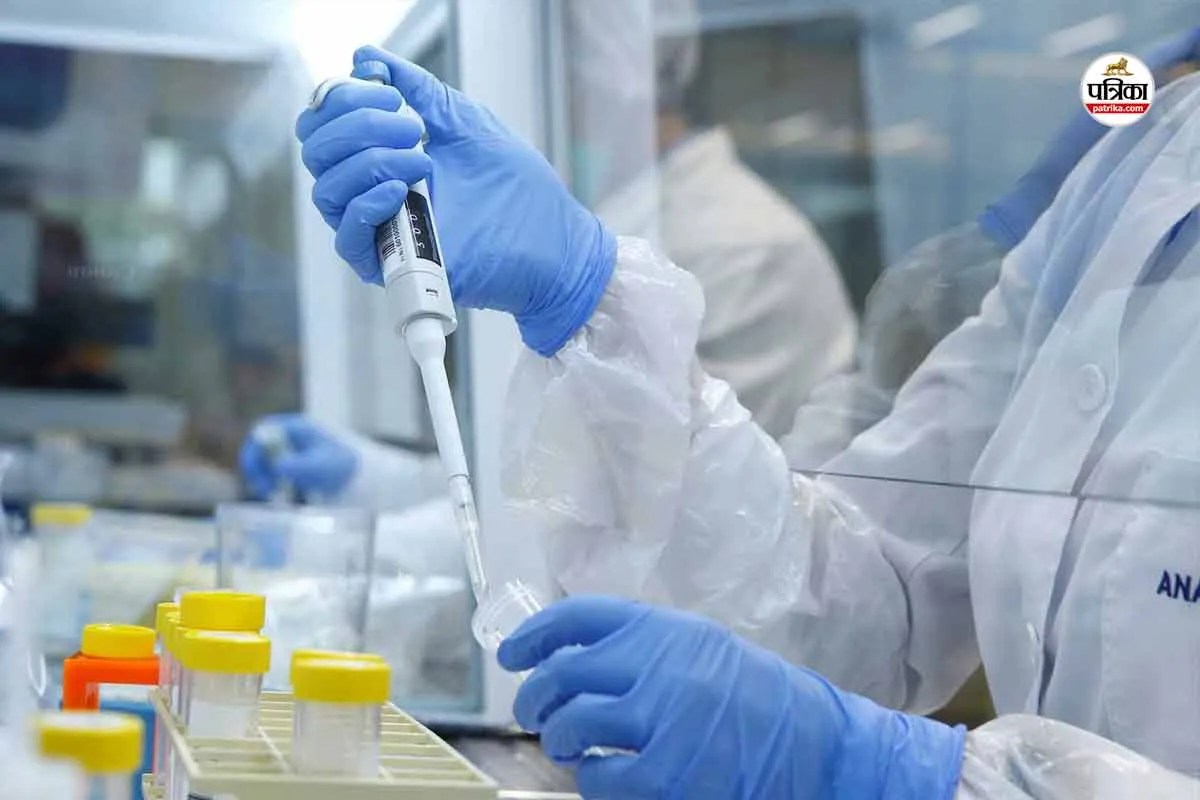
Imagine the scene. It is 3:00 AM. The air inside the protective suit is hot, smelling faintly of recycled plastic and sweat. The worker’s fingers are cramped from gripping a pipette for four hours straight. Their vision is slightly warped by the curved plastic visor of the positive-pressure suit. There is a microscopic drop of condensation forming right where they cannot wipe it away.
In that environment, routine is a double-edged sword. It keeps you alive on Monday, Tuesday, and Wednesday. But on Thursday, routine breeds a micro-second of complacency. A glove catches on a sharp edge of a centrifuge rotor. A seal compromises. Or perhaps, as international inquiries often probe, an underlying medical vulnerability collides with an occupational exposure, creating a fatal trajectory that nobody anticipated.
When the WHO asked Moscow for answers, they were not just inquiring about a local workplace accident. They were asking about the integrity of the invisible walls we have built around our worst nightmares.
The public often imagines biosecurity as an impenetrable fortress guarded by men with assault rifles. But real biosecurity looks like a tired human being checking a digital logbook, wiping down a biological safety cabinet with a bleach solution, and trusting that the HEPA filters above their head are doing their job.
When a laboratory worker dies under ambiguous circumstances involving a pathogen like the plague, the global alarm system triggers for a very specific reason. The plague is not a relic of the past. It still lingers in wild rodent populations across the globe—from the American Southwest to the steppes of Central Asia. Fleas carry it. Marmots carry it. Nature maintains her own reservoirs.
What worries epidemiologists is not the natural spread; our sanitation and streptomycin have weapons against that. What terrifies them is the laboratory adaptation. What happens when a strain is handled, studied, or potentially altered in an environment where containment fails?
When the news broke, the initial reports were sparse. Cold facts. A fatality. An investigation. A request for transparency from the World Health Organization.
Cold facts are comforting because they fit into neat paragraphs. But cold facts do not tell you what it feels like to sit in a room in Geneva, looking at a flashing red light on a map, wondering if a containment breach is about to become tomorrow’s headline on your morning commute. They do not capture the heavy silence in a Moscow research facility as inspectors pore over logs, trying to determine whether an employee’s death was an unfortunate tragedy of natural illness or an occupational containment breach.
We live in an era where we expect our technology to be infallible. We trust the algorithms, we trust the clean white walls of modern hospitals, and we trust that the people in white coats have everything under control. We want to believe that we have outgrown the plagues of the Middle Ages, that we locked them in cages and threw away the key.
The reality is far messier. We are constantly walking a tightrope over an abyss, holding hands with the very microbes that have shaped our evolution.
When the WHO demands answers from a member state regarding a high-consequence pathogen incident, it is a diplomatic dance of immense delicacy. Sovereignty clashes with global survival. No nation wants to admit that its containment protocols cracked, just as no global health body can afford to look the other way when a potential vector of contagion flickers in the dark.
Transparency is the only vaccine we have against panic.
And that is why the questions asked of Russia mattered so deeply. They were not just asking about a single lost life, though that life mattered immensely to the family who will never see them walk through the front door again. They were asking about the boundary between order and chaos.
Think about the invisible stakes. Every high-containment laboratory on Earth is a testament to human hubris and human courage combined. We look at the most lethal organisms on the planet, and instead of running away, we build a box around them so we can learn how they tick. We do it to save millions of lives down the road.
Yet every single one of those laboratories represents a calculated risk. A single error can ripple outward with devastating speed. We saw it with smallpox leaks in Birmingham in 1978. We saw it with anthrax leaks in Sverdlovsk in 1979. History is littered with the ghosts of laboratory accidents, reminders that our tools are only as reliable as the human beings operating them.
When the investigation into the Russian lab worker’s death unfolds, the technical details will dominate the trade journals. They will talk about aerosol generation, biosafety levels, post-mortem tissue samples, and genetic sequencing. They will debate whether the strain involved matched wild-type variations or showed signs of laboratory manipulation.
Do not let the jargon fool you.
At its core, this is a story about human vulnerability. It is about the person who walked into work on a Tuesday morning, unaware that they were stepping onto the frontline of an invisible war. It is about the scientists across the globe who hold their breath every time a colleague falls ill, wondering if the glass wall will hold.
The plague did not vanish. It is sitting in a freezer right now, waiting for someone to open the door. And as long as we need to study it to stay alive, we will keep opening that door—hoping against hope that our discipline is stronger than our fatigue.
The world outside the laboratory keeps spinning, oblivious to the quiet dramas playing out behind triple-sealed airlocks. People sip their coffee, catch their trains, and scroll through their phones, entirely unaware of the invisible shields protecting them from the past.
Until something slips.
Until a whisper from a Moscow laboratory reminds us of just how fragile our modern sanctuary really is.
The investigation will conclude. Reports will be filed in thick binders in Geneva and Moscow. The public will move on to the next crisis, the next sensation, the next distraction.
But deep inside the facilities, the hum of the negative pressure ventilation will continue. The filters will catch the air. And the scientists will put on their suits, zip them up tight, and step back into the dark.
Because the only way out is through.