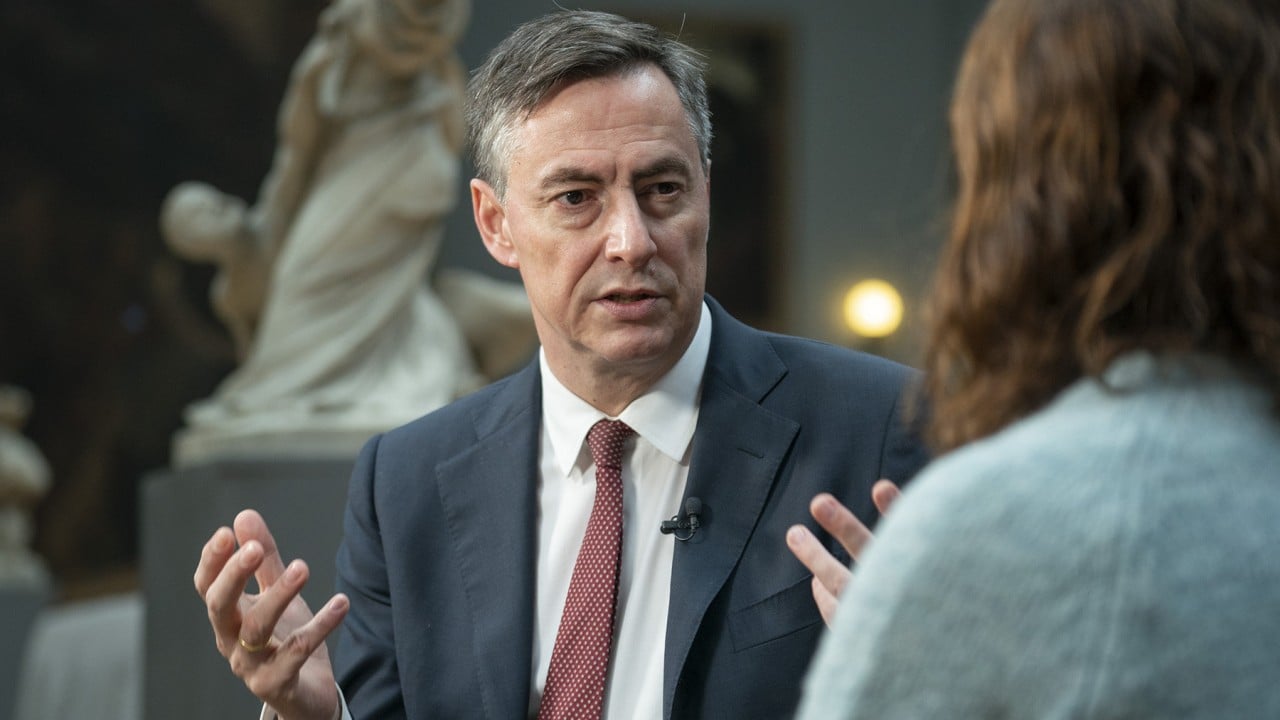
Behind the heavy double doors of the Great Hall of the People, the air carries a distinct chill. It is not just the air conditioning battling the humid haze of a Beijing summer; it is the weight of an escalating economic cold war. European trade diplomats adjust their ties, shuffle their briefings, and prepare to face their Chinese counterparts. Outside, global markets hold their breath. Inside, two economic titans are attempting to untangle a web of grievances that threatens to rewrite the rules of global commerce.
Tension does not always arrive with the roar of military hardware. More often, it arrives in crisp leather portfolios, wrapped in polite diplomatic phrasing, backed by the implicit threat of crushing tariffs.
To understand what is happening between Brussels and Beijing, consider a hypothetical small business owner in Stuttgart named Clara. Clara manufactures precision auto components. For decades, her business model was simple and reliable: engineer high-quality parts, ship a third of them to expanding assembly lines in China, and reinvest the profits into local apprenticeships. But over the last two years, the ground beneath Clara’s feet began to shift. Local Chinese competitors, bolstered by sweeping government subsidies, began undercutting her prices by nearly forty percent. At the same time, Brussels announced investigations into unfair trade practices, raising the spectre of retaliation. Clara isn't a politician. She doesn't draft geopolitical white papers. Yet her livelihood hangs on whether a handful of negotiators in a distant capital can agree on the price of electric vehicle batteries.
This is the human reality hiding beneath headlines about trade deficits and policy frameworks.
The core of the friction is straightforward, even if the resolution is anything but. Europe finds itself caught in an agonizing double bind. On one side, its ambitious climate mandates demand a rapid transition to green energy and electric transportation. On the other, Chinese state-backed manufacturers have flooded the European market with affordable solar panels, wind turbines, and electric vehicles. To European green advocates, this rapid influx looks like a shortcut to meeting net-zero targets. To European industrial leaders, it looks like an existential threat—a deliberate attempt to hollow out the continent's manufacturing base.
Money talks. But right now, it is shouting.
The European Delegation arrived in Beijing not to sign celebratory treaties, but to draw hard lines in the sand. Brussels has grown increasingly weary of what it views as market distortion. When a state injects massive capital into domestic industries, it creates artificial overcapacity. That excess production has to go somewhere. It flows outward, washing over foreign markets like a tidal wave, wiping out unsubsidized local producers who simply cannot compete with the deep pockets of a central government.
Yet, turning off the tap is dangerously complex. China controls vast swaths of the supply chains required for the modern world—from refined lithium and cobalt to critical rare earth minerals. A full-scale trade war would not just raise the price of a new sedan; it could halt the entire European green transition in its tracks.
Negotiation under these conditions is an exercise in high-wire acrobatics without a net.
European officials speak of "de-risking"—a carefully chosen buzzword designed to sound pragmatic rather than hostile. They insist they do not want a complete economic decoupling like the one unfolding between Washington and Beijing. They want to remain trade partners. They simply want the playing field leveled.
Chinese officials view the situation through a starkly different lens. From Beijing's perspective, Western trade barriers look less like a defense of fair competition and more like a desperate attempt to contain China's technological rise. They point out that European nations built their own industrial dominance through centuries of state support, protectionism, and global expansion. Why, they ask, should Chinese innovation be penalized for succeeding on a global scale?
When both sides believe history is on their side, compromise becomes an uphill battle.
The Cost of Miscalculation
Walk through the shipping ports of Hamburg or Rotterdam today, and you will see the physical manifestation of this stalemate. Thousands of imported vehicles sit in vast, silent holding lots, waiting for regulatory clarity or market buyers. Each vehicle represents a gamble on global stability.
If talks break down and a cycle of tit-for-tat tariffs takes hold, the immediate victims will not be the ministers sitting around mahogany tables in Beijing. The fallout will hit everyday consumers and workers. The price of an electric vehicle in Madrid will creep out of reach for a middle-class family. A solar installer in Lyon will find their order backlogged indefinitely. A factory floor in Guangdong will quiet down as export orders dry up.
Risk is contagious. Uncertainty is worse.
What makes this moment uniquely dangerous is the total lack of margin for error. The global economy is already battered by lingering inflation, geopolitical fragmentation, and energy volatility. A prolonged conflict between two blocks that account for a massive chunk of global trade could trigger a domino effect that neither side can truly afford.
In the quiet corridors where these delegations meet, there are no easy wins. Victory will not look like a triumphant joint press conference or a sweeping trade agreement. If these high-stakes talks succeed, victory will look much more modest: a shared commitment to keep talking, a temporary freeze on new tariffs, and a tedious, item-by-item negotiation over supply chain transparency and market access.
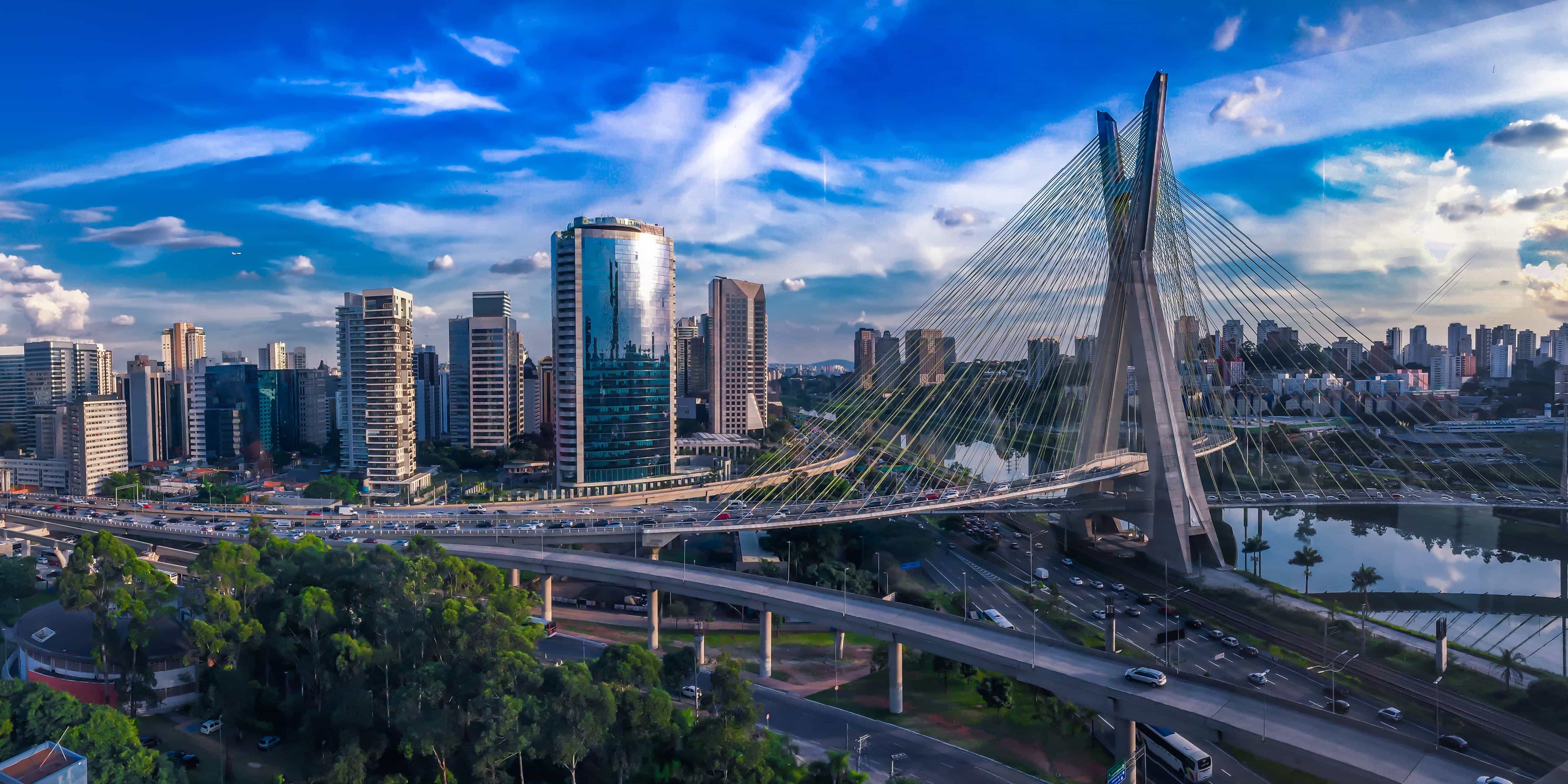
As the sun sets over the Beijing skyline, the negotiators order more tea and reopen their binders. The ambient hum of traffic outside serves as a constant reminder of the millions of lives quietly linked to the words typed into these draft agreements. The future of global trade will not be decided by grand ideological declarations, but by the painstaking, uncomfortable work of finding common ground before the doors swing open and the world demands an answer.