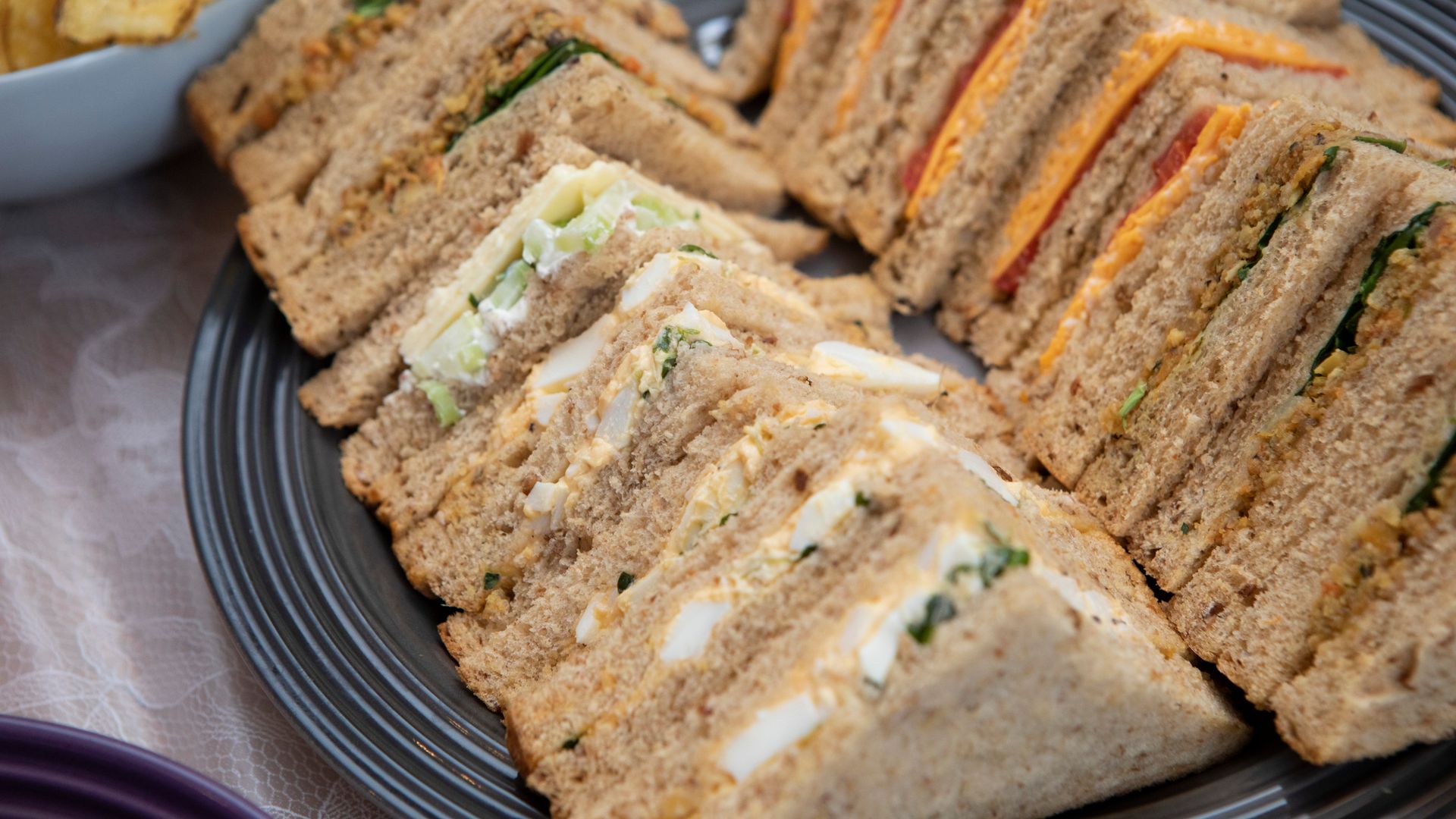
The ritual is universal. It is 12:45 PM. You are standing in a fluorescent-lit aisle, or perhaps staring at a chalkboard menu above a stainless steel counter. You have exactly twenty minutes before your next meeting. Your stomach is a hollow, insistent ache. You reach for the reliable choice. The meal of the masses. The humble sandwich.
It feels virtuous. It isn’t a greasy burger dripping with trans fats. It isn’t a box of sugar-coated donuts. It’s whole-grain bread, sliced turkey, maybe a swipe of pesto and a leaf of arugula. You pay your ten dollars, take that first massive bite, and feel the immediate, soothing rush of glucose hitting your bloodstream.
But beneath the "artisan" crust and the "farm-fresh" labels, a chemical structural integrity is being maintained by a silent, crystalline additive. You don't taste it—not really. Your brain is too busy enjoying the dopamine hit. But as you finish that last corner of crust, you have just ingested more salt than a person in the 1800s might have consumed in three days.
The industry calls it "flavor enhancement." Cardiologists call it a ticking clock.
The Hidden Architecture of the Modern Lunch
To understand why your pre-packaged chicken wrap contains 2,300 milligrams of sodium, we have to look past the taste buds. Salt is the world's cheapest preservative and the ultimate camouflage.
Consider a hypothetical office worker named Sarah. She’s health-conscious. She tracks her steps. She drinks two liters of water a day. For lunch, she selects a "Mediterranean Veggie" baguette from a high-end chain. She sees the fiber. She sees the protein. What she doesn’t see is the industrial process required to keep that bread soft for four days and that hummus stable for weeks.
Salt holds water. In the world of commercial food production, water is weight. Weight is profit. By saturating the proteins and starches in a sandwich with sodium, manufacturers ensure the meat stays juicy and the bread stays plump. It’s a trick of physics disguised as culinary craft.
When Sarah finishes her lunch, her body begins a frantic, invisible rebalancing act. Salt is an electrolyte, essential for nerve function and muscle contraction, but in these concentrations, it becomes a biological irritant. To dilute the sudden influx of sodium in her blood, Sarah’s body pulls water from her cells and into her bloodstream.
The volume of her blood increases.
The pressure against her arterial walls rises.
Her heart, that tireless four-chambered engine, has to pump harder to move this thickened, high-volume fluid through her system. By 2:00 PM, Sarah feels a slight tightness in her temples. She blames the spreadsheet on her monitor. She doesn't realize her vasculature is currently under the kind of hydraulic stress usually reserved for a garden hose attached to a fire hydrant.
The Great Salt Reset
We have been conditioned to believe that saltiness is a fixed preference, like liking the color blue or preferring dogs to cats. This is a lie. Our palates are highly plastic, but they have been systematically "salted up" by decades of processed food competition.
If a soup company reduces salt by 10%, the soup tastes "thin." Not because it lacks nutrition, but because salt masks the bitter notes of low-quality ingredients and rounds out the flavor profile. To keep us coming back, the industry has engaged in a sodium arms race. The result? A "supermarket ham" sandwich now frequently exceeds the entire recommended daily allowance (RDA) of sodium in a single sitting.
The World Health Organization suggests a limit of 5 grams of salt per day—about one teaspoon. Many popular high-street sandwiches contain 6 or 7 grams alone.
This isn't just about "bloating" or "water weight," terms often used to dismiss the issue as one of vanity. This is about the long-term degradation of the endothelium, the thin membrane lining the inside of the heart and blood vessels. Chronic high salt intake stiffens these vessels. It turns flexible pipes into brittle ones.
The Anatomy of the Offenders
Why are certain sandwiches so much worse than others? It comes down to the "Three Layers of Salt."
- The Bread: We think of bread as a neutral vessel. It isn't. Commercial loaves are often the single largest contributor to salt intake because of the sheer volume we consume. Sodium controls the yeast fermentation and strengthens the gluten.
- The Cure: Deli meats—ham, bacon, pastrami, even "roasted" turkey—are injected with brines containing sodium nitrites and phosphates. These keep the meat pink and moist, but they turn a slice of turkey into a salt sponge.
- The Extras: This is where the "hidden" salt lives. Pickles, olives, cheese, and especially sauces. That "signature mayo" or "tangy dressing" is often a concentrated slurry of salt, sugar, and fat designed to bypass your satiety signals.
If you deconstruct a standard Italian Sub, you find a perfect storm. The salami is cured with salt. The provolone is aged with salt. The vinaigrette is stabilized with salt. The bread is baked with salt. By the time you reach the center, you aren't eating a meal; you are eating a geological event.
The Quiet Violence of 140/90
Hypertension is known as the silent killer because it doesn't shout. It whispers. You don't feel your arteries stiffening. You don't feel your kidneys struggling to filter the excess minerals, slowly scarring the delicate nephrons that keep your blood clean.
We talk about the "opioid crisis" or the "obesity epidemic," but the "sodium crisis" is arguably more insidious because it is baked into the very fabric of our convenience culture. We are a society on the move, and salt is the fuel that allows food to move with us without spoiling.
But there is a cost to this convenience. It is paid in the currency of stroke risk, heart failure, and chronic kidney disease.
Think back to Sarah. If she eats that "healthy" veggie baguette three times a week for ten years, she isn't just "eating salt." She is conditioning her body to operate at a higher baseline of stress. She is wearing down the treads on her biological tires far faster than necessary.
The Path Through the Minefield
Reclaiming your health doesn't mean eating bland, grey mush. It requires a shift in how we perceive "freshness."
True flavor comes from acidity, heat, and aromatics. Lemon juice, vinegar, fresh herbs, chili flakes, and garlic provide the complexity that salt often fakes. When you prepare a meal yourself, you realize that a pinch of salt is plenty. When a factory prepares it, they use a handful.
The next time you stand before that refrigerated display, look past the "low fat" and "natural" stickers. Turn the package over. Look for the sodium content. If it starts with a '1' and has four digits, put it back.
We have been sold a version of "convenience" that is fundamentally at odds with our survival. We have traded our long-term arterial health for a thirty-second hit of savory satisfaction.
The sandwich in your hand is more than just lunch. It is a choice about how hard you want your heart to work this afternoon. It is a choice about whether you want to be the master of your palate or a captive to a manufacturing process that prioritizes shelf-life over your life.
The salt is already there, crystalline and patient, hiding in the grain of the bread. It doesn't care about your heart. Only you can do that.
You take a breath. You look at the menu. You see the "freshly roasted chicken" (with skin, no brine) and the "fresh avocado" on whole-grain sourdough. You ask for no extra dressing.
The first bite is different. It’s quieter. You taste the nuttiness of the grain. You taste the creaminess of the fat. You taste the actual food.
Outside, the world continues its frantic pace, but inside, the pressure begins, ever so slightly, to drop.