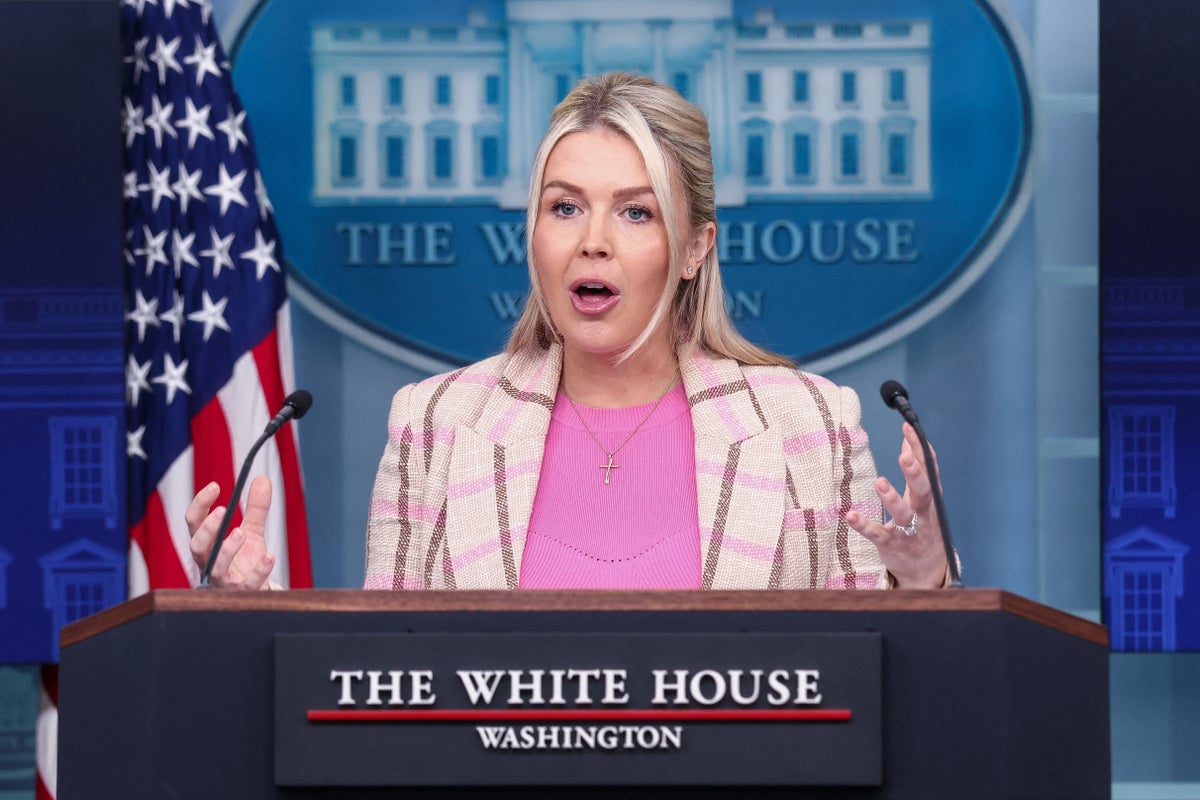
White House Press Secretary Karoline Leavitt just handed the American public a bitter pill with a sugar-coated promise. She’s claiming the current war in Iran, which has already sent gas prices screaming upward, is actually a long-term play for cheaper fuel. If you’ve looked at a gas station sign in the last 48 hours, you know the reality feels a lot different. National averages have jumped 17% since the U.S. and Israel launched strikes on February 28, 2026. In places like Los Angeles, some drivers are staring down $8 a gallon.
It’s a bold gamble. The administration’s logic is that by taking out the "rogue Iranian regime," they’ll permanently clear the bottlenecks in the Strait of Hormuz. They’re betting that a short, violent disruption today buys decades of energy security tomorrow. But can you really bomb your way to a cheaper commute?
The logic behind the long term gamble
Leavitt isn’t just talking about current supply. She’s framing this as a "short-term disruption for a long-term gain." The administration’s theory relies on two main pillars. First, removing Iranian influence over the Strait of Hormuz. About 20% of the world’s oil flows through that narrow waterway. Right now, it’s a ghost town. Shipping companies are terrified of mines and retaliatory strikes. By "securing" the strait through military force, the White House believes they can ensure a "free flow" of energy that isn't subject to Tehran's whims.
Second, there’s the "newfound markets" angle. Leavitt recently pointed to Venezuela as a safety valve. Since the U.S. moved against Nicolás Maduro in January, the administration sees South American crude as a bridge to fill the gap left by Middle Eastern chaos. They want you to believe that once the dust settles, the world will be awash in oil from "friendly" or controlled regimes, driving prices lower than they were before the war started.
What it’s costing you right now
Theory is great, but your wallet lives in the present. When President Trump took office in 2025, gas was around $3.11. By late February 2026, he’d bragged about getting it down to $2.92. That progress is gone.
- National Average: Jumped to $3.54 this week.
- Crude Spikes: Brent crude hit $115 a barrel, the highest since the early days of the Ukraine invasion.
- Infrastructure Damage: This isn't just about "uncertainty." Real refineries and processing plants in the region are taking hits.
Hugh Daigle, a professor at UT Austin, points out that damage to these facilities doesn't fix itself overnight. Even if the shooting stops tomorrow, the supply chain is mangled. You’re paying for the risk premium that traders bake into every barrel. Every time a tanker is delayed or a pipeline is threatened, the price at your local pump ticks up another nickel.
The Strait of Hormuz problem
The White House says they’ll "secure" the strait. That’s easier said than done. Iran has spent decades preparing for this exact scenario. They don’t need a massive navy to cause a global recession. They just need a few hundred naval mines and some cheap drones.
If the U.S. Navy starts escorting tankers, it might calm the markets slightly. But as long as the area is an active war zone, insurance rates for those ships will stay through the roof. Those costs don't just vanish. They get passed directly to you. Energy Secretary Chris Wright and Interior Secretary Doug Burgum are reportedly under massive pressure to find "good news" for the markets, but the reality is that the Strait of Hormuz remains the world's most sensitive chokepoint.
Can the President actually lower prices
Presidents often get too much blame and too much credit for gas prices. Usually, the global market dictates the cost. However, when a president starts a war in the world’s biggest oil-producing region, that responsibility shifts.
The administration has a few levers left, but they're getting rusty. They can tap the Strategic Petroleum Reserve (SPR) again. They can "jawbone" oil traders by promising a quick victory. They can even try to waive sanctions on other producers. But none of that changes the fact that 9 million barrels of oil a day are currently off the market due to the conflict.
Reality check for the American driver
Don't expect a miracle at the pump this month. Experts like those at GasBuddy are predicting prices could climb to $3.75 or higher if the "excursion," as Trump calls it, drags on. The "long term" Leavitt talks about could be months or years away.
If you want to protect your budget, look at your usage now.
- Monitor local prices: Use apps like GasBuddy or Waze to find the cheapest stations, as prices are varying wildly even between neighboring blocks.
- Consolidate trips: It sounds old-school, but with prices rising 50 cents in a week, it matters.
- Watch the headlines, not the politicians: Ignore the "promises" of $2 gas. Watch for news about the Strait of Hormuz reopening. That's the only signal that actually matters for your wallet.
The White House is asking for your patience while they reshape the Middle East. Whether that actually leads to cheaper gas or just a permanent state of high-priced instability remains a massive, expensive question mark.