The sound was not a crack. It was a sigh.
Imagine the weight of four human lives resting on a slab of frozen water no thicker than a dinner plate. For a nine-year-old boy and three adults, the world did not end with a bang. It ended with a gentle, terrifying drift. One moment, they were part of the solid Earth, tethered to the shore by the familiar logic of winter. The next, they were passengers on a slow-moving raft of ice, heading into the mouth of a grey, indifferent sea.
The transition from safety to survival is often instantaneous. It happens in the space between heartbeats. On this particular afternoon, the ice beneath their feet decided it was no longer land. It became a vessel. As the gap between the floe and the shoreline widened, the psychological weight of that water—only a few feet of it at first—became an ocean.
They were stuck for twenty-four hours.
Time behaves differently when you are waiting to see if you will freeze or drown. Seconds stretch into minutes that feel like hours. The cold is not just a temperature; it is a predator. It starts at the fingertips, a dull ache that eventually turns into a numb, woody sensation. Then it migrates. It seeks the core. It demands that the heart work harder, pumping thickening blood through narrowing pipes.
The Geography of Fear
When we look at the Great Lakes or the frozen reaches of the northern coasts, we see a playground. We see ice fishing, snowmobiling, and the thrill of walking on water. We forget that the ice is a living, breathing thing. It is subject to the whims of the wind and the hidden shove of the currents.
A shift in wind direction, often no more than a few knots, can exert enough pressure to snap a mile-wide shelf of ice away from the bedrock. This is the "invisible stake" of winter recreation. You aren't just standing on a surface; you are standing on a balance sheet of thermal energy and kinetic force. If the wind blows from the south, you are safe. If it turns, you are gone.
For the four people trapped on that floe, the wind was the enemy. It pushed them further into the white void. The shoreline, with its lights and its warmth and its promise of dinner, faded into a blur of grey.
The nine-year-old would have looked to the adults. In these moments, the hierarchy of age is everything. The adults must project a calm they do not feel. They must mask the math they are doing in their heads—the math of body heat, the math of battery life on a dying cell phone, the math of how long a child can endure sub-zero temperatures before the shivering stops and the lethargy begins.
The Chemistry of the Cold
To understand why this rescue was a miracle, you have to understand what happens to the human body when the mercury drops.
Cold-water immersion or prolonged exposure to freezing air triggers the "mammalian dive reflex," but on an ice floe, the threat is more insidious. It is a slow-motion exhaustion. The body burns through its glycogen stores just to keep the internal organs at $37°C$. Once those stores are gone, the core temperature begins its inevitable slide.
$T_{core} < 35°C$ marks the onset of hypothermia.
At this stage, the brain begins to fog. Decision-making, the very thing needed to stay alive, becomes a chore. You stop feeling the cold and start feeling tired. This is the "Umbles"—stumbling, mumbling, fumbling. For the rescuers, the race was not just against the drifting ice; it was against the metabolic clock of a small child whose surface-area-to-mass ratio made him a much faster target for the frost.
A Night Without Walls
The night is the hardest part.
Without the sun, the horizon disappears. You are trapped in a sphere of darkness where the only sound is the grinding of ice against ice—a sound like glass breaking in a velvet bag. Every time the floe jolts, you wonder if it is shrinking. Every time a wave laps at the edge, you wonder if the shelf is tilting.
They spent twenty-four hours in this limbo.
Search and rescue teams are the unsung cartographers of these crises. They don't just look for people; they map the drift. They calculate the vector of the wind against the speed of the current to predict where a piece of ice might be in six hours. They use thermal imaging to peer through the gloom, looking for the tiny, flickering heat signature of a human heart.
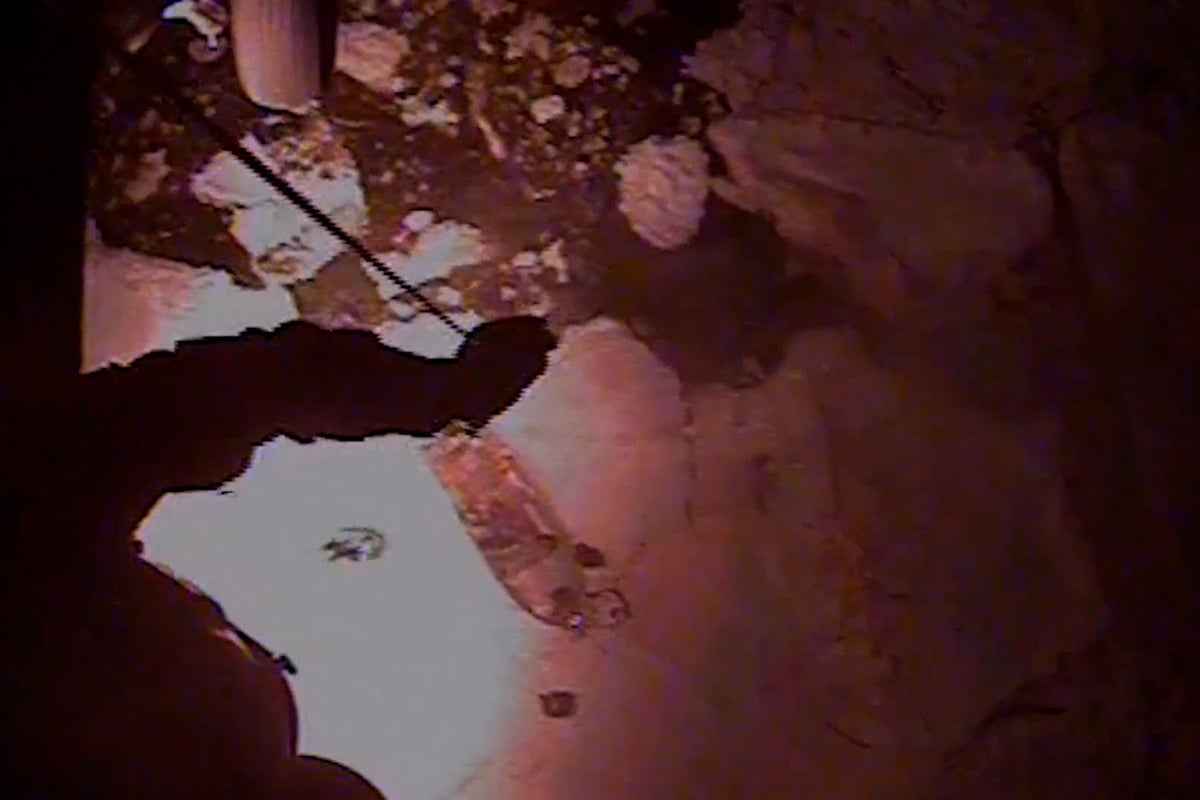
When the Coast Guard finally spotted them, the relief must have been physical, a sudden rush of heat that felt like a burn. But the rescue itself is a delicate dance. You cannot just land a heavy helicopter on a thinning ice floe. You cannot bring a heavy boat alongside without risking a collision that could shatter the very ground the victims are standing on.
It is a game of inches played in a world of miles.
The Thin Line Between Adventure and Tragedy
We often treat nature as a backdrop for our lives, a static screen against which we play out our hobbies. We forget that nature is a participant. It has no malice, but it has no mercy either.
The rescue of these four individuals is a testament to human grit and the sophistication of modern rescue technology, but it is also a somber reminder of our fragility. We are creatures of heat and light, trying to survive on a crust of frozen water in a landscape that would just as soon swallow us whole.
The boy will likely remember the sound of the rotors first. The rhythmic thumping of a Jayhawk helicopter is the sound of the cavalry arriving. It is the sound of the world coming back into focus.
As they were hoisted, one by one, away from the white silence and into the vibrating, noisy, wonderful warmth of the cabin, the ice floe continued its journey. It didn't care that it was now empty. It simply drifted further out, a small, white ghost dissolving into the black water.
We walk on thin ice every day of our lives. Usually, it's metaphorical—a job we might lose, a relationship on the brink, a health scare. But for twenty-four hours, for these four people, the metaphor became literal. They lived the nightmare of the shifting floor. They stared into the grey and waited for the world to stop sighing.
The next time you look out over a frozen lake, look past the beauty. Look at the edges. See the water that waits beneath the crust.
Remember the nine-year-old who spent a night in the heart of the winter and lived to tell the story. The ice is never as solid as it looks.