The air tastes like cold ash and scorched pine, even thirty miles from the frontline.
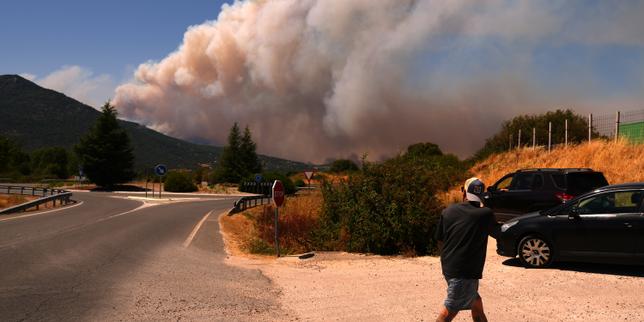
In the small village of Tres Cantos, just north of Madrid, Miguel stands on his roof with a garden hose. The plastic spray nozzle feels absurdly fragile against the backdrop of a sky that has turned a bruised, unnatural violet. To the north, the Guadarrama mountains—usually a jagged blue sanctuary from the city's suffocating summer heat—are swallowed whole by a wall of grey smoke so dense it looks solid enough to walk on.
Miguel isn't a firefighter. He’s a high school history teacher who spent his life savings on a modest brick home near the foothills. Today, he is a man watching the horizon burn.
Spain has entered a state of emergency.
The official announcements on the radio speak in the measured, clinical tones of bureaucracy. They talk about hectares, wind vectors, and deployed units. They call it the worst wildfire in the recorded history of the Madrid region. But numbers on a screen fail to capture the violent, roaring reality of a forest converting centuries of growth into thermal energy in mere seconds.
The fire didn't start with a massive explosion. It started, as these disasters almost always do, with a confluence of silent threats: a relentless heatwave that sapped every drop of moisture from the earth, pine needles turned to tinderbox dry matches, and a sudden, chaotic shift in wind direction.
In a normal summer, the pine forests of the Sierra de Guadarrama act as the lungs of the capital. Families flee the asphalt furnace of Madrid's city center on weekends to hike under the cool canopy, picnicking beside stone-lined streams. Now, that same canopy is fuel.
When the regional government declared the state of emergency, it was an admission of a sobering truth: standard firefighting operations were no longer enough. The blaze had crossed the threshold from a localized emergency into an atmospheric event, generating its own localized winds and pulling oxygen into its inferno like a giant, roaring lung.
Consider what happens when a wildfire reaches this scale:
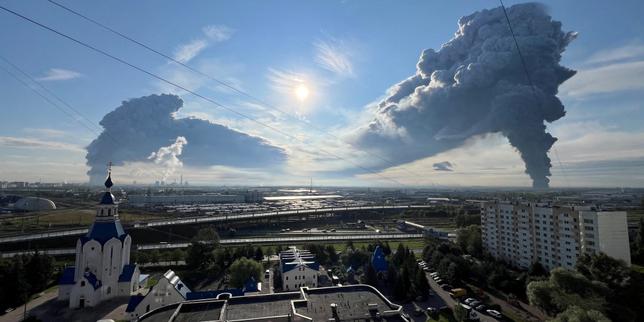
It creates microclimates. The sheer heat forces air to rise at terrifying speeds, creating massive smoke plumes known as pyrocumulonimbus clouds. These clouds don't bring rain. They bring lightning, sparking new fires miles ahead of the main front, trapping firefighters in sudden, unpredictable pockets of flame.
Military Emergency Units were deployed, their orange trucks snaking up the mountain roads alongside heavy water-bombing aircraft. But from the ground, the efforts feel agonizingly small against the scale of the destruction. A plane drops thousands of liters of water, and the moisture evaporates before it even hits the tree canopy, lost to the radiant heat.
Down in the streets of the evacuated villages, the human cost becomes immediate and sharp.
Evacuation centers set up in local sports halls are quiet. It’s not a dramatic silence, but a heavy, stunned hush. People sit on green folding cots, holding dog leashes, staring at their phones, waiting for updates that come too slowly. An elderly woman wraps a damp towel around her neck, her hands trembling as she explains to a volunteer that she forgot her medicine on the kitchen counter. She left the front door unlocked because the police shouted that they had two minutes to leave. Two minutes to summarize thirty years of living.
The fire is a warning shot.
For years, summer fires in southern Europe were framed as seasonal nuisances—tragic, but expected. A price paid for living in a Mediterranean climate. That perspective is dead. The intensity, frequency, and sheer velocity of these blazes have shifted. The dry season starts earlier, lasts longer, and bakes the soil until it shatters.
As night falls over the region, the sky doesn't turn dark. It turns a dull, flickering crimson.
Miguel shuts off his hose. The water pressure in the neighborhood has dropped to a trickle anyway. He climbs down the ladder, packs a single backpack with his passport, a photograph of his grandparents, and a clean shirt, then gets into his car. He leaves the headlights off for a moment, watching the red glow in his rearview mirror reflect off the silent homes of his neighbors.
The forest will take months, perhaps decades, to recover. The soil will remain scorched and vulnerable to winter mudslides. The homes may be rebuilt, but the illusion of security—the quiet belief that the mountains are merely a peaceful backdrop to human life—has burned away entirely.