The red clay of Georgia does not easily wash out of white linen. Neither, as it turns out, does the sudden, heavy weight of global survival once it settles onto the humid asphalt of downtown Atlanta.
For forty-eight hours at the end of October, the intersection of Peachtree Street and Andrew Young International Boulevard became the most heavily guarded square mile on earth. Snipers perched atop the glass-and-steel towers overlooking Centennial Olympic Park. Black Suburbans with diplomatic plates idled in unbroken chains outside historic hotels, their engines humming a low, anxious bass note that vibrated through the soles of ordinary commuters’ shoes. For another view, check out: this related article.
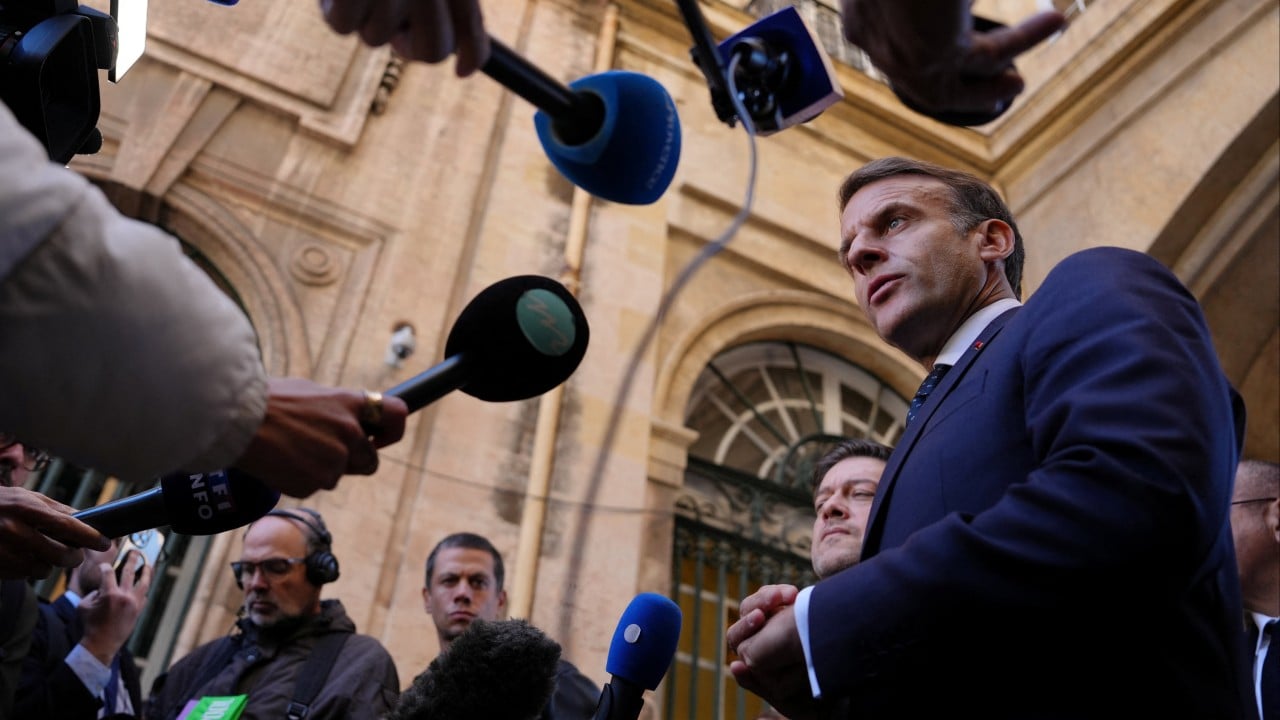
On paper, the event was a standard bureaucratic milestone. Secretary of State Marco Rubio was hosting the G20 Foreign Ministers’ meeting in Atlanta on October 30 and 31. In the dry lexicon of wire reports and diplomatic cables, it was a preparatory summit—a routine gathering of the world’s top diplomats ahead of the main leaders' summit during the United States' 2026 G20 presidency.
If you only read the press releases, you would think it was about communiqués, working groups, and bilateral pull-asides. Further analysis regarding this has been shared by BBC News.
You would be wrong.
To understand what actually happened in Atlanta over those two days, you have to step away from the podiums and look at the invisible threads connecting a conference room in Georgia to a kitchen table in Nairobi, a shipping dock in Rotterdam, and a shuttered factory in Ohio. Diplomacy is rarely about the people in the suits. It is about the people who never get invited into the room, yet pay the price for every comma misplaced in the final draft.
The Architecture of a Fragile Room
Picture a hypothetical diplomat—let’s call her Elena, a mid-level attaché from a European delegation—standing near a floor-to-ceiling window on the twentieth floor of an Atlanta hotel at 6:00 AM on October 30. Below her, the city is waking up. Delivery trucks are backing into alleys. A barista is unlocking a corner café.
Elena is holding a briefing binder three inches thick, and her hands are slightly shaking. Not from the cold—the Georgia autumn is stubbornly warm—but from the sheer, suffocating math of the Group of Twenty.
Together, the nations represented in the rooms below her account for roughly eighty-five percent of the world’s gross domestic product, over seventy-five percent of global trade, and nearly two-thirds of the human population. When these twenty chairs are occupied, the entire architecture of modern civilization is sitting at one table. When those chairs are pushed back in anger, the floor falls out from beneath ordinary lives thousands of miles away.
I have spent years watching international summits unfold from press risers and hotel lobbies, and there is a specific, unmistakable smell to high-stakes diplomacy. It smells like burnt espresso, expensive wool, and quiet panic. You learn quickly that the official agenda is merely a polite fiction. The real agenda is always the thing nobody wants to put in the headline: how to keep a fractured world from snapping in half.
Why Atlanta? That was the question whispered in the corridors of Brussels, Tokyo, and Brasília when Secretary Rubio’s State Department announced the venue. Washington, D.C., is the predictable stage for American statecraft—a city built of marble monuments designed to remind visitors of imperial permanence. New York has the United Nations, a familiar, almost worn-out theater for global grievances.
Atlanta is something else entirely. It is a city that burned to the ground in 1864 and rebuilt itself out of the ashes into the logistical nerve center of the American South. It is home to the world’s busiest airport, the headquarters of global corporate giants, and the cradle of the American Civil Rights Movement. By bringing the G20 Foreign Ministers to Atlanta on October 30 and 31, Rubio wasn't just choosing a convention center with good security sightlines. He was making a statement about American resilience, Southern economic muscle, and the messy, complicated reality of democratic progress.
The Ghost at the Banquet
To grasp why this particular October gathering carried such unusual voltage, you have to look at the calendar. The G20 was born out of crisis—first as a meeting of finance ministers after the Asian financial contagion of 1997, and then elevated to a leaders' summit in 2008 when the global banking system nearly imploded. It is, by design, a fire brigade.
Yet by the autumn of 2026, the fire brigade was arguing over what kind of water to use while the roof was actively smoking.
Consider what happens when twenty foreign ministers sit down in the same room during an era of hardened geopolitical blocs. Across the table from Marco Rubio—a former senator known for his hawkish clarity on Western Hemisphere security, supply chain independence, and strategic competition with Beijing—sat counterparts from nations with wildly diverging survival instincts.
There were the European ministers, exhausted by years of continental war and energy anxiety, desperate for assurances that the transatlantic alliance remained ironclad. There were the representatives of the Global South—India, Brazil, South Africa, Indonesia—nations tired of being treated like pawns on someone else's chessboard, demanding debt relief and climate financing that actually materializes rather than dissolving into empty pledges. And there were the rivals, watching every micro-expression for signs of American hesitation or overreach.
Think of the G20 table not as a boardroom, but as a crowded lifeboat in a swelling sea. Everyone agrees the boat shouldn't sink. Nobody agrees on who gets to hold the oars, who has to bail out the water, or whose luggage needs to be thrown overboard to keep the gunwales above the waves.
Inside the secure perimeter in Atlanta, the debates over those forty-eight hours centered on issues that sound bloodless on television news tickers: sovereign debt restructuring, critical mineral supply chains, artificial intelligence governance, and maritime security.
Let’s translate those terms into human flesh.
"Critical mineral supply chains" sounds like a spreadsheet. In reality, it is the reason a nurse in Chicago can or cannot afford an electric vehicle to get to her night shift, and whether a child in the Democratic Republic of Congo spends their youth breathing toxic dust in an unregulated cobalt pit.
"Maritime security" sounds like naval maps. In reality, it is the invisible shield that keeps a container ship carrying fertilizer from the Black Sea or microchips from East Asia from being blown out of the water, which directly dictates whether a loaf of bread in Cairo costs two pounds or ten.
When Secretary Rubio took the gavel in Atlanta, the unspoken question hanging over the sessions wasn't whether the ministers could agree on a lofty vision for the future. The era of utopian diplomacy is dead, buried beneath decades of broken treaties and weaponized interdependence. The question was far more primitive: Could they still talk to each other without lying about their intentions?
The Choreography of the Corridor
In my own experience covering international negotiations, the breakthrough—or the collapse—never happens when the cameras are rolling. The plenary sessions are pure theater, a series of pre-written monologues read aloud for domestic audiences back home.
The truth happens in the margins. It happens in the "pull-aside"—that frantic, ten-minute conversation standing near a potted ficus outside the restrooms, with only two ministers and two interpreters present.
During the October 30–31 meetings in Atlanta, those corridors were electric. Imagine the choreography required just to keep certain delegations from crossing paths unexpectedly, while simultaneously engineering "accidental" encounters between others. A single handshake in a hallway outside an Atlanta ballroom can move currency markets in Frankfurt before the diplomats have even reached the elevator.
Rubio’s approach as host carried a distinct stamp. Unlike traditional multilateralists who treat consensus as a sacred end in itself, his diplomatic style leaned heavily into transactional realism. In closed-door sessions, the message from the American chair was blunt: the United States would no longer subsidize a global order that allowed adversaries to exploit open markets while undermining democratic norms. If the G20 wanted to remain relevant, it had to produce tangible, verifiable outcomes—not thirty-page communiqués stuffed with diplomatic double-speak that everyone signs on Friday and ignores by Monday.
That candor was jarring to some of the veterans in the room. Diplomacy has long relied on "constructive ambiguity"—the art of using vague language so two mortal enemies can both claim victory. Stripping away that ambiguity is like turning on harsh fluorescent lights in a dimly lit restaurant; suddenly, you see every stain on the tablecloth and every wrinkle on your dinner companion's face.
Some ministers bristled. There were tense exchanges over trade tariffs, technology export controls, and the definition of fair development lending. At one point late on the first evening, as rain lashed against the windows of downtown Atlanta, word leaked to the press corps that negotiations over the draft chair’s statement had hit a wall. The sticking points were familiar yet intractable: how to characterize ongoing regional conflicts without triggering a walkout by Moscow or Beijing, and how to balance Western security concerns with the economic urgency of developing nations.
It is easy to feel cynical in moments like that. Sitting in a windowless media filing center at midnight, watching tired spokespeople dodge direct questions, you start to wonder if the whole apparatus is an expensive illusion. Why shut down half of a major American city, spend millions on security, and burn tons of jet fuel just to watch twenty smart people argue over adjectives?
The Quiet Gravity of Staying at the Table
Then you remember the alternative.
History is brutally clear about what happens when great powers stop talking. They start guessing. And when nations with nuclear arsenals and interconnected economies start guessing at each other’s intentions, miscalculation becomes inevitable.
In 1914, Europe didn't stumble into the First World War because its leaders wanted a four-year slaughter that would destroy four empires. They stumbled into it because they lacked a permanent room where foreign ministers were forced to sit across from one another, look into each other’s eyes, and test their assumptions before mobilizing their armies.
That is the hidden, unglamorous victory of a gathering like the Atlanta G20 Foreign Ministers’ meeting. Even when the communiqué is watered down, even when the press conferences are stiff and guarded, the sheer physical reality of twenty nations sitting in the same Georgia building for two days acts as a circuit breaker against catastrophe.
By the afternoon of October 31, the tension in Atlanta had shifted from sharp confrontation to exhausted pragmatism. Nobody got everything they came for. The Europeans didn't get unconditional guarantees on every trade dispute. The Global South didn't get a blank check for debt forgiveness. Washington didn't get unanimous alignment on its toughest strategic postures.
Yet agreements were forged in the quiet spaces between the headlines. Frameworks for coordinating responses to cross-border cyber threats moved forward. Commitments to diversify supply chains for essential medicines—a lesson burned into the global psyche during the pandemic years—found rare, unanimous backing. And perhaps most crucially, the pathway to the main G20 Leaders’ Summit was cleared of the immediate landmines that threatened to derail it before it even began.
What Remains When the Motorcades Leave
By late evening on October 31, the transformation of downtown Atlanta reversed itself with startling speed.
The police barricades were stacked onto flatbed trucks. The black Suburbans vanished down the ramps toward Hartsfield-Jackson International Airport, carrying ministers and their exhausted aides back across oceans and time zones. On Peachtree Street, kids in Halloween costumes began appearing on the sidewalks, their plastic pumpkins swinging under the streetlights just hours after armoured limousines had occupied the exact same lanes.
That juxtaposition—the surreal collision of mundane neighborhood life and high-stakes global statecraft—is the whole point.
When we read a headline like "Rubio to host G20 Foreign Ministers’ meet in Atlanta on Oct 30-31," our eyes tend to glaze over. We treat foreign policy like a distant weather system happening on another planet. We forget that the weather eventually lands on our own roofs.
Every quiet morning you wake up to lights that turn on, grocery shelves that are stocked, and a world that has not erupted into a global conflagration is, in part, the invisible dividend of grueling, imperfect, unglamorous rooms like the one in Atlanta. The diplomats didn't save the world over those two days in October. They didn't erase centuries of rivalry or solve the structural inequalities of the global economy.
They simply kept the doors from slamming shut.
Down on Peachtree Street, long after the last diplomatic flight had lifted off into the Georgia night, a street sweeper rolled slowly past the convention center, its rotating brushes scrubbing away the tire marks left by twenty nations—clearing the asphalt for tomorrow morning’s commute, leaving the city quiet, intact, and still standing.