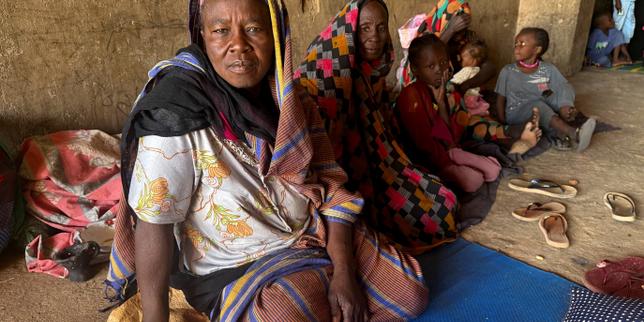
Sudan is tearing itself apart, and the international community is watching it happen in real time. For months, the global spotlight flickered over the bloodbath in Darfur and the ruin of Khartoum. Now, the crosshairs have shifted to El Obeid. The United Nations just issued a chilling "red alert" for the capital of North Kordofan state, warning that an imminent, large-scale massacre is brewing. If the Rapid Support Forces (RSF) breach the city defenses, we aren't just looking at another battle. We are looking at a predictable, preventable slaughter of over half a million people.
UN High Commissioner for Human Rights Volker Türk didn't mince words during an emergency session in Geneva. He called the situation an unfolding catastrophe. The warning signs aren't subtle. They mirror the exact playbook the RSF used before overrunning El Fasher last year, an assault that left thousands dead and displacement camps in ashes. El Obeid has been choked by siege-like conditions for 18 months, but the pressure turned lethal over the last few weeks.
We need to talk about what is actually happening on the ground right now, why this strategic hub matters, and what happens if the world keeps dragging its feet.
The Grim Reality of the Siege
Living in El Obeid right now means living under a constant rain of explosives. The city is almost completely encircled by RSF troops. Instead of a direct infantry push, the militia is using an aggressive campaign of drone strikes and artillery to soften the defenses and terrorize the population.
Between June 6 and June 28, the UN documented at least 15 major drone attacks inside the city. Those strikes killed at least 45 civilians and injured dozens more. The actual numbers are almost certainly higher because tracking casualties in a besieged city is nearly impossible. These aren't accidental hits on military outposts. The drones are deliberately striking markets, schools, residential neighborhoods, and places where families gather.
The psychological toll is massive. People don't know if a trip to buy bread will be their last. The RSF aims to break the city's will to resist before the main ground assault even begins.
Weapons Aimed at Water and Power
If you want to force a city of 500,000 people to surrender, you cut off their life support. That is exactly what the blockade is doing. Drone strikes have methodically targeted the infrastructure that keeps ordinary people alive.
The main power station is heavily damaged. Fuel depots are burning. At least 13 fuel stations in El Obeid and nearby Al-Rahad were smashed by strikes recently. No fuel means no generators. No generators means hospitals can't run life-saving equipment, and water pumps stop working.
The price of a simple jerry can of clean water doubled in a matter of days. Food prices are skyrocketing out of reach for families who haven't earned an income in over a year. The city is running on fumes, and local aid workers report that vital supplies will completely run out within weeks.
The Ghosts of El Fasher
Why is the UN panicking right now? Because we already saw the movie, and the ending is horrific.
Look at what happened in El Fasher last October. The RSF encircled the city, cut off aid, systematically destroyed the water and power grids, and pounded civilian areas with artillery. When the defenses finally collapsed, the militia ran amok. The UN estimated that at least 6,000 people were slaughtered in just three days. Mass executions, systemic sexual violence, and the burning of the Zamzam displacement camp followed.
The strategy in El Obeid is identical. Mona Rishmawi from the UN's Independent International Fact-Finding Mission pointed out that this modus operandi is a signature. First comes the encirclement, then the disruption of food and water, followed by relentless bombardment, and finally, indiscriminate atrocities against civilians. The warning signs are flashing red, and ignoring them is a choice.
A Crucial Humanitarian Lifeline Under Threat
El Obeid isn't just another dot on the map. It sits roughly 250 kilometers southwest of Khartoum and serves as the primary commercial and administrative heart of central Sudan. More importantly, it is the logistical gateway for humanitarian operations across the entire Kordofan region.
If El Obeid falls, the aid network for millions of people collapses. Right now, the city shelters about 105,000 people who already fled violence and starvation in other parts of the country. They ran to El Obeid looking for safety, only to find themselves trapped in a new cage.
One recent drone strike hit the city's largest camp for displaced people, where 72,000 human beings are trying to survive. A humanitarian worker was among the dead in recent bombardments. The message from the RSF is clear: no one is safe, and nowhere is sacred.
The International Blind Spot and Foreign Weapons
The war in Sudan started in April 2023 as a power struggle between General Abdel Fattah al-Burhan's Sudanese Armed Forces (SAF) and Mohamed Hamdan Dagalo's RSF. It quickly devolved into the world's worst humanitarian crisis. Nearly 13 million people are displaced. Famine is actively killing children. Yet, Western capitals remain largely silent or ineffective.
Part of the paralysis stems from messy international geopolitics. The drones killing civilians in El Obeid aren't built in Sudan. Specialized, sophisticated weaponry flows into the country constantly. UN experts and human rights organizations have repeatedly pointed fingers at the United Arab Emirates for supplying the RSF with advanced hardware, a claim Abu Dhabi denies. On the flip side, countries like Saudi Arabia and Egypt back the SAF.
Western nations are hesitant to push hard against regional powers due to commercial and political ties. British officials faced intense criticism in parliamentary hearings for allegedly ignoring early intelligence about the El Fasher massacres to preserve relations with external actors. This diplomatic tiptoeing has a direct cost, and that cost is paid in Sudanese lives.
What Needs to Happen Instantly to Stop the Slaughter
Statements of deep concern from Geneva won't stop a drone strike. If the international community wants to prevent a repeat of the Darfur atrocities, the strategy must change immediately.
First, global leaders must apply direct, unapologetic pressure on the external states funding and arming the RSF. The flow of advanced weapons and drone tech has to be choked off at the source. If you don't stop the supply chain, you can't stop the violence.
Second, the UN Security Council must expand the existing Darfur arms embargo and International Criminal Court jurisdiction to cover the entire territory of Sudan. Local commanders need to know that their actions are being documented and that a prison cell in The Hague awaits them.
Third, regional bodies like the African Union and influential global powers must demand an immediate humanitarian truce specifically for El Obeid. Safe corridors must be established and guaranteed so civilians can leave the combat zone if they choose, and aid trucks must be allowed to enter without being targeted by drones.
The world looked away during the horrors of El Fasher. It cannot look away from El Obeid. The civilian population is trapped, the supplies are dwindling, and time is officially up.