The Roar Before the Kickoff
The pitch is quiet for twenty minutes.
It is a specific, tense silence, the kind that settles over eighty thousand people huddled shoulder-to-shoulder in a steel bowl while billions watch through glass screens across every continent. The grass is pristine. The chalk lines are sharp. But before a single leather boot touches the ball, the stadium vibrates with a completely different kind of energy.
It is the bass line.
We tend to remember the World Cup through a narrow lens of athletic drama: a late-minute penalty kick, a goalkeeper diving into the turf, tears streaming down the face of a veteran defender. Yet, if you close your eyes and think back over the last few decades, the soundtrack hits you first. The brassy horn stabs. The thunderous drum tracks beat out rhythms designed to move muscles across culture lines.
Sports alone didn't turn this tournament into a global religion. Music did.
When pop icons step onto soccer’s grandest stage, they aren’t just performing a half-time show or opening ceremony set. They are performing a delicate, terrifying act of cultural diplomacy. They are tasked with making a kid in Buenos Aires, a family in Seoul, and a bar full of fans in London feel the exact same chill at the exact same second.
The Golden Era of the Anthems
To understand how we arrived at stadium-filling spectacles featuring pop royalty and puppet icons, you have to go back to the moment the spectacle broke free from marching bands and regional folk songs.
Think of 1990 in Italy, or 1998 in France. Before the turn of the millennium, tournament music felt localized, almost modest. Then came a seismic shift in how global entertainment functioned.
Consider Shakira in 2010.
When "Waka Waka (This Time for Africa)" dropped ahead of the tournament in South Africa, it was met with immediate, fiery debate. Critics questioned whether a global pop star born in Colombia should lead the anthem for the first African World Cup. The stakes were impossibly high. Failure meant cultural alienation on a global broadcast; success meant immortality.
Shakira didn't fight the pressure with corporate polish. She leaned into infectious, celebratory movement and partnered with Freshlyground, an Afro-fusion band from Cape Town. She brought a kinetic, joyful humanity to a broadcast usually dominated by rigid corporate sponsors.
The song didn't just top charts. It seeped into the marrow of daily life. Schoolchildren practiced the choreography in dusty courtyards. Taxi drivers cranked it through blown-out speakers in Johannesburg. It became a unifying heartbeat.
That is the hidden power of the World Cup stage. It strips away the cynical armor of the music industry. On that grass, a song isn't trying to sell an album; it's trying to hold hands with a giant, messy world.
When Pop Royalty Met the Pitch
If Shakira proved that a song could define a summer, the icons who followed proved that the stage could bear any level of theatrical ambition.
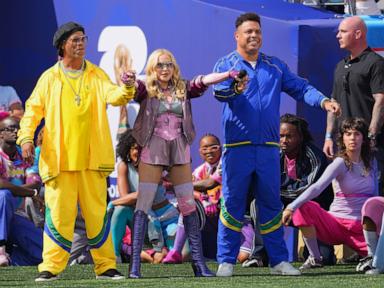
Take Madonna.
When her name enters the orbit of global sporting events, the atmosphere shifts. Madonna has built a career out of subverting expectations, pushing aesthetic boundaries, and demanding absolute precision. Placing her style of theatrical drama alongside the raw, unpredictable adrenaline of international football created a strange, intoxicating friction.
Soccer fans are notoriously picky. They don't like interruptions to their sport. They scoff at glitz if it lacks soul. Yet, when an artist of Madonna’s magnitude commands the light, the tribal divisions of club and country momentarily dissolve. You aren't a supporter of Brazil or Germany for those fifteen minutes; you are an eyewitness to spectacle.
The modern World Cup stage transformed into a runway where pop royalty had to prove their worth to an audience that didn't buy tickets to see them.
Think about that pressure.
In a standard arena show, every person in the seats bought a ticket specifically for you. They know every word. They love your flaws. At the World Cup, half the audience is nervous about a hamstring injury to their star striker, and the other half is drunk on nerves and cheap beer.
You have to win them over from scratch. Every single time.
Puppets, Chaos, and Unexpected Joy
Then came the moments that defied all logical corporate planning.
Picture this: among the multimillion-dollar light rigs, precision choreography, and global superstars, someone greenlit the Muppets.
It sounds absurd on paper. A multi-billion-dollar athletic enterprise built on intense national pride sharing oxygen with felt puppets. Yet, when Kermit, Miss Piggy, and the gang joined the World Cup conversation across broadcasts and promotional spectacles, something remarkable happened.
The tension snapped.
International sports can be agonizingly serious. Geopolitics bleeds into the matches. Historical rivalries resurface. Millions of dollars hang on referees' whistle blows. In the middle of all that suffocating intensity, the Muppets brought back a childlike simplicity that soccer often loses in its quest for commercial dominance.
They reminded everyone watching that, at its absolute core, this is still just a game played by adults chasing a leather ball.
That contrast—the hyper-intense world of elite athletics mixed with pure, unadulterated absurdity—is where the magic lives. It proves that the tournament stage isn't just a marketing vehicle; it's a living room where every flavor of human culture, high and low, gets to sit on the same couch for a month.
The New Guard and Global Stardom
As the digital age dismantled old media empires, the music of the World Cup had to evolve again. Enter the era of BTS and Justin Bieber.
When BTS entered the World Cup sphere, the internet practically fractured. The South Korean group didn't just bring music; they brought an unprecedented global infrastructure of fandom. Suddenly, the audience watching the tournament expanded far beyond traditional sports enthusiasts. Millions of young people who had never watched ninety minutes of tactical football were suddenly glued to broadcast schedules, waiting to see their idols champion themes of global unity and environmental awareness.
Bieber brought a different flavor of modern stardom—a child prodigy who grew up in the harsh glare of public scrutiny, wielding a hit-making machine capable of transcending language barriers.
Their inclusion signaled a total transformation in how global events communicate. The old boundaries between sports fan and music listener vanished.
Consider what happens when a K-pop stadium anthem plays over highlights of a underdog victory:
- Language ceases to be a barrier, replaced by shared melodic cues.
- Social media feeds collapse into a single stream of global reaction.
- A young viewer in Tokyo feels an identical emotional spike as a viewer in Rio.
The stage is no longer just physical turf in a host nation. It is a digital nervous system stretching across six billion smartphones.
The Human Stakes Behind the Spectacle
It is easy to be cynical about all of this.
You can look at the massive brand partnerships, the dizzying production budgets, and the political posturing of international sports federations and see only cold commercialization. You wouldn't be entirely wrong. The money involved is staggering. The corporate machinery is terrifyingly efficient.
But human beings are resiliently emotional creatures. We have an uncanny ability to hijack corporate spaces and fill them with authentic meaning.
I remember watching a broadcast years ago in a crammed basement apartment with six friends, each from a different country. We had spent the entire afternoon arguing about foul calls, historical grudges, and political disputes. We were exhausted, tense, and ready to snap at each other over the slightest disagreement.
Then the musical sequence began before the final match.
The cameras panned across the crowd. In the stands, you saw mothers with painted faces holding sleeping children. You saw old men wiping away tears as their national colors filled the screens. The music swelled, simple and sweeping.
And in that drafty basement, six people who couldn't agree on a single political boundary suddenly slung their arms around each other's shoulders and sang along to a chorus in a language none of us spoke fluently.
That isn't marketing. That is raw, irreplaceable human need.
We live in a world that is fractured into infinite subcultures, algorithmic echo chambers, and isolated screen time. We rarely do anything together anymore. We don't watch the same shows at the same time. We don't read the same news. We inhabit customized, solitary realities.
The World Cup performance is one of the last remaining places where the whole planet looks at the exact same spot at the exact same second.
The Final Chord
When the lights go down on the opening ceremony and the pop stars step off the grass, the stage disappears in minutes. Rollers flatten the turf. The referees walk out. The real drama of win and loss begins.
Yet the songs linger long after the tournament trophy has been hoisted into the night air.
Years later, you won't remember the exact score of a random group-stage match. You won't remember who took a yellow card in the sixty-fourth minute. But when a specific horn line plays on a radio in a grocery store ten years down the road, you will instantly smell the summer heat. You will feel the cold drink in your hand. You will remember who you were sitting next to when the world felt briefly, impossibly united.
That is why artists take that field, despite the terrifying stakes and the absurd pressure. They aren't just filling time before a soccer match. They are writing the soundtrack to our collective memory.