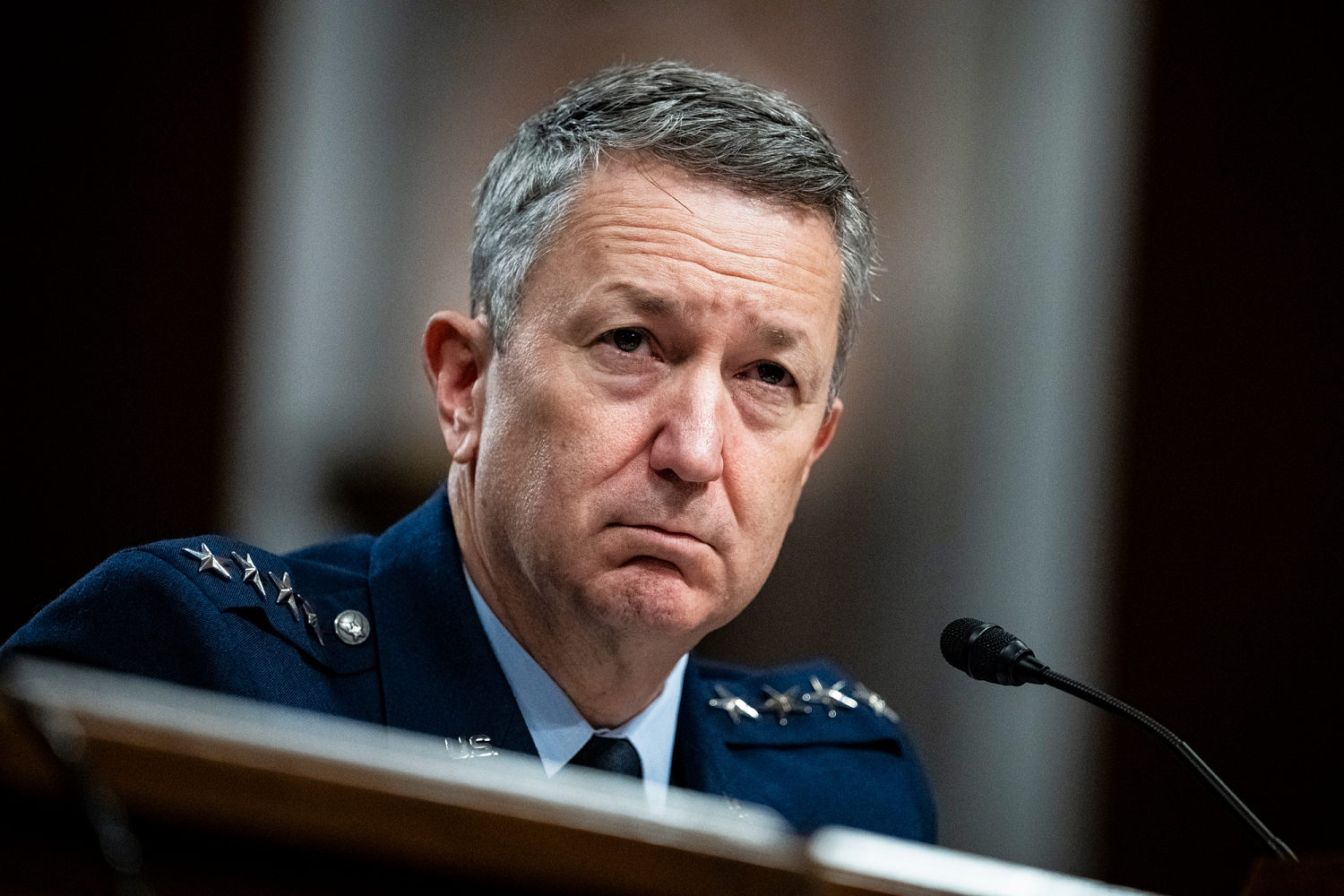
The headlines read like a soothing bedtime story. Chairman of the Joint Chiefs of Staff General Dan Caine penned a letter assuring lawmakers that the military has zero plans to march armed personnel into voting booths. Pundits sighed in relief. Congress patted itself on the back for asking the tough questions. Everyone went home believing the constitutional guardrails held firm against the specter of jackbooted soldiers hovering over ballot boxes.
It is a comforting illusion. And it is completely wrong.
By fixating on the cinematic fantasy of active-duty infantrymen standing guard next to volunteer poll workers, political observers are staring at the empty hand while the dealer switches the deck. The lazy consensus of mainstream coverage assumes that if troops aren't physically present inside a precinct, the military cannot touch the electoral ecosystem. That assumption ignores how modern administrative power actually operates, relying on legal gray areas, statutory workarounds, and the quiet erosion of domestic boundaries.
Let us look past the general's reassuring talking points. The real danger to election integrity does not stem from a battalion seizing a local community center. It stems from the weaponization of bureaucratic legal theories that bypass traditional statutory tripwires entirely.
Federal law explicitly criminalizes stationing armed men at polling places. Statutes like 18 U.S.C. section 592 were written precisely to prevent military coercion of voters. General Caine knows this. Secretary of Defense Pete Hegseth knows this. Any commander with a basic grasp of the Uniform Code of Military Justice understands that marching soldiers into a civilian precinct is a blatant violation of federal code. That is why the military can comfortably promise they have no plans to do it. It is the easiest promise in the world to keep because it was never the actual playbook.
The actual playbook looks entirely different, and it plays out far away from the voting booth.
Imagine a scenario where federal authorities reinterpret existing emergency statutes to federalize National Guard units under administrative pretexts, deploying them not inside polling places, but strategically around critical infrastructure, logistics hubs, and central tabulation facilities under the guise of public safety or border enforcement. They do not need to intimidate a single voter in line at a suburban high school if they can disrupt the secure transit of mail-in ballots or tie up election administration boards in endless administrative gridlock.
We have already seen the groundwork for this kind of jurisdictional push-and-pull. Recent legal battles over federalized National Guard deployments in urban centers demonstrate how easily executive authority can stretch statutory limits. When federal courts attempt to enforce the boundaries of the Posse Comitatus Act, the administration counters with sweeping interpretations of executive power that attempt to neuter judicial oversight. If those legal arguments succeed on appeal, the statutory wall protecting elections from domestic military meddling begins to crumble.
The debate in Washington remains trapped in a 19th-century mindset. Lawmakers draft letters demanding guarantees against old-school occupation, treating the military as a monolithic actor that either obeys or revolts. Meanwhile, the real pressure points of an election cycle are decentralized, digitized, and deeply fragile.
Focusing entirely on whether a soldier will stand next to a voting machine ignores the structural vulnerability of the administrative state. Elections are won or lost weeks before Election Day through voter roll challenges, legal injunctions, mail-in ballot litigation, and the paralysis of local canvassing boards. If an administration wants to tilt the playing field, it does not need a rifle. It needs a legal brief and a compliant bureaucracy.
Relying on high-ranking generals to issue reassuring letters is a substitute for rigorous oversight. It lets political actors off the hook by substituting PR statements for institutional defense. When democratic norms fray, they do not snap under the weight of an overt military coup. They dissolve quietly behind a wall of legal technicalities, executive memos, and misplaced public complacency. Stop asking if troops are going to the polls. Start looking at who controls the machinery behind them.