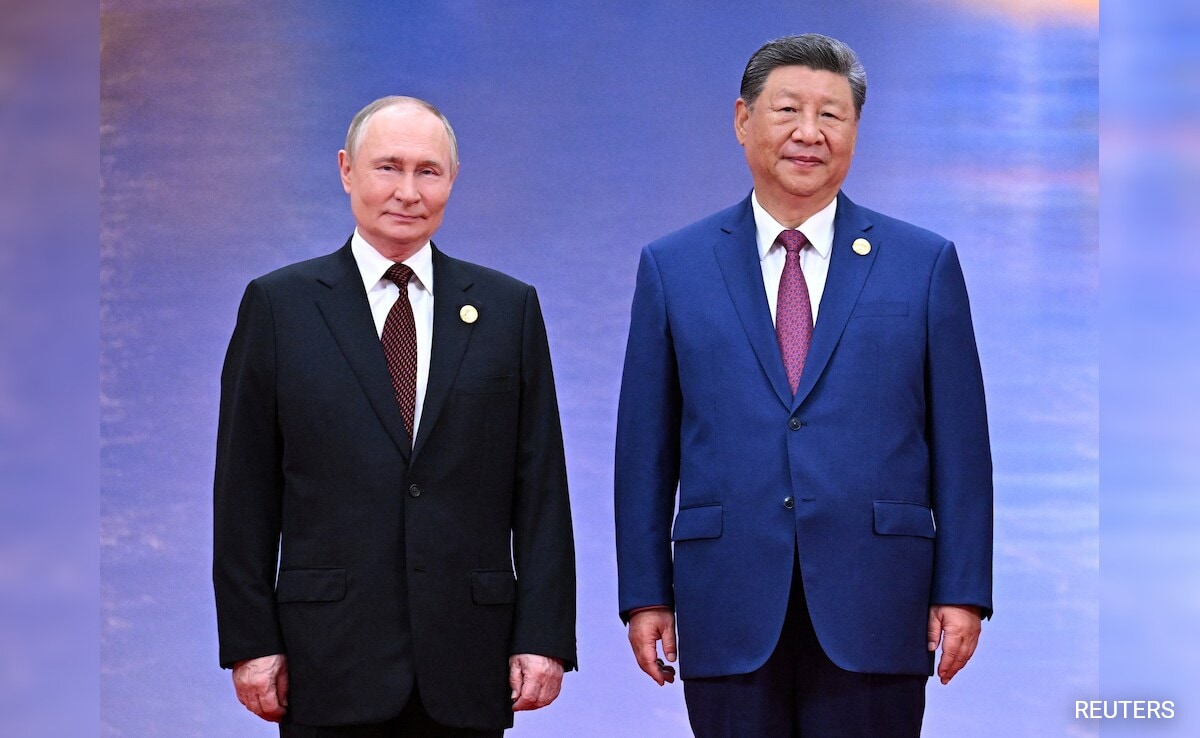
The media is currently swooning over the optics of Beijing. They see the gold-trimmed halls, the long red carpets, and the performative "Three Autumns" rhetoric and conclude that we are witnessing a monolithic Eurasian bloc. They call it a "no-limits" partnership. They are wrong. What we are actually seeing is a desperate, transactional hedge between two aging powers that trust each other about as far as they can throw a T-90 tank.
Western analysts love a scary story. It sells subscriptions. But if you look past the handshakes and the choreographed tea ceremonies, the math does not add up. This isn't a marriage of passion or even a marriage of convenience. It’s a temporary bunking arrangement in a storm shelter. If you liked this article, you might want to look at: this related article.
The Asymmetry Trap
The "lazy consensus" suggests this is a meeting of equals. It isn’t. Russia’s entire economy is now smaller than that of Guangdong province. When Putin walks into the Great Hall of the People, he isn't a partner; he's a supplicant. He is looking for a lifeline for a "Special Military Operation" that has drained his coffers and isolated his banks.
China, meanwhile, is playing a much longer, colder game. Xi Jinping does not want a "limitless" friendship with a pariah state. He wants a cheap gas station. For another look on this event, check out the latest update from TIME.
Russia has been forced to pivot its entire energy infrastructure toward the East. This gives Beijing incredible leverage. I have spent years watching trade negotiations in emerging markets, and the pattern is always the same: when one party has no other buyers, the "friendship price" is whatever the buyer says it is. China is buying Russian crude at steep discounts while forcing Moscow to accept the Yuan—a currency that Putin can't easily spend anywhere else. This isn't "bonhomie." It’s a hostile takeover of the Russian treasury.
The Power of Siberia 2 Pipe Dream
Let’s talk about the literal pipes. The media focuses on the Power of Siberia 2 pipeline as a symbol of unity. In reality, it’s a symbol of Russian frustration. China has been dragging its feet on this project for years. Why? Because they don't need it as much as Russia needs to sell it.
Beijing is diversifying its energy imports faster than most realize. They are courting Central Asia and investing heavily in domestic renewables. By the time that pipeline is actually operational, China will have even more leverage to squeeze Gazprom’s margins into nothingness. Putin is trading Russia’s long-term sovereignty for short-term survival.
Technology is the Real Battlefield
Everyone asks: "Will China send weapons to Russia?" This is the wrong question. China is too smart to trigger secondary sanctions from the US and EU—their two largest export markets—just to help Putin take a few more kilometers of Ukrainian soil.
The real story is the "dual-use" trickle. It’s the chips in washing machines, the CNC machine tools, and the navigation components that find their way through shell companies in Kyrgyzstan and the UAE.
But even here, there is friction. China is terrified of Russia’s history of intellectual property theft. For decades, the Kremlin reverse-engineered Chinese tech (and vice versa). Now that China has surpassed Russia in drone tech, AI, and hypersonic materials, the gates are closing. China isn't going to hand over its top-tier military secrets to a neighbor that shares a 4,000-kilometer border and a history of territorial disputes.
The "No Limits" Myth
The phrase "no limits" was a marketing blunder by the Chinese Foreign Ministry that they have been trying to walk back ever since.
- The Border Issue: Mention Vladivostok to a Chinese nationalist and they will call it Haishenwai. The territorial grievances of the 19th century have not been forgotten in Beijing; they are just on pause.
- Central Asia Friction: Russia views the "Stans" as its backyard. China views them as the vital corridor for the Belt and Road Initiative. Every rail line China builds in Uzbekistan is a nail in the coffin of Russian influence in its "near abroad."
- Nuclear Anxiety: Beijing was visibly annoyed by Putin’s nuclear saber-rattling. China’s brand is "stability for business." A tactical nuke in Europe ruins the global trade environment that China relies on to keep its 1.4 billion people from revolting.
Stop Asking if They are Allies
The question "Are they forming a new Axis?" is fundamentally flawed. An alliance, like NATO, requires a treaty and a commitment to mutual defense. This is a non-aggression pact with fringe benefits.
The "People Also Ask" sections of the internet are obsessed with whether this duo can "topple the Dollar." Let’s be brutally honest: No. The Yuan accounts for a fraction of global reserves. Even Russian companies prefer the Euro and Dollar for their stability when they can get them. You cannot replace a global reserve currency with a currency that is subject to the whims of a single party’s capital controls.
The Cost of the "Friendship"
There is a massive downside to this alignment that the pro-China hawks ignore. By tethering himself to Putin, Xi is accelerating "de-risking" in Europe. For years, Germany and France tried to play both sides. But the optics of Xi hugging a man wanted by the ICC has made that position politically toxic.
China is sacrificing its relationship with the European consumer—the very people who buy their EVs and smartphones—to maintain a strategic buffer with a failing petro-state.
Imagine a scenario where the Russian economy finally buckles under the weight of its war footing. China will be left holding the bag of billions in unpaid infrastructure loans and a chaotic nuclear state on its doorstep. That is not a "victory." It’s a liability.
The Strategy for the West
We should stop trying to "split" them. That is a Cold War tactic that won't work in a multipolar world. Instead, we should let them exhaust each other.
The more dependent Russia becomes on China, the more the Russian elite will resent their status as a vassal state. I’ve spoken to Russian oligarchs who are horrified that their children, who used to summer in London and ski in Courchevel, are now forced to do business in provincial Chinese cities where they are treated as second-class citizens. That resentment is a slow-acting poison.
The "Three Autumns" sentiment is a poetic mask for a grim reality. Putin is looking for a savior. Xi is looking for a servant. Eventually, the servant realizes they are being fleeced, or the savior realizes the servant is too expensive to keep.
History shows us that every time these two giants have tried to get close, they ended up in a border skirmish or a decades-long cold shoulder. This time is no different. The "bonhomie" isn't a new world order; it's a temporary truce between two empires that are terrified of being alone.
Stop looking at the smiles. Look at the balance sheets. The math says this "alliance" is a house of cards.