Beijing and Tokyo will not reproduce the 2014 APEC diplomatic thaw because the political, economic, and military foundations that enabled that brief truce no longer exist. Twelve years ago, Chinese President Xi Jinping and then-Japanese Prime Minister Shinzo Abe met in Beijing under severe economic pressure and managed to engineer a cold, functional reset. Today, Sanae Takaichi’s ideological commitments, structural supply chain decoupling, and hardened military postures around Taiwan make a repeat of that choreography virtually impossible.
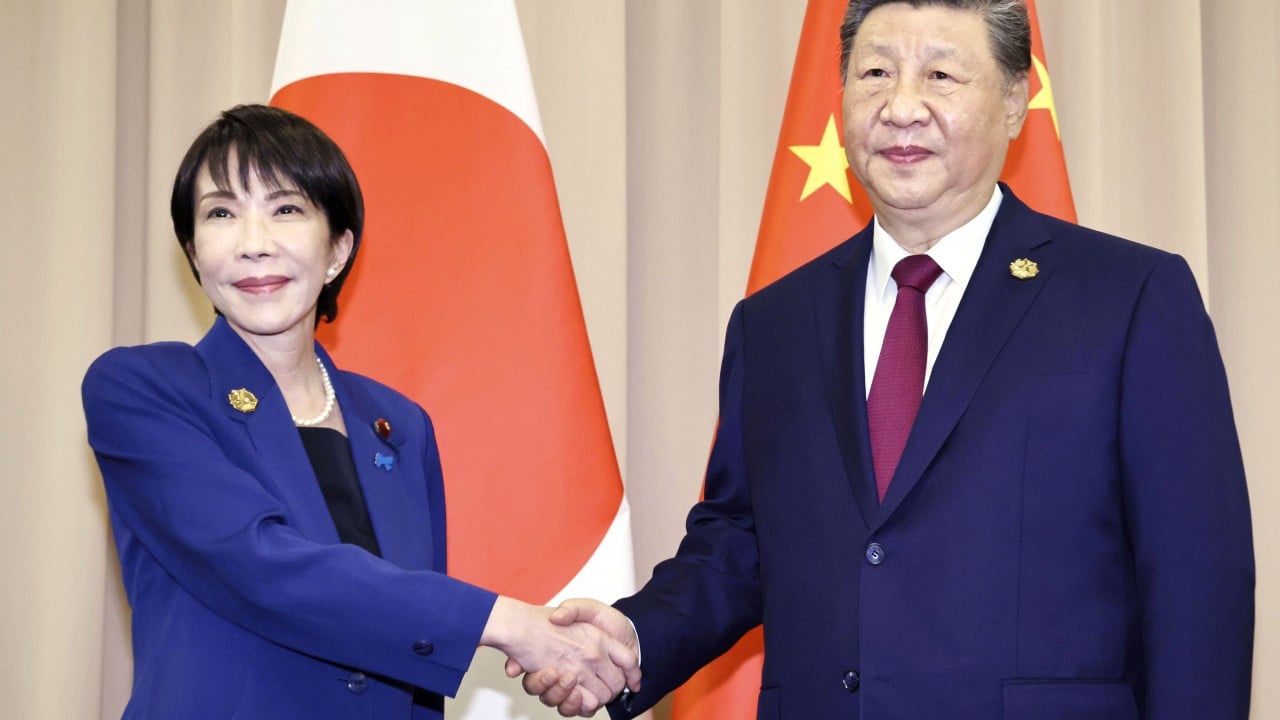
History rarely offers clean sequels. Yet whenever friction between Asia’s two largest economies reaches a boiling point, diplomatic observers reflexively reach for the November 2014 playbook. They remember the stiff, unsmiling handshake inside the Great Hall of the People, a photograph that looked less like a reconciliation and more like a hostage exchange. That image became shorthand for pragmatic crisis management in East Asia. You might also find this related article interesting: The Structural Viability of a Philippine-Based ASEAN Maritime Centre.
It was an illusion then, and it is a dangerous distraction now. Treating the 2014 APEC summit as a repeatable template ignores how fundamentally both nations have changed over the past decade.
The Anatomy of the 2014 Beijing Illusion
To understand why the formula is broken, you have to look at what actually happened in autumn 2014. Bilateral ties had been frozen solid for over two years following Tokyo’s September 2012 decision to nationalize three of the disputed Senkaku Islands, known in China as the Diaoyu Islands. Violent anti-Japanese protests had erupted across Chinese cities, Japanese factories were vandalized, and high-level ministerial contact had effectively vanished. As extensively documented in recent articles by Reuters, the effects are notable.
Both leaders needed an off-ramp, and both possessed the specific domestic leverage required to take it. Xi Jinping was only two years into his tenure, consolidating power through an aggressive anti-corruption campaign while trying to position China as a credible host for the Asia-Pacific Economic Cooperation summit. Playing host to a major regional gathering while refusing to speak to the leader of Asia’s second-biggest economy looked petty rather than powerful.
Shinzo Abe faced his own arithmetic. Returning to office in late 2012, Abe had staked his entire political survival on Abenomics, an ambitious program of monetary easing, fiscal stimulus, and structural reform. Japanese corporate titans—led by the powerful business lobby Keidanren—were hammering the Prime Minister’s office behind closed doors. Chinese consumers were boycotting Japanese cars, customs clearance for Japanese components was slowing to a crawl, and corporate earnings were taking direct hits.
The resulting four-point consensus released on November 7, 2014, was a masterpiece of constructive ambiguity. Neither side surrendered its core territorial claim. Instead, both governments agreed to acknowledge that "different positions" existed regarding the recent tensions in the East China Sea, while pledging to resume political, diplomatic, and security dialogue.
Why Constructive Ambiguity Worked Once
Diplomats call it creative wording; veteran reporters call it kicking the can down a very short road. The 2014 communiqué succeeded solely because both sides agreed to pretend the other had blinked. Beijing told its domestic audience that Tokyo had finally admitted a territorial dispute existed, a concession Japan had officially denied for decades. Tokyo told its voters that it had merely acknowledged a difference of opinion without altering its sovereign administration of the islands.
That linguistic sleight of hand required two ingredients that have vanished from the regional equation. First, it demanded a willingness in Beijing to tolerate semantic gray zones for the sake of economic stability. Second, it required a Japanese leader with enough political capital among conservative nationalists to absorb domestic backlash for shaking Xi’s hand without securing a single concrete Chinese concession on maritime incursions.
Even then, the thaw barely survived the flight home. Chinese coast guard vessels resumed patrols near the Senkaku Islands within weeks, and bilateral trust remained near zero. What the 2014 APEC summit actually achieved was not peace, but a temporary suspension of open economic warfare so corporate supply chains could keep humming.
Sanae Takaichi Is Not Shinzo Abe
Analysts who assume Sanae Takaichi can simply dust off her late mentor’s diplomatic playbook fundamentally misread both politicians. Shinzo Abe was a deeply committed conservative nationalist, yet he was also a cold-blooded political realist who understood when to subordinate ideology to statecraft. After visiting the controversial Yasukuni Shrine in December 2013—a move that infuriated Beijing and drew a rare public rebuke from Washington—Abe never returned to the shrine while in office. He made a calculated trade, sacrificing symbolic gestures at Yasukuni to unlock economic stabilization with China and maintain alignment with the United States.
Takaichi operates from a very different political mold. Throughout her career, she has built her brand on ideological consistency rather than transactional flexibility. Her repeated, unapologetic visits to Yasukuni Shrine as a cabinet minister were not accidental provocations; they were core declarations of political identity aimed directly at the Liberal Democratic Party’s conservative base.
In Chinese state media and foreign ministry briefings, Takaichi is viewed not as a pragmatic dealmaker who can be nudged toward compromise, but as a hardline revisionist whose worldview is incompatible with Beijing’s red lines. When a leader’s domestic political legitimacy rests on refusing to bend to foreign pressure, the room for backchannel compromise shrinks to millimeters.
The Structural Collapse of Economic Deterrence
In 2014, economics acted as the ultimate circuit breaker. When political rhetoric overheated, boardrooms in Tokyo and Shanghai intervened to cool things down. Today, that circuit breaker has been systematically dismantled by both governments in the name of economic security.
Over the past several years, Japan has fundamentally rewritten its industrial policy to reduce reliance on Chinese manufacturing and raw materials. From subsidizing semiconductor fabrication plants in Kumamoto to tightening export controls on advanced chipmaking equipment alongside the United States and the Netherlands, Tokyo now treats economic interdependence with China as a strategic vulnerability rather than an asset.
Beijing has executed a mirror-image strategy. Xi Jinping’s push for dual circulation and technological self-reliance has steadily reduced China’s dependence on Japanese intermediate goods, machine tools, and consumer brands. Japanese automakers, once dominant in Chinese showrooms, have watched their market share evaporate against domestic Chinese electric vehicle manufacturers.
Consider a hypothetical example of how this shift alters crisis diplomacy. Suppose a major maritime incident erupts near the southwestern islands tomorrow. In 2014, a coalition of Japanese auto executives and electronics manufacturers would have immediately demanded emergency diplomatic outreach to protect their Chinese factories and retail networks. Today, those same executives are already actively executing "China Plus One" diversification strategies, moving assembly lines to Southeast Asia and India. The corporate lobby that once forced Tokyo to the negotiating table has lost both its urgency and its clout.
The Rare Earths and Export Control Trap
Trade friction between the two nations is no longer about consumer boycotts that can be turned off with a few editorials in the state press. It is embedded in statutory export control regimes and national security legislation.
- Semiconductor chokepoints: Japan’s restrictions on advanced lithography and etching tools strike directly at China’s core industrial ambitions, creating a structural grievance that a polite summit handshake cannot erase.
- Critical mineral leverage: Beijing’s tightening of export licensing on gallium, germanium, and graphite reminds Tokyo daily that supply chains are active weapons in peacetime.
- Anti-espionage laws: China’s expanded counter-espionage statutes and the detention of Japanese corporate executives have chilled business travel and hollowed out the informal corporate channels that used to relay candid messages between both capitals.
When commerce itself becomes the battlefield, business leaders stop acting as diplomats and start acting as defense contractors.
Taiwan Has Replaced the Senkakus as the Flashpoint
Perhaps the single biggest reason 2014 cannot be repeated is that the geographic center of gravity in Sino-Japanese friction has shifted southward—and grown infinitely more lethal.
In 2014, the primary dispute centered on uninhabited rocks in the East China Sea. It was a dangerous territorial standoff, certainly, but one governed by unspoken rules of engagement and coast guard gray-zone tactics. Neither side wanted a shooting war over barren islets.
Today, the defining fault line is Taiwan. Following the strategic trajectory set in motion by Abe’s famous declaration that a Taiwan emergency is a Japanese emergency, Tokyo has undertaken its most sweeping military transformation since World War II. Japan’s revised National Security Strategy explicitly identifies China as an unprecedented strategic challenge, commits to doubling defense spending toward two percent of gross domestic product, and authorizes the acquisition of counterstrike capabilities—long-range missiles capable of hitting targets on the Asian mainland.
Takaichi has consistently advocated for even stronger defense postures, closer security coordination with Taipei, and deeper integration into U.S.-led deterrence architectures across the First Island Chain. To Beijing, this crosses the most sensitive red line in Chinese politics.
Why Deterrence Kills Diplomatic Theater
You can draft ambiguous diplomatic language around disputed uninhabited islands. You cannot draft ambiguous language around whether Japan’s Self-Defense Forces will provide logistical support to American troops defending Taiwan, or whether Japanese bases in Okinawa will become targets in a regional conflict.
Beijing’s insistence that Tokyo strictly adhere to the four foundational political documents between China and Japan—particularly regarding the One China principle—leaves almost zero margin for creative phrasing. From Xi Jinping’s perspective, shaking hands with a Japanese leader who openly champions stronger defense ties with Taiwan without extracting an explicit retreat on Taipei would look like weakness to China’s military establishment and nationalist public.
Conversely, any Japanese prime minister who softens Tokyo’s stance on Taiwan deterrence to secure a photo opportunity with Xi would trigger an immediate crisis of confidence in Washington and among Japanese defense planners who view Taiwan’s survival as directly tied to Japan’s own maritime lifelines.
Domestic Politics in Both Capitals Punish Compromise
Leaders only take diplomatic risks when the domestic payoff outweighs the political cost. In 2026, the domestic incentive structures in both Beijing and Tokyo actively punish conciliation.
In China, Xi Jinping presides over an economy grappling with structural headwinds, including a prolonged property sector slump, local government debt pressures, and sluggish domestic consumption. Historically, when economic growth slows in authoritarian systems, nationalism becomes a vital pressure valve. State-controlled media ecosystems have spent years cultivating deep skepticism toward Japan, particularly over the discharge of treated wastewater from the Fukushima Daiichi nuclear plant, historical memory, and Tokyo’s alignment with American containment strategies.
Xi does not need a summit with a Japanese hawk to prove his global stature. Through BRICS expansion, the Shanghai Cooperation Organization, and bilateral outreach across the Global South, Beijing has built alternative diplomatic stages where it sets the rules without facing Western-aligned pushback.
In Japan, the political math is equally unforgiving. The Liberal Democratic Party has navigated intense public scrutiny over inflation, stagnant real wages, and internal party turbulence. A leader like Takaichi draws her core strength from ideological clarity and perceived toughness on national security. Replicating Abe’s 2014 concession—acknowledging that a territorial dispute exists over the Senkakus just to get into a room with Xi—would alienate her most loyal supporters without delivering a tangible economic windfall to ordinary Japanese voters.
The Washington Factor Has Hardened
Any honest assessment of Sino-Japanese relations has to account for the third chair in the room. In November 2014, the Obama administration was actively pursuing climate cooperation with Beijing—signing a landmark joint emissions announcement during that very same APEC week—while encouraging Tokyo and Beijing to lower temperatures in the East China Sea. Washington wanted stability so it could manage both relationships simultaneously.
That era of strategic engagement is dead and buried in Washington. Across successive administrations, American grand strategy has locked onto long-term systemic competition with Beijing. Japan is no longer merely a regional ally hosting U.S. bases; it is the indispensable linchpin of American military, technological, and industrial deterrence in the Indo-Pacific.
High-level diplomacy between Tokyo and Beijing is still necessary to prevent accidental collisions between warships or fighter jets in the East China Sea. Maintaining a military hotline and keeping working-level channels open is basic statecraft, not a diplomatic breakthrough.
Expecting a grand, televised reset modeled on the 2014 APEC summit mistakes stagecraft for strategy. The handshake in Beijing twelve years ago worked because two leaders temporarily paused a localized territorial dispute to protect a booming trade relationship that both desperately needed. Today, the trade relationship is being deliberately rewired for national security, the territorial dispute has expanded into a full-spectrum military standoff over Taiwan, and neither Xi Jinping nor Sanae Takaichi possesses the political incentive to blink first.