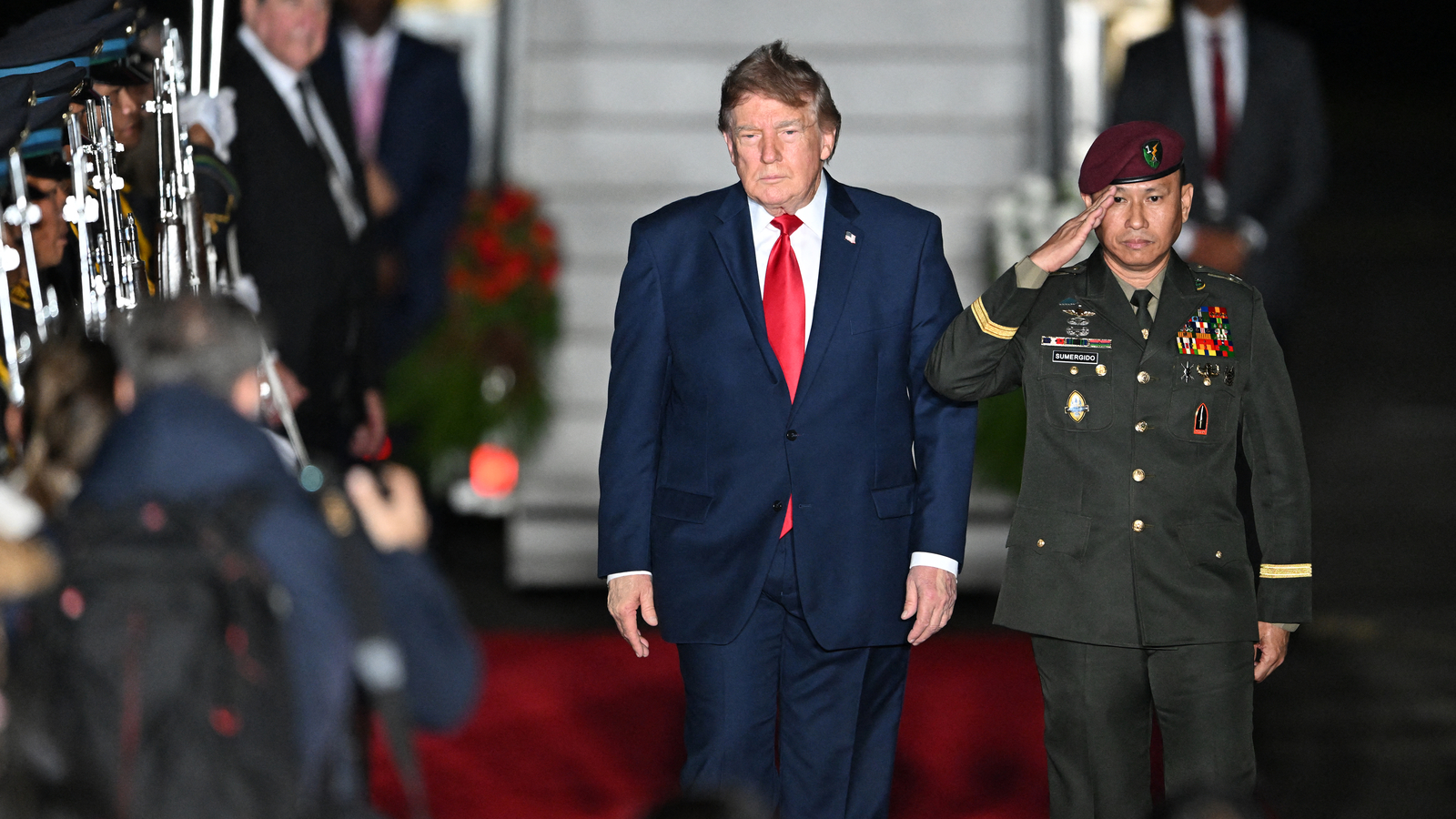
Ninety minutes in a room in Shenzhen produced a four-paragraph statement, zero ceasefire agreements, and enough photo ops to keep state media running for a year. If you're looking for the real story behind the November 19, 2026 trilateral summit between Chinese President Xi Jinping, U.S. President Donald Trump, and Russian President Vladimir Putin, stop reading the official communiqué. Watch the staging instead.
The Xi Trump Putin meeting on the sidelines of the Asia-Pacific Economic Cooperation (APEC) summit was billed as a historic turning point. It was indeed the first time the heads of state of the United States, China, and Russia ever sat down together in a three-way format. Yet the gap between the grandiose rhetoric and the actual policy outcomes tells you everything you need to know about modern great-power politics. Symbolism didn't just outweigh concrete results here. Symbolism was the entire point. Expanding on this theme, you can find more in: Geopolitical Alignment at the ASEAN Sidelines The Strategic Mechanics of the Quad Meeting.
What Actually Happened Inside the Room
Let's look at the hard facts on paper. When the doors opened after roughly an hour and a half of talks, the three governments released the U.S.-Russia-China Heads of State Declaration toward Peace. On the surface, getting Washington, Beijing, and Moscow to sign the same piece of paper sounds impressive. Then you read the four bullet points.
First, the three permanent members of the UN Security Council pledged to "reform the UN" so it responds more effectively to global challenges. No timeline. No mechanism. Just a vague nod to institutional reform that diplomats have recited for decades. Experts at USA Today have shared their thoughts on this trend.
Second, they promised to increase the production and supply of refined petroleum products to keep energy flows stable. Third, they took a coordinated swipe at the International Criminal Court (ICC), declaring that state officials must enjoy immunity from prosecution and warning international tribunals against "jurisdiction abuse". Fourth, they recycled the classic Reagan-Gorbachev line that "a nuclear war cannot be won and must never be fought," agreeing to start a dialogue on reducing nuclear risks.
Notice what's missing? Everything that's actually burning down the global order.
The declaration didn't mention the war in Ukraine. It didn't mention the escalating conflict with Iran, even though Trump told reporters afterward that all three leaders agreed Tehran shouldn't get a nuclear weapon. It didn't resolve a single tariff dispute, tech export ban, or territorial flashpoint in the South China Sea. In foreign policy circles, when leaders spend ninety minutes together and emerge with a joint attack on the ICC and a boilerplate pledge against nuclear Armageddon, you know they couldn't agree on the issues that actually divide them.
Why Xi Jinping Walked Away the Clear Winner
When you strip away the diplomatic fluff, the Shenzhen summit was a masterclass in hosting optics by Beijing.
For years, Chinese officials have pushed the narrative that the era of American unipolar dominance is dead and that Beijing stands on equal footing with Washington. Hosting both Trump and Putin on Chinese soil—and chairing a trilateral meeting between them—handed Xi Jinping the ultimate visual proof. He wasn't just a participant at APEC. He was the convenor of the world's three most powerful militaries.
Look closely at the choreography before and after the meeting, because Chinese protocol never happens by accident.
- The G2 signal: Xi personally greeted Trump on the tarmac upon his arrival in Shenzhen and sat right next to him at the opening dinner. In the pre-gala group photo, Trump stood to Xi's right, which is the traditional spot of highest honor in Chinese diplomatic protocol.
- The balancing act: Beijing knew that leaning too far toward Washington would irritate Moscow. So in the final group photo following the summit, the seating shifted, and Putin took that exact spot of honor to Xi's right.
- The state media victory lap: Immediately after the talks, the Chinese Communist Party's flagship journal Qiushi hailed the summit as a historic milestone in "major-country relations".
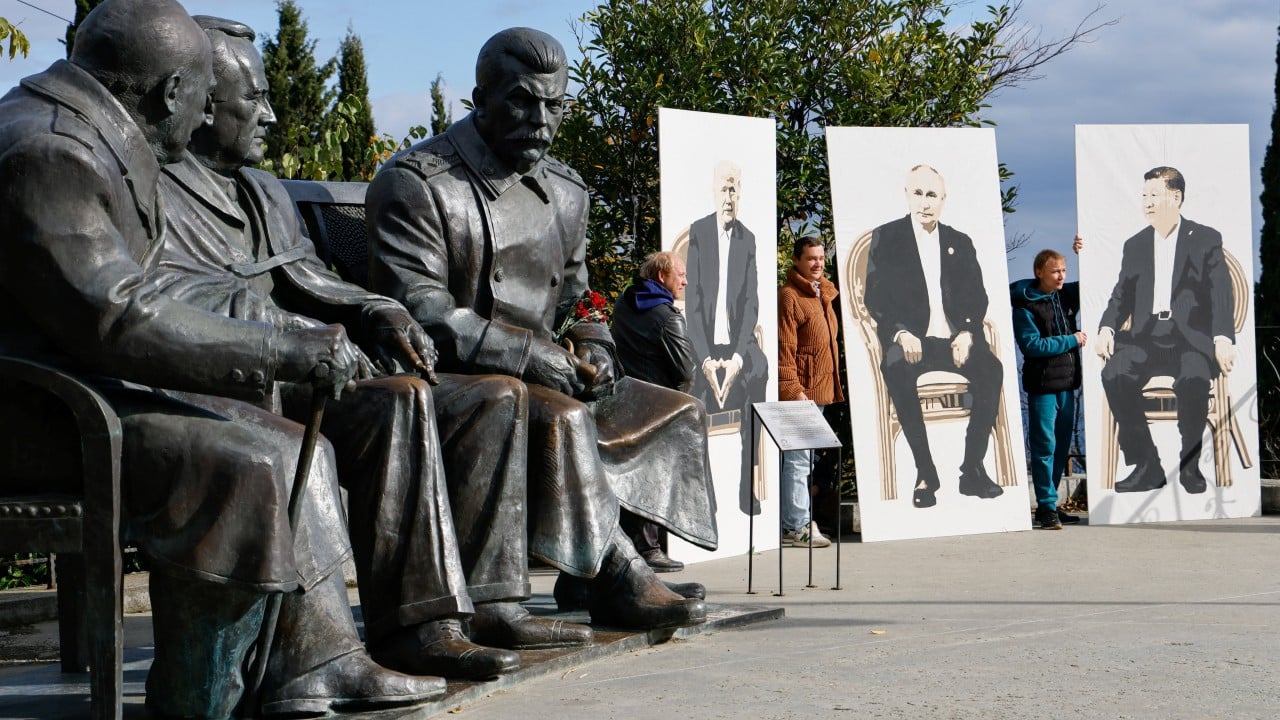
Meia Nouwens, a senior fellow at the International Institute for Strategic Studies (IISS), pointed out that Chinese academic circles had practically zero expectations for concrete policy breakthroughs before the meeting even started. Wu Xinbo, Dean of the Institute of International Studies at Fudan University, explicitly warned observers not to compare Shenzhen to the 1945 Yalta Conference—a summit from which China was notably excluded. Beijing didn't want a summit to carve up spheres of influence. It wanted a stage to show the Global South that nothing major happens in world politics without going through China first.
What Putin and Trump Each Got Out of the Optics
If Xi got the prestige of hosting, Putin got something even more urgent—legitimacy.
Putin hadn't attended an APEC leaders' summit since 2017. Since the invasion of Ukraine and the subsequent ICC arrest warrant issued against him, his international travel has been heavily restricted to friendly capitals. Standing shoulder-to-shoulder with the President of the United States in Shenzhen shattered any remaining illusion of Russia's diplomatic isolation.
Better yet for Moscow, Putin got the United States and China to co-sign a statement delegitimizing the very court that issued his arrest warrant. That clause in the Shenzhen declaration wasn't some abstract legal debate. It was a direct political gift to the Kremlin, neatly aligned with Washington's own anger over ICC warrants targeting Israeli officials. And just hours after the meeting ended, Putin turned around and told reporters that European leaders should travel to Moscow if they wanted to talk peace on Ukraine—a clear sign he felt zero pressure from Trump to soften his terms.
Trump, meanwhile, approached Shenzhen the way he approaches almost every high-stakes diplomatic encounter: as a showcase for personal dealmaking.
Coming off bruising domestic midterm elections earlier in November, Trump needed a headline-grabbing foreign policy moment. Sitting between Xi and Putin and declaring "we are really making history" gave him dramatic television footage to bring home. He framed the three nations as uniquely capable of halting nuclear proliferation and stabilizing energy markets, casting himself as the only leader willing to talk directly to America's fiercest adversaries.
Here's the catch. Analysts at the European Union Institute for Security Studies (EUISS) noted that China and Russia spent weeks coordinating their positions ahead of Shenzhen, holding a much longer bilateral meeting between Xi and Putin before Trump ever entered the room. Trump walked into a setting where his two counterparts were already reading from the same script. He got the cameras, sure, while Beijing and Moscow locked in the diplomatic framing.
The Dangerous Illusion of a New Big Three
Whenever the leaders of Washington, Beijing, and Moscow gather in one room, commentators immediately reach for historical analogies. Headlines start throwing around phrases like "Yalta 2.0" or predicting a grand geopolitical bargain where three strongmen divide the world into neat spheres of influence.
Don't fall for it. That framing misunderstands both the history and the reality on the ground.
In February 1945, Franklin D. Roosevelt, Winston Churchill, and Joseph Stalin met at Yalta because their armies were actively crushing a common enemy and literally occupying the territories whose borders they were redrawing. They held total military leverage over the map of Europe.
None of those conditions exist today. The United States, China, and Russia aren't wartime allies; they are locked in structural rivalry across trade, artificial intelligence, military alliances, and energy markets. Even if Trump, Xi, and Putin wanted to strike a secret grand bargain over Europe or the Indo-Pacific, they couldn't enforce it. Medium-sized powers—from Tokyo and Seoul to Warsaw, Brussels, and New Delhi—aren't passive chess pieces waiting to be traded away by three men in a conference room.
Still, the symbolism carries real risks for America's allies.
When Washington joins Moscow and Beijing in a statement attacking international courts and praising "state consent," it weakens the exact rules-based norms that smaller democracies rely on to deter aggression from larger neighbors. Several U.S. senators immediately criticized the summit on those grounds, warning that trading away diplomatic leverage for photo opportunities undermines NATO and leaves front-line allies guessing where Washington actually stands.
How to Read Great-Power Summits Without Getting Fooled
If you follow international politics, finance, or global supply chains, summits like the Shenzhen trilateral can easily distort your judgment if you react to the headlines instead of the mechanics. Next time a high-profile leaders' meeting dominates the news cycle, run it through three quick filters before assuming the world has changed:
- Check the implementation mechanisms, not the adjectives. Words like "historic," "constructive," and "groundbreaking" cost nothing. Look for working groups with deadlines, tariff schedules, verification inspectors, or troop withdrawal dates. Without an enforcement mechanism, a joint declaration is just expensive stationery.
- Track the bilateral meetings around the main event. In multilateral diplomacy, the real business happens in the one-on-one rooms beforehand. The fact that Xi and Putin held an extended bilateral session before meeting Trump told analysts far more about the power dynamic in Shenzhen than any public handshake did.
- Watch what leaders say to their domestic audiences twenty-four hours later. Diplomacy is what happens at the podium; policy is what happens when the plane lands. Putin's immediate demand that Europeans come to Moscow for Ukraine talks proved that the Shenzhen peace declaration hadn't moved Russian policy by a single millimeter.
The Xi Trump Putin meeting will go into the history books as a visual milestone—a snapshot of a messy, multipolar world where Beijing can summon both Washington and Moscow to its table. Just don't mistake a well-lit photograph for actual peace.