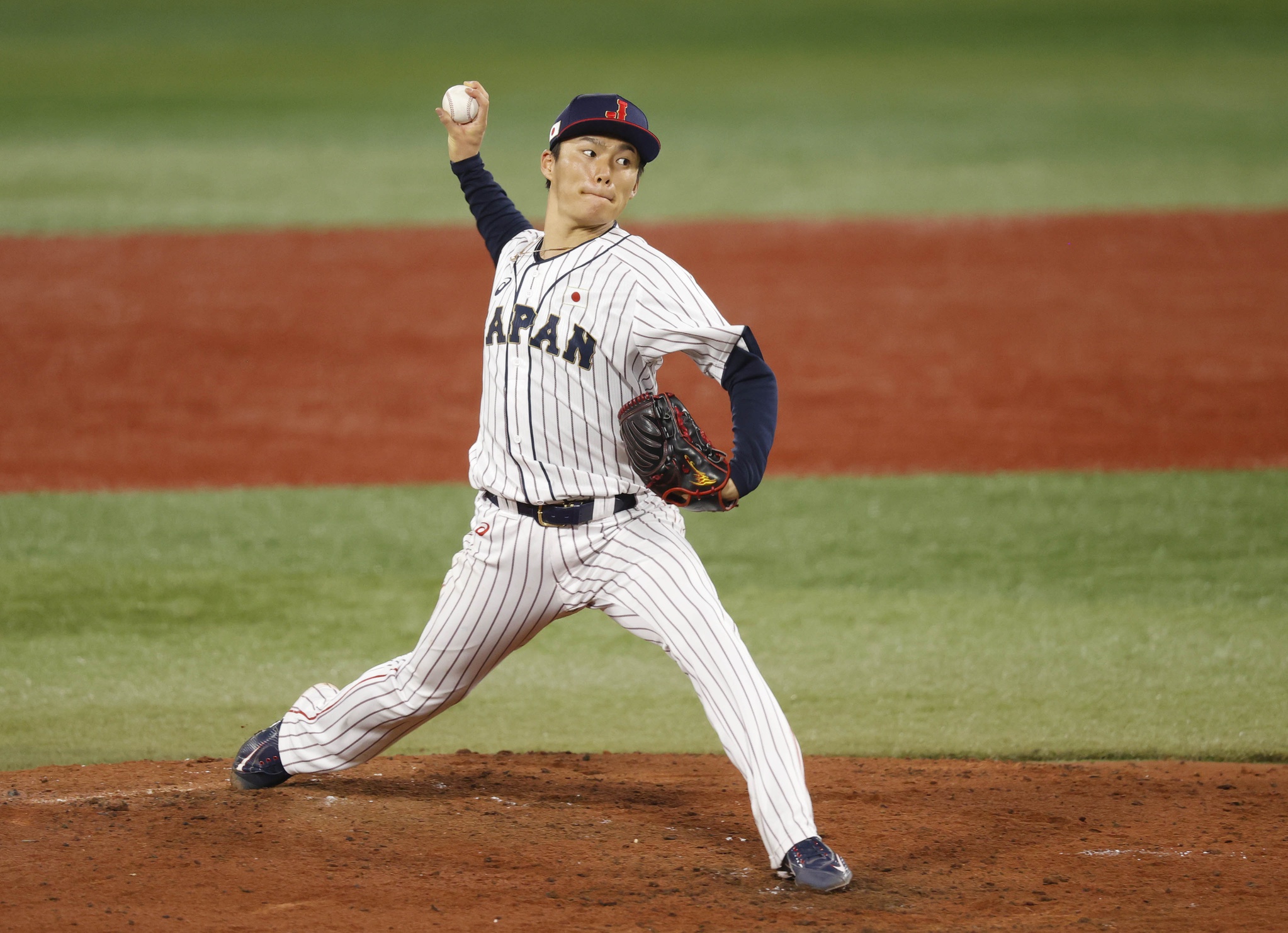
The lazy narrative surrounding the Los Angeles Dodgers is a comfortable, well-worn sweater. It says that for a team to win a World Series, they must sacrifice individual accolades at the altar of "workload management." It suggests that if Yoshinobu Yamamoto pushes hard enough to secure a Cy Young Award, he will inevitably flame out by October, leaving the rotation a hollowed-out shell of itself.
This is a fundamental misunderstanding of modern pitching mechanics and the psychological warfare of a postseason run.
The conventional wisdom argues that the Dodgers’ quest for a historic three-peat—assuming they secure the 2024 and 2025 titles—is threatened by a dominant, front-line ace chasing hardware. They point to the "innings limit" bogeyman. They whisper about the "Japanese transition" to a five-day rotation. They claim that a Cy Young campaign for Yamamoto is a vanity project that risks the collective goal.
They are wrong. A Cy Young-caliber Yamamoto isn't a risk to a three-peat; he is the only way it actually happens.
The Myth of the Fresh Arm
Pundits love to talk about "saving" pitchers for October. It sounds logical. If you don't use the bullets in July, you'll have them in the chamber for the Division Series.
I have spent decades watching front offices obsess over pitch counts and stress innings. Here is the reality they won't tell you: Rust is more dangerous than fatigue. When a team "manages" an ace into a state of mediocrity just to keep him healthy, they enter the postseason with a pitcher who lacks the high-leverage edge. You don't win a World Series with a guy who has been coddled for six months. You win it with a predator who has spent the summer dismantling the best hitters in the world.
If Yamamoto is in the Cy Young conversation, it means his splitter is diving with late life. It means his command of the "high-and-in" fastball is surgical. It means he has developed the "feel" for the MLB ball that only comes through high-intensity competition. You cannot simulate the intensity of a Cy Young race in a bullpen session or a "controlled" five-inning start in August.
Why Quality Trumps Quantity in the Postseason
The argument against Yamamoto winning the Cy Young often centers on the idea that the Dodgers need "depth" more than a "peak performer."
This is a cope for teams that don't have a true No. 1.
Look at the history of the modern postseason. The "opener" strategy and the "bullpen game" are desperate measures for teams that lack a guy who can shove for seven innings against a lineup of All-Stars. To win three championships in a row, you don't need a stable of "reliable" starters who give you five innings of three-run ball. You need a monster at the top of the rotation who can end a losing streak or shut down a surging opponent in Game 1.
A Cy Young season from Yamamoto provides a psychological shield for the rest of the staff. When the ace is untouchable, the pressure on the No. 3 and No. 4 starters evaporates. They aren't pitching to save the season; they are pitching to bridge the gap back to the guy who wins every time he touches the rubber.
The Cultural Impact of Individual Excellence
There is a weird, Puritanical streak in sports writing that views individual awards as selfish. This is nonsense.
In a clubhouse like the Dodgers, which is packed with massive contracts and future Hall of Famers, excellence is the only currency that matters. Yamamoto winning a Cy Young validates the organization's massive $325 million investment. It sets a standard.
When your $325 million man is actually the best pitcher in the league, nobody else has an excuse to slack off. It kills complacency. A "managed" Yamamoto who finishes with a 3.80 ERA because he was constantly pulled in the sixth inning sends a message that "good enough" is the goal. A Yamamoto with a sub-2.50 ERA and a trophy on his mantle tells the team that the pursuit of perfection is the expectation.
The "Innings Count" Fallacy
Let’s address the elephant in the room: the workload.
Critics argue that the Japanese six-man rotation makes a Cy Young run impossible or dangerous for Yamamoto. They claim that pushing him to 180 or 200 innings to satisfy voters will break him.
This ignores the evolution of sports science. We are no longer in the era of "run him out there until his arm falls off." The Dodgers utilize biometric tracking that would make NASA jealous. If Yamamoto is winning the Cy Young, he is doing it through efficiency, not volume.
The most dominant pitchers today aren't throwing more pitches; they are throwing better ones. A Yamamoto who needs only 85 pitches to get through seven innings—because his stuff is so nasty that hitters are chasing out of the zone—is under less physical stress than a mediocre pitcher grinding through five innings with 100 pitches.
A Cy Young season is often the result of mastery, not just effort. Mastery is sustainable. Grinding is not.
Challenging the "Three-Peat" Logic
Winning three titles in a row is statistically improbable. It requires luck, health, and a lack of ego.
The competitor's argument suggests that a Cy Young for Yamamoto is an ego-driven distraction. In reality, the distraction is the constant questioning of his durability. Nothing would stabilize the Dodgers’ dynasty more than a definitive answer to the question: "Can he be the best in the world?"
If the answer is yes, and he has the hardware to prove it, the Dodgers move from being a "superteam" on paper to a juggernaut in reality.
Imagine a scenario where the Dodgers are facing an elimination game in the NLCS. Would you rather have a "fresh" Yamamoto who spent the season being protected by the training staff, or a Yamamoto who spent the last six months proving he is the most dominant force in professional baseball?
The choice is obvious.
The Cost of the Conservative Approach
What happens if the Dodgers follow the "lazy consensus"?
They limit Yamamoto. They skip starts. They pull him early. He finishes the year 12-6 with a decent ERA, but he hasn't been "the guy." He hasn't had to pitch out of a bases-loaded jam in the 7th inning of a tight race.
Then October hits. Suddenly, the "management" stops. Now he’s expected to go 100+ pitches against the Braves or the Phillies. But he hasn't done it all year. His body isn't conditioned for it. His mind isn't calloused for it.
The conservative approach creates a fragile pitcher. The aggressive, "Cy Young or bust" approach creates a weapon.
The Real Threat to the Dynasty
The real threat to a Dodgers three-peat isn't a pitcher winning an award. It's the "Los Angeles Tax." It's the internal belief that they can simply out-talent the rest of the league without having to be the most intense competitors on the field.
Yamamoto chasing a Cy Young is the antidote to that culture. It brings a hunger to the mound that is infectious.
Stop worrying about whether a Cy Young "meshes" with a championship window. Excellence always meshes with winning. The idea that you have to choose between individual greatness and team success is a myth sold by those who are afraid of the pressure that comes with both.
The Dodgers didn't sign Yoshinobu Yamamoto to be a "piece of the puzzle." They signed him to be the puzzle.
If he wins the Cy Young, the rest of the league is in serious trouble. If he doesn't, it means he wasn't the pitcher they thought he was—and that is a much bigger threat to a three-peat than a few extra innings in July.
The pursuit of the trophy isn't a detour. It's the map.
You don't win three rings by playing it safe. You win them by being undeniable. Let the man hunt the trophy. The rings will follow the leader.