Walk into a university campus in Boston and ask students about generative artificial intelligence. You will likely hear anxious talk about job loss, corporate greed, and the death of human creativity. Do the same in Shanghai. The vibe changes completely. There, young people treat these tools as essential career accelerators.
Young Americans feel significantly more threatened by artificial intelligence than their peers in China. This is not a vibe check. It is backed by data. A widespread global survey by Ipsos revealed that while roughly 80% of Chinese respondents believe AI products have more advantages than disadvantages, only about 35% of Americans agree.
Why such a massive gap? It comes down to economic safety nets, cultural views on technology, and how young people in both nations view their place in the workforce.
The Fear of the Copied Mind
American youth face a distinct cultural narrative around AI. In the West, tech is often framed as a replacement for human agency. Hollywood spent decades feeding us stories of rogue systems taking over. Now, those sci-fi tropes feel uncomfortably close to home.
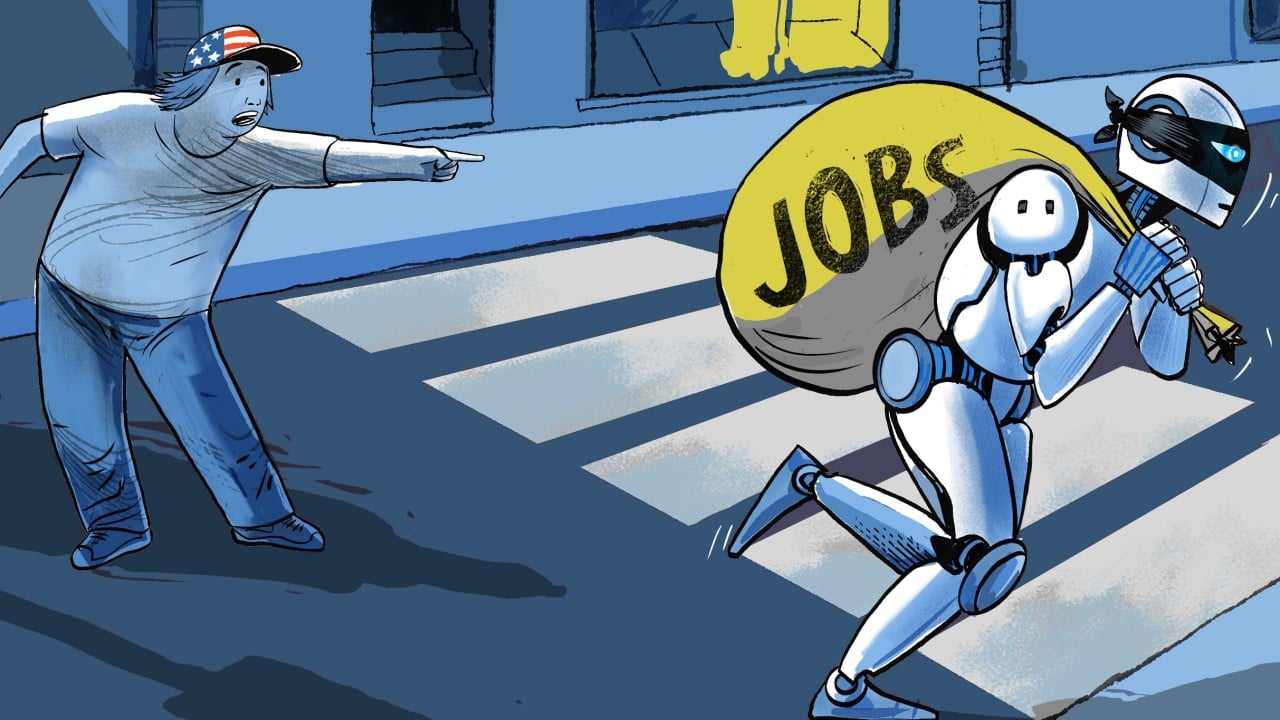
The immediate threat is economic. Young Americans graduate with massive student loan debts. They expect entry-level knowledge work to pay those bills. When software automates copywriting, junior coding, and graphic design, it destroys the bottom rung of the career ladder.
If you cannot get an entry-level job because an algorithm does it for free, how do you get experience?
This reality creates a deep sense of alienation. Western capitalism puts the burden of survival entirely on the individual. If your job gets automated, you are on your own. It makes sense why American Gen Z views automation as an existential threat to their financial survival.
Efficiency as a Survival Strategy
The situation looks entirely different through the lens of Chinese youth. They operate under intense competition. The term neijuan, or involution, describes a hyper-competitive rat race where everyone works harder just to stay in the same place.
To a young professional in Beijing, AI is not a rival. It is a shield.
Chinese youth use these tools to automate grunt work so they can survive the grueling "996" work culture (9 AM to 9 PM, six days a week). If a program can write a report in five minutes instead of five hours, that means less burnout. It means a slight edge over the colleague at the next desk.
The Chinese tech ecosystem also integrates these tools more naturally into daily life. From WeChat to Alipay, super-apps normalized deeply integrated tech long ago. AI feels like a natural upgrade to the tools they already use every single day, not a disruptive alien force trying to steal their livelihood.
Optimism Grounded in State Strategy
We also have to look at how both governments frame the technology.
- The US Approach: Washington focuses heavily on the risks—misinformation, copyright theft, national security threats, and algorithmic bias. The public discourse is cautious and adversarial.
- The China Approach: Beijing views the technology as a core pillar of national rejuvenation. While the state heavily regulates content to ensure social stability, it actively pushes for rapid adoption in industries like manufacturing, healthcare, and logistics.
Young Chinese people see their government investing heavily in tech infrastructure. They view mastery of these tools as a guaranteed ticket to a stable career aligned with national priorities.
The Creative Friction
There is another massive divide in how both cultures view creativity. The Western view of art and writing is deeply tied to individualism and the soul. When an algorithm generates a painting or a story, American youth see it as an attack on human dignity and intellectual property.
The backlash from Hollywood writers, digital artists, and musicians highlights this friction. They want strict boundaries to protect human expression.
In contrast, pragmatic utility dominates the conversation among young Chinese users. Tech is a tool to achieve an end product. If an image generator helps a small e-commerce business owner on Taobao launch a clothing line faster and cheaper, it is a massive win. The philosophical debate about whether the machine has a "soul" matters far less than the practical economic output.
How to Navigate the Shift
The anxiety felt by young Americans is completely valid, but passive fear will not protect your career. The gap in perception shows that the way you frame the technology dictates how much power it has over you.
Stop treating these systems like an existential threat and start treating them like a hyper-competent, slightly erratic intern. You must learn to direct them rather than let them replace you.
Focus on developing skills that algorithms struggle to replicate. Complex negotiation, cross-disciplinary strategy, and deep empathetic communication cannot be easily automated. Master the technical side of your industry, but double down on the messy, unpredictable human elements that happen offline. Survival in the modern workforce requires shifting from a mindset of resistance to one of aggressive adaptation.