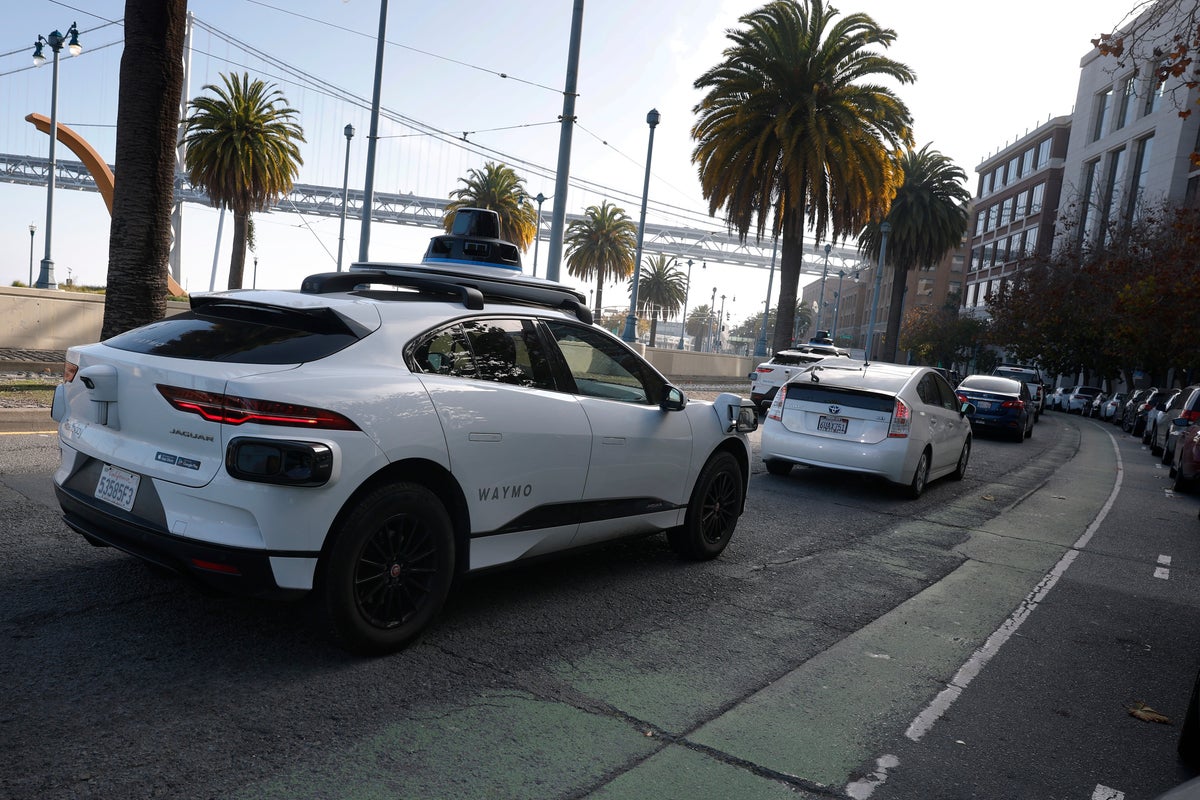
The headlines are doing exactly what they were designed to do: weaponize fear for clicks. "Amazon’s Zoox recalls self-driving vehicles amid emergency response issues." The immediate takeaway forced down the public's throat is that autonomous vehicles are a looming public hazard, a half-baked experiment failing on open roads.
It is a lazy, mathematically bankrupt narrative.
What the tech press calls a failure, anyone with an understanding of scalable systems recognizes as a triumph of iterative deployment. The "recall" over Zoox's software interactions with emergency vehicles isn't a sign that the technology is broken. It is evidence that the safety infrastructure built around autonomous vehicles is working exactly as intended.
We need to stop treating software updates in robotics like Firestone tire blowouts from the 1990s. The premise of the panic is entirely flawed.
The Recalibration Myth
Let's clear up a fundamental industry misunderstanding. The word "recall" evokes images of greasy assembly lines, mechanical failure, and physical hazards requiring thousands of vehicles to sit in a dealership lot. In the context of modern autonomous systems, a recall is almost always a line of code modified over a cellular connection.
In the case of Zoox, the issue stems from how the vehicle reacts to the unpredictable, chaotic nature of emergency first responders. Think about human drivers for a second. When an ambulance approaches an intersection with its sirens blaring, human drivers panic. They slam on their brakes in the middle of intersections. They block lanes. They freeze. Human unpredictability around emergency vehicles causes thousands of secondary collisions every year.
Zoox’s system exhibited overly cautious behavior. It didn’t mow down a crowd; it hesitated in a way that federal regulators flagged as a potential impediment to emergency crews.
The Reality Check: An autonomous vehicle pausing too long because it is prioritizing absolute safety over human convenience is not a system failure. It is a baseline calibration issue.
I have watched engineering teams spend millions of dollars trying to solve the "edge case of edge cases." The truth that nobody wants to admit is that you cannot simulate your way to perfection. You have to put the rubber on the asphalt. The National Highway Traffic Safety Administration (NHTSA) stepping in to scrutinize these behaviors is part of the feedback loop, not an indictment of the architecture.
The Broken Premise of "Perfect Safety"
The public and the media are asking the wrong question. They ask, "When will these vehicles be 100% safe?"
That question is a trap. Nothing is 100% safe. Human drivers are demonstrably horrific at operating heavy machinery. We tolerate roughly 40,000 traffic fatalities a year in the United States alone because of texting, drinking, and sheer incompetence. Yet, the moment an autonomous vehicle hesitates too long at a green light because an ambulance is three blocks away, the industry faces an existential crisis.
Let's look at the actual mechanics of how these systems learn. Autonomous vehicles rely on a stack of sensor modalities:
- LiDAR: Creating a precise 3D map of the environment.
- Radar: Tracking velocity and moving targets through adverse weather.
- Cameras: Identifying semantic data like the flashing lights of an emergency vehicle.
The challenge isn’t seeing the ambulance. The challenge is predicting what the human driving that ambulance—and the other thirty human drivers nearby—will do next.
Imagine a scenario where an autonomous vehicle approaches an intersection. A fire truck is coming from the left. The autonomous vehicle has the green light but detects the auditory and visual signatures of the truck. It stops. The human driver behind it, paying zero attention, rear-ends the autonomous vehicle. The headline the next morning? "Autonomous Vehicle Involved in Crash Near Emergency Response Scene."
This is the data distortion we are dealing with daily.
Stop Fixing the Wrong Problem
If you are an executive or an investor in the mobility space, the worst thing you can do right now is panic and pull back on deployment. The conventional wisdom says to retreat to closed courses until the software is flawless. That is a death sentence for innovation.
The only way to solve the emergency vehicle interaction problem is to gather real-world telemetry. You cannot simulate the panic of a human driver cutting off an ambulance in a digital sandbox. The system needs to experience the noise, the erratic movements, and the defiance of standard traffic laws that define real-world driving.
The downside to this approach? Public relations hits. Every time a vehicle stops in an awkward position, someone will tweet about it, a regulator will issue a notice, and a competitor will write an article about how the technology isn't ready. That is the cost of entry. If you cannot stomach that friction, you should get out of the deep tech business entirely.
The Operational Double Standard
We hold silicon to a standard we would never demand from carbon.
When a human driver blocks an ambulance because they have their headphones in, we blame the individual. When an autonomous vehicle hesitates because its perception system is processing conflicting signals to avoid a catastrophic T-bone collision, we blame the entire enterprise.
Amazon’s backing of Zoox allows them to play the long game, ignoring the quarterly hysteria of the tech blogs. They know what the critics don't: a software update pushed out over the air to correct a cautious behavior pattern is a feature of the development lifecycle, not a bug.
The compliance framework is doing its job. The company is doing its job. The only group failing here is the gallery of commentators who expect a revolution to happen without a single stumble. Stop looking at software updates as defeats. The real danger isn't that these vehicles are on the road; it's that we might let fearmongering slow down their deployment, leaving human drivers behind the wheel for a decade longer than necessary.