You are sitting in a aggressively air-conditioned corporate conference room, nursing a lukewarm coffee. A colleague drops a slide deck on the screen. The presentation is painfully dry. They make an incredibly mild, distinctly unfunny observation, and yet, your mouth twitches. Out escapes a polite, clipped, rhythmic puff of air.
Ha.
It is entirely performative. You did not feel joy. You did not find the slide funny. But you needed to signal compliance, warmth, and shared social space.
Now shift the scene. You are back home, sitting on the living room rug. You reach out and dig your fingers into the soft ribs of your three-year-old child. The reaction is instantaneous, violent, and utterly helpless. The child arches away, eyes squeezed shut, exploding into a rapid-fire cascade of breathy, uncontrollable giggles.
To the untrained ear, these two sounds share almost nothing. One is an instrument of social survival; the other is a primal, reflexive explosion. We tend to view our vast vocabulary of chuckles, snickers, polite workplace giggles, and breathless belly laughs as a uniquely sophisticated human achievement. We assume that language came first, and that our complicated relationship with humor evolved alongside our massive brains.
We are looking at it completely backward.
The machinery of human joy, and the very foundation of the words we speak, did not start with our intellect. It started with a tickle. And it is fifteen million years old.
The Sound of an Ancient Tree
Sound is a frustrating ghost for evolutionary biologists. Bones fossilize. Teeth endure. Stone tools wait patiently in the dirt for eons, offering clear, physical evidence of how our ancestors moved and ate. But a voice? A voice vanishes into the air the exact microsecond it is produced. For centuries, tracing the origins of how humans learned to manipulate their breath to communicate felt like trying to map the path of a long-faded wind.
To solve the mystery of where our speech came from, a team of primatologists and behavioral scientists at institutions like the University of Warwick had to get their hands dirty. Or, more accurately, they had to get their fingers moving.
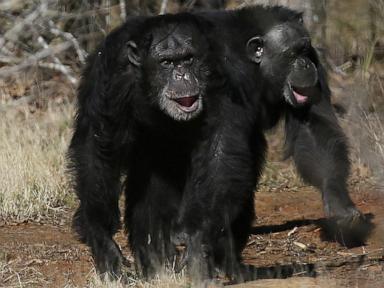
They gathered 140 acoustic recordings of spontaneous laughter. The subjects were a diverse group: four orangutans, two gorillas, three bonobos, four chimpanzees, and four human children. To keep things fair and natural, the subjects were recorded in their own familiar home environments, interacting with caretakers and parents they already trusted. The method to get them to vocalize was beautifully, elegantly simple.
They tickled them.
If you have never heard a young chimpanzee or an orangutan get tickled, the sound is jarring. It does not possess the bright, musical, voiced vowels of human merriment. It sounds less like a joke and more like a handsaw cutting through dry timber. It is a breathy, frantic huffing and panting. It happens on both the inhale and the exhale, an alternating rhythm of air rushing in and out of the lungs.
Yet, when researchers stripped away the pitch and looked strictly at the mathematics of the timing intervals between successive bursts of sound, something astonishing emerged.
The spacing was identical.
Whether it was a human toddler screeching in a living room or a young bonobo squirming in a wildlife sanctuary, the underlying pulse—the steady, metronomic beat of the laughter—followed the exact same rhythmic template.
When you chart these sounds on an acoustic family tree, they do not look like random variations. They trace a perfect, unbroken line back through time. The human rhythm matches the bonobo and chimp closest of all. It sits slightly further from the gorilla, and furthest from the orangutan. This matches the exact genetic split of our physical evolution.
This means that the basic neurological machinery required to pace a vocalization was not invented by early humans standing around a fire. It was already fully operational in the canopy of a prehistoric forest, long before our ancestors ever took their first upright steps on the savanna.
The Hominid Continuum
There is a long-standing, comforting myth we tell ourselves about human exceptionalism. It is the idea of the "vocal leap"—the belief that at some point in our evolutionary history, a sudden, radical mutation occurred that granted our ancestors sophisticated vocal control, instantly separating us from the rest of the animal kingdom. We became the talkers; they remained the grunters.
But the tickled apes destroy this narrative.
What the data actually reveals is a hominid continuum. Our capacity for speech did not drop out of the sky. It is a slow, cumulative refinement of a physical trait that our primate family has been honing for fifteen million years. Laughter was the sandbox where our vocal cords learned to play.
Consider what happened next across those millions of years. As our specific branch of the evolutionary tree split away, our ancestors began to tweak the ancestral design.
We changed the plumbing of our breath. While a chimpanzee pants rapidly on both the intake and output of air, humans learned to extend the exhalation. We can hold a single breath out for a remarkably long time, chopping it up into micro-segments of sound. Our laughs became faster, more variable, and heavily "voiced"—meaning we began to vibrate our vocal cords regularly, turning raw air into melody.
But the most profound shift was not mechanical. It was cognitive.
Humans took an ancient, involuntary physical reflex and hooked it up to the conscious brain. We became the only great ape capable of weaponizing or deploying laughter based entirely on context.
An orangutan cannot fake a laugh to make a superior feel comfortable. A chimpanzee does not offer a nervous, self-deprecating snicker after dropping a piece of fruit. Their laughter is honest; it is locked behind the iron gate of raw emotion and physical play.
Humans, however, learned to play the instrument. We use that same ancient 15-million-year-old rhythm to flirt, to mock, to soothe, to lie, and to bond. We use it to navigate the treacherous waters of modern social hierarchies.
The Stake of the Story
It is easy to look at this research as a quirky, amusing footnote in a scientific journal. Scientists tickling apes sounds like the setup to a joke. But the implications are deeply humbling, and perhaps a little frightening.
We live in a culture that is increasingly isolated, driven by text on screens, detached from the physical reality of our bodies. We look at our complex languages, our poetry, our political debates, and our philosophy as proof of our elevated nature. We think our minds are what hold our world together.
But the next time you hear a joke that catches you off guard, feel what happens to your chest. Your intellect steps aside. Your sophisticated vocabulary evaporates. Your body takes over, forcing you into a rhythmic, breathless spasm that you cannot stop, even if you try.
In that precise moment, the polished, modern veneer of the 21st-century human vanishes. You are reaching across fifteen million years of history, sharing a breath with a creature hanging from a branch in an ancient world, bound by the exact same pulse of survival and connection. We did not think our way into becoming human. We laughed our way here.