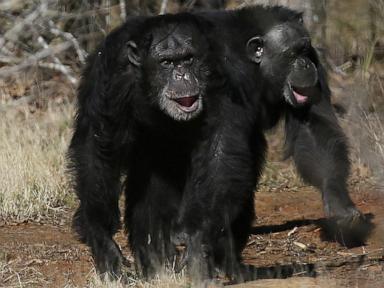
The phylogenetic origins of human vocal communication have long been obscured by the assumption that human language and emotional expression represent a complete break from non-human primate behavior. However, comparative bioacoustics reveals that human laughter is not an isolated evolutionary novelty. Instead, it is a highly specialized iteration of a deeply rooted primate vocal signaling system. By applying a structural framework to the acoustic properties of hominid vocalizations, we can map the precise evolutionary trajectory of laughter across the family Hominidae, isolating the biomechanical variables that separate human laughter from the pant-giggles of great apes.
Understanding this trajectory requires moving past the vague notion that animals "make similar sounds." We must look at the specific physiological and acoustic constraints that govern vocal production. By analyzing the mechanics of the primate respiratory tract, the acoustic structure of play vocalizations, and the social utility of these signals, we can decode the evolutionary blueprints of human joy.
The Tri-Acoustic Framework of Hominid Vocalization
To objectively evaluate the relationship between human laughter and great ape vocalizations, the acoustic output must be broken down into three distinct, measurable vectors. This framework removes subjective interpretation and replaces it with quantitative bioacoustic metrics.
1. Phonatory Control and Source Airflow Mechanics
The primary differentiator between human and non-human hominid vocalization lies in the direction of airflow during sound production. Human laughter is fundamentally egressive, occurring almost exclusively during exhalation. This relies on stable, highly coordinated subglottic pressure control.
Non-human great apes (chimpanzees, bonobos, gorillas, and orangutans) utilize an alternating ingressive-egressive cycle. They produce sound during both inhalation and exhalation. This structural difference stems from the neurological and muscular control of the diaphragm and intercostal muscles. Humans possess enhanced cortical control over the respiratory system, a prerequisite for speech, which allows for the sustained, segmented exhalation characteristic of a typical human "ha-ha-ha" burst.
2. Spectral Overtone and Formant Structure
Formants are the spectral peaks of the acoustic spectrum of the voice, resulting from acoustic resonances of the vocal tract. In humans, regular vocal cord vibration produces a harmonic series with clear formant structures, giving human laughter its tonal, resonant quality.
Ape play vocalizations are heavily unvoiced and characterized by broadband noise. The sound is friction-dominated rather than phonation-dominated, resulting in a breathy, pant-like quality. The degree of voicing—the regularity of vocal fold vibration during the signal—serves as a clear marker of phylogenetic distance from the human lineage.
3. Temporal Segmentation and Rhythmicity
Human laughter features a highly stable temporal structure, characterized by rapid, rhythmic bursts of sound averaging 210 milliseconds per syllable, separated by predictable, brief pauses. Great ape play vocalizations lack this rigid segmentation. Instead, they present as continuous, uninterrupted modulations of breath, where the boundaries between individual acoustic events are fluid and overlapping.
The Hominid Acoustic Continuum: A Species-by-Species Diagnostic
Phylogenetic reconstruction allows us to map these acoustic traits onto the evolutionary tree of the great apes, tracing the gradual modification of play vocalizations over roughly 14 million years of divergence.
       Orangutan (Deepest divergence: highly breathy, unvoiced, strictly alternating airflow)
          |
          |--> Gorilla (Intermediate divergence: increased voicing, variable airflow)
                |
                |--> Chimpanzee / Bonobo (Closest relatives: highly flexible, emerging egressive bias)
                      |
                      |--> Human (Highly specialized: strictly egressive, highly voiced, rhythmic)
Pongo (Orangutans)
As the most phylogenetically distant genus from humans within the family Hominidae, orangutan play vocalizations represent the ancestral state of the trait. Their laughter-equivalent consists almost entirely of unvoiced, noisy panting. Airflow is strictly symmetrical between inhalation and exhalation. There is minimal vocal fold vibration, resulting in an acoustic profile dominated by chaotic air turbulence rather than defined pitch.
Gorilla (Gorillas)
Gorilla play vocalizations occupy an intermediate evolutionary position. While they retain the alternating ingressive-egressive breathing pattern, the acoustic density changes. Gorillas demonstrate a marked increase in the frequency of voiced elements during exhalation compared to orangutans. The spectral profile shows early stabilization of fundamental frequency, though it remains highly irregular when compared to hominin lineages.
Pan (Chimpanzees and Bonobos)
Chimpanzees and bonobos share our most recent common ancestor, and their vocal mechanics reflect this proximity. Pan vocalizations exhibit the highest degree of acoustic flexibility among non-human primates. While they still pant continuously during play, they can bias the acoustic energy toward the egressive phase. Bonobos, in particular, produce higher-pitched, more tonally clear calls during play that approach the structural frequency of human vowels, signaling an evolutionary transition toward enhanced laryngeal control.
The Social Cost Function of Play Signals
Vocalizations do not evolve in a vacuum; they are selected for based on their utility within a species' survival strategy. To understand why human laughter transitioned away from the breathy panting of apes, we must analyze the social cost function of these acoustic signals.
In non-human primates, play is a high-risk activity. It mimics physical aggression, involving chasing, wrestling, and mock biting. Without a continuous, unambiguous signal verifying that the interaction is non-lethal, play can quickly degenerate into actual conflict, causing injury and disrupting group hierarchy.
The breathy pant-giggle serves as an immediate, low-cost fitness signal. Because it mimics the heavy breathing of physical exertion, it communicates a non-threatening state of metabolic expenditure. It informs the play partner that the actions are benign.
The human transition to large-scale social groups created an evolutionary bottleneck. Physical grooming—the primary mechanism for bond maintenance in non-human primates—is mechanically limited by group size; an individual can only groom one partner at a time. Human groups required a mechanism for distance grooming.
Laughter evolved to meet this need. By transitioning from a quiet, breathy pant to a loud, resonant, highly voiced vocalization, the signal's range expanded. A voiced human laugh can be heard across a wide physical area, allowing an individual to emotionally groom multiple group members simultaneously. This shift optimized social signaling efficiency, reducing the time investment required to maintain group cohesion.
Methodological Bottlenecks in Comparative Bioacoustics
While the structural similarities between human and great ape laughter point toward a shared evolutionary origin, drawing definitive conclusions requires acknowledging the limits of current research methodologies.
- Sample Bias in Captive Populations: The vast majority of acoustic data gathered on great ape play vocalizations comes from captive or sanctuary-born individuals. Captivity alters behavioral repertoires and vocal frequencies due to human interaction and altered social structures, meaning the baseline acoustic data may not perfectly mirror wild populations.
- The Anthropomorphic Interpretation Vector: Human researchers are neurologically hardwired to detect patterns that match human emotional expressions. When analyzing primate play, there is an inherent risk of over-interpreting chaotic acoustic noise as structured laughter, a bias that can only be countered through blind algorithmic spectral analysis.
- The Laryngeal Soft Tissue Absence: The fossil record provides detailed data on cranial capacity and skeletal structure, but it leaves no trace of the soft tissue architecture of the larynx and vocal tract. Consequently, the exact timeline of the physiological transition from panting to voiced laughter remains an educated hypothesis derived from living species, rather than an verified historical sequence.
The Strategic Path of Vocal Evolution
The evolutionary transition of hominid laughter reveals a clear progression from a functional respiratory byproduct to a highly sophisticated tool for social bonding. The data shows that human laughter is not an entirely unique behavioral trait, but rather an acoustic modification of a shared ancestral signal. The physiological changes that enabled speech—specifically, precise cortical control over exhalation and enhanced laryngeal coordination—were applied to the ancient primate play pant, turning it into the resonant, rhythmic laughter we use today.
For researchers and evolutionary biologists, the path forward requires moving away from simple behavioral observations. Future studies must focus on isolating the specific neural pathways that control play vocalizations across all hominid species. By comparing the activation of the motor cortex and the limbic system during play signals in both humans and non-human apes, we can pinpoint the exact neurological changes that turned a physical pant into a tool for social connection. Identifying these brain networks will reveal not only the origin of laughter, but the fundamental evolutionary steps that made the human voice possible.