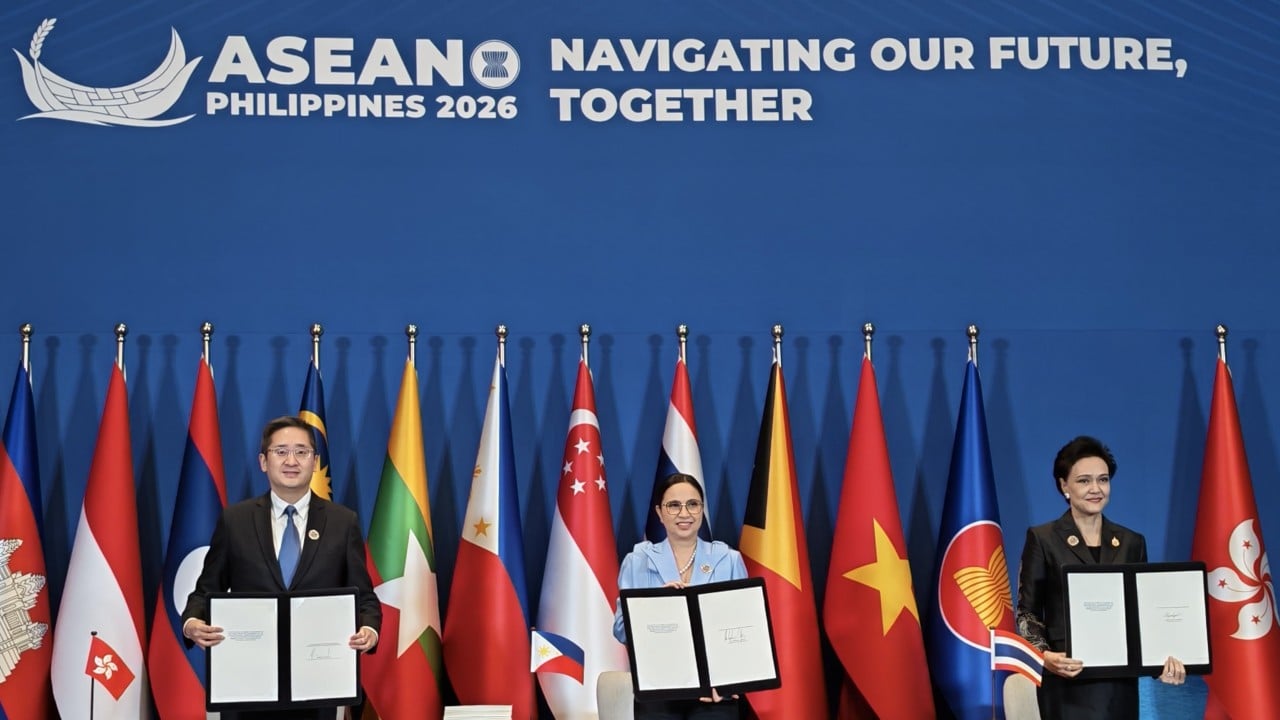
Capital allocation across fragmented regulatory zones requires a constant calculation of risk premiums. For enterprises using Hong Kong as an institutional bridge into Southeast Asia, cross-border investments historically faced an asymmetric regulatory friction. While merchandise trade and services agreements lowered transactional tariffs, foreign direct investment (FDI) remained exposed to domestic policy shifts, discriminatory administrative hurdles, and variable ownership restrictions across individual Southeast Asian economies. The signing of the first protocol to amend the ASEAN-Hong Kong Investment Agreement in Manila alters this equation by introducing binding equal treatment and explicit investment guarantees across all ten member states.
Understanding the true utility of this agreement requires stripping away diplomatic rhetoric to analyze its structural mechanics. With Hong Kong holding cumulative outward direct investment stock of HK$671.2 billion in the region and two-way merchandise trade registering at US$154.5 billion, the stakes for regional capital structuring are immense. The protocol does not merely signal goodwill; it alters the cost function of deploying long-term capital into non-services sectors such as manufacturing, supply chain infrastructure, and logistics.
The Cost Function of Regulatory Asymmetry
Prior to the formal operationalization of National Treatment and Most-Favoured-Nation provisions under the amended framework, foreign enterprises operating across Brunei, Cambodia, Indonesia, Laos, Malaysia, Myanmar, the Philippines, Singapore, Thailand, and Vietnam encountered severe administrative opacity. When a foreign corporate entity deploys capital into a developing jurisdiction, its risk-adjusted return model must account for the probability of regulatory expropriation, discriminatory licensing requirements, and preferential treatment granted to domestic champions.
In economic terms, this uncertainty acts as an implicit tax on capital. Investors demand higher internal rates of return to offset the risk of arbitrary policy changes. By locking in non-discriminatory treatment, the protocol compresses this risk premium. Hong Kong enterprises now possess legal recourse when local jurisdictions attempt to impose ownership caps or operational constraints that disadvantage foreign capital relative to domestic operators.
However, legal parity on paper does not translate to immediate operational uniformity. The practical weight of the protocol depends entirely on the specific schedules of reservations filed by each member state. Jurisdictions maintain targeted carve-outs for sensitive industries, natural resources, and national security assets. Sophisticated corporate strategists must evaluate these reservations individually rather than treating ASEAN as a single, homogenous regulatory block.
Deconstructing the Core Guarantees
The architecture of the updated agreement rests on several foundational pillars that redefine investor protection standards in the region.
First, National Treatment mandates that participating states treat Hong Kong enterprises and their investments no less favorably than domestic entities in like circumstances. This eliminates structural disadvantages in local procurement, licensing approvals, and market access, provided the sector is not explicitly shielded by a country's reservation schedule.
Second, Most-Favoured-Nation treatment ensures that any operational advantage or favorable regulatory concession granted by an ASEAN member to a third-party jurisdiction automatically extends to Hong Kong investors. This prevents regulatory arbitrage where competing foreign capitals secure superior terms under separate bilateral treaties.
Third, the inclusion of robust protection standards—specifically fair and equitable treatment, physical security of assets, and freedom to transfer funds and returns—addresses the primary anxieties of asset-heavy investors. Capital flight restrictions and foreign exchange controls have historically trapped liquidity within high-growth emerging markets. The binding commitment to allow free transfer of capital removes a critical liquidity bottleneck for corporate treasurers.
Fourth, standardized compensation frameworks for expropriation or losses stemming from armed conflict or civil strife establish a predictable dispute resolution baseline. When sovereign risk is mitigated by treaty-backed arbitration pathways, the cost of capital declines, driving higher valuations for cross-border corporate expansions.
Sectoral Transmission Channels and Capital Deployment
The economic impact of the protocol concentrates heavily on non-services industries. While the existing Free Trade Agreement primarily targeted services and tariff reductions, capital-intensive projects in manufacturing and logistics require long amortization schedules.
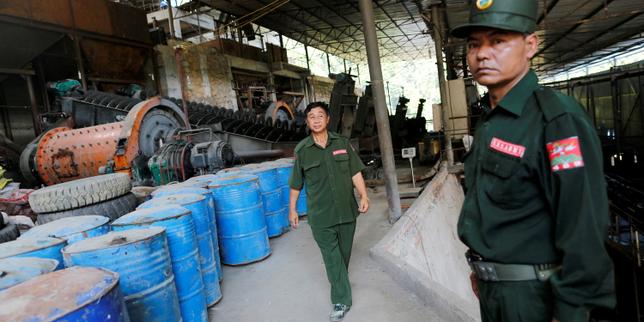
Consider the downstream transformation occurring in resource-rich economies like Indonesia, which has aggressively attracted capital to transition from a raw commodity exporter into a higher-value industrial manufacturer. For Hong Kong-domiciled industrial conglomerates deploying billions into smelting, assembly, and supply chain infrastructure across ASEAN, the new treaty provisions provide insulation against sudden export bans, unexpected tax revisions, or discriminatory local content mandates.
Logistics networks follow a similar trajectory. Regional supply chain reconfiguration—driven by multinational corporations diversifying manufacturing bases out of single-country concentration risks—demands massive investments in warehousing, port facilities, and cross-border transport corridors. Investors committing capital to these physical assets require absolute clarity regarding land tenure rights and operational permits. The protocol establishes a ceiling on discriminatory regulatory interventions, enabling more accurate long-term discounted cash flow modeling.
The Limits of Treaty-Based Arbitrage
Despite these structural enhancements, institutional friction persists at the sub-national and administrative levels. Treaties signed at the ministerial level must filter down through local bureaucracies, customs agencies, and judicial systems that often operate with varying degrees of institutional capacity and transparency.
A common structural failure in regional expansion strategies is assuming that treaty guarantees eliminate the need for local political risk assessment. International investment agreements provide ex-post dispute mechanisms, but litigation is costly, protracted, and disruptive to daily operations. The presence of country-specific reservation lists means that certain strategic sectors remain heavily protected. Investors who fail to audit the precise schedule of reservations maintained by a host state will encounter severe operational bottlenecks regardless of broader treaty protections.
Furthermore, corporate structuring matters immensely. To qualify for treaty benefits, holding entities established in Hong Kong must demonstrate genuine economic substance, management control, and operational nexus within the territory. Regulators across ASEAN increasingly scrutinize shell companies designed purely for treaty shopping. Establishing substantive corporate substance—local payroll, office infrastructure, and executive decision-making—is the operational prerequisite for claiming protection under the protocol.
Operational Execution for Regional Expansion
To capitalize on the expanded guarantees without falling prey to administrative friction, corporate planners must execute a rigorous, multi-step validation process prior to capital deployment.
Audit the specific target jurisdiction's schedule of reservations under the amended agreement to verify that the intended operational sector is entirely free from ownership or licensing restrictions. Cross-reference the investment structure against substance-over-form requirements in both Hong Kong and the target ASEAN member state to ensure treaty eligibility.
Model project cash flows with adjusted discount rates that reflect the compressed sovereign risk premium, while maintaining contingency reserves for local administrative delays. Establish direct institutional channels with local legal counsel who specialize in investor-state dispute settlement mechanisms within the specific host nation.
Deploy capital through phased tranches tied to operational milestones and regulatory clearance validations, avoiding upfront lump-sum exposure in high-friction sub-sectors.