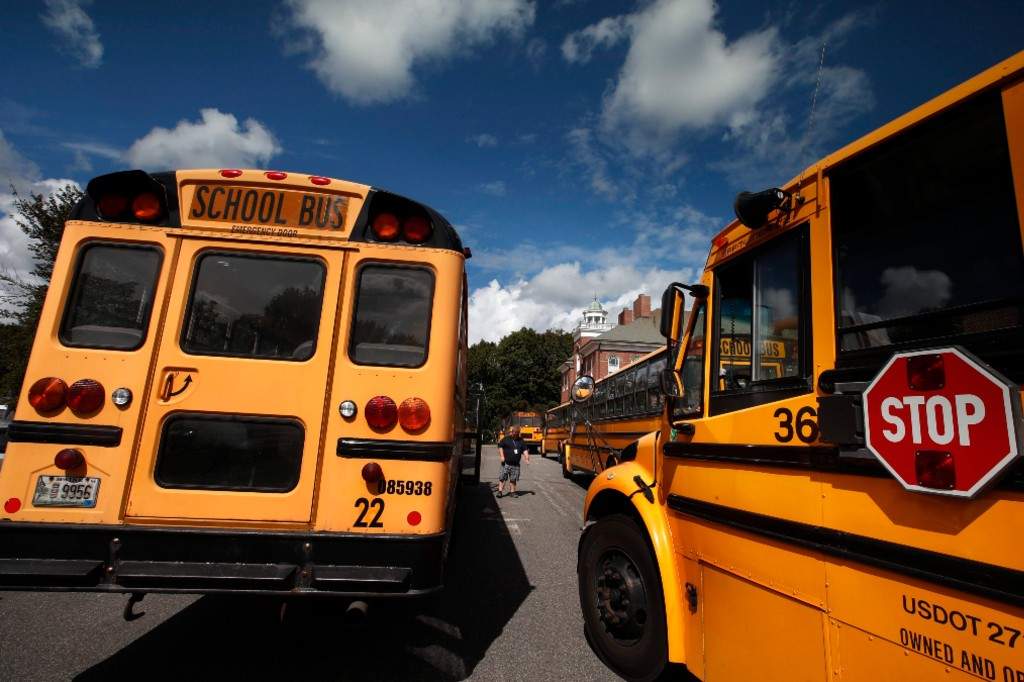
A school bus door entrapment and dragging incident represents a catastrophic failure across three distinct operational layers: mechanical detection limits, human visual verification protocols, and kinetic risk management. Standard local news coverage treats the arrest of a driver following the dragging of a five-year-old child as an isolated criminal anomaly. From a systems engineering and fleet safety perspective, these events are predictable outcomes when single-point-of-failure human procedures govern high-mass transit operations involving early-childhood passengers.
The Structural Anatomy of a Door Entrapment Failure
To analyze how a five-year-old child becomes trapped in a folding or outward-opening transit door and is subsequently dragged, one must separate the event into its component physical and procedural variables.
The Anthropometric Blind Spot
A standard Type C or Type D school bus features a front-right entry door positioned directly adjacent to the driver’s primary blind zone—the area immediately below the windshield cowling and forward of the front axle. A five-year-old child averages roughly 40 to 45 inches in height. When standing on the bottom stepwell or directly outside the rubber door gaskets, the child's upper torso drops below the driver's direct line of sight through the service door glass. Without properly calibrated crossover mirrors—convex mirrors mounted on the front fenders specifically angled to eliminate the immediate perimeter blind spot—the driver operates purely on assumption once the child clears the top step.Mechanical Force vs. Sensory Feedback
School bus service doors operate via pneumatic, electric, or manual lever mechanisms. Pneumatic and electric actuators apply continuous closing pressure until the door leaves reach full mechanical lock. Unlike modern residential garage doors or commercial elevator doors equipped with infrared light curtains and low-threshold pressure reversal sensors, legacy school bus doors frequently rely on passive rubber edges. A narrow object—such as a backpack strap, a coat drawstring, or a five-year-old's wrist—does not create sufficient physical displacement to prevent the door latch from engaging. The driver receives no tactile or auditory warning from the control console that an obstruction is present.The Kinetic Acceleration Phase
Once the door closes, the vehicle's interlock system—if equipped—disengages the brake lock, permitting immediate forward motion. A heavy-duty transit vehicle generates immense low-end torque at idle and minimal throttle. Within two seconds of brake release, the vehicle achieves a velocity sufficient to overcome a small child's friction and balance, transitioning an entrapment into an active dragging event before peripheral mirror checks register the anomaly.
The Four Sequential Checkpoints of Boarding and Alighting
In high-reliability fleet operations, passenger loading and unloading is governed by a strict four-stage verification sequence. An arrest for reckless endangerment or vehicular assault indicates that the operator bypassed at least three of these mandatory controls.
Stage 1: The Mirror Sweep Prior to Door Actuation
Before pulling the door control lever, the operator must execute a disciplined visual scan across three mirror sets: the flat rear-view mirrors, the convex side mirrors, and the front fender crossover mirrors. The objective is to confirm that the boarding zone—extending ten feet out from the bus—is entirely clear of pedestrians. Closing the door while looking forward toward traffic rather than downward into the stepwell and crossover mirrors introduces immediate entrapment risk.
Stage 2: The Stepwell Clearance Confirmation
For early-childhood passengers, exiting the vehicle requires navigating three deep steps while managing oversized backpacks. Standard operating procedures dictate that the driver must visually confirm the child has exited the stepwell, cleared the swing radius of the door, and reached a designated safe distance from the curb. When drivers compress dwell times to maintain route schedules, they frequently initiate door closure while the child is still stepping off the bottom tread.
Stage 3: The Post-Closure Crossover Verification
This is the critical fail-safe. Once the door is fully closed, the vehicle must remain stationary with the service brake depressed while the driver performs a dedicated check of the right-side crossover mirror. This mirror projects a wide-angle view of the exact seam where the rubber door gaskets meet. If a backpack strap or limb is caught in that seam, it is visible in the crossover mirror prior to wheel rotation. Initiating acceleration simultaneously with door closure eliminates this verification window entirely.
Stage 4: Controlled Throttle Application
Even after visual clearance is confirmed, professional transit protocols require a gradual, two-stage throttle application. Sudden acceleration eliminates the reaction window needed to abort movement if a child drops an item and darts back toward the vehicle's blind spot.
Criminal Liability vs. Systemic Negligence
When police arrest a driver following a dragging incident, the legal mechanism typically centers on criminal negligence, reckless endangerment, or child endangerment statutes. Prosecutors must establish that the operator deviated grossly from the standard of care expected of a Commercial Driver's License (CDL) holder with a Passenger (P) and School Bus (S) endorsement.
However, focusing exclusively on individual criminal culpability obscures the institutional failures that create the conditions for the error.
- Route Compression and Schedule Pressure: School districts facing chronic driver shortages routinely consolidate routes. When a driver is assigned a double run with tight bell-time windows, cognitive load spikes. Under time pressure, human operators subconsciously optimize for speed by overlapping sequential tasks—such as closing the door while shifting into drive and checking left-side traffic to merge.
- Equipment Standardization Gaps: Federal Motor Vehicle Safety Standards (FMVSS) mandate specific mirror configurations (FMVSS 111) and emergency exit requirements, yet they do not universally mandate active electronic anti-entrapment sensors on all legacy fleet vehicles still in daily service. Districts operating aging fleets rely entirely on human vigilance to compensate for the absence of automated safety interlocks.
- The Drawstring and Backpack Hazard: Despite Consumer Product Safety Commission guidelines restricting drawstrings on children's outerwear, modern elementary school gear—specifically chest-clip backpacks with loose nylon adjustment straps—creates high-tensile tethering points. A standard nylon strap can withstand hundreds of pounds of shear force without snapping, ensuring that if caught in a pneumatic door seal, the child remains tethered to the chassis rather than breaking free.
Distinguishing Known Facts from Operational Hypotheses
In breaking law enforcement reports regarding a driver's arrest, the public record establishes three baseline facts: the age of the victim (five years old), the mechanism of injury (entrapment by the bus door followed by dragging), and the law enforcement determination of probable cause for an arrest.
What remains unverified until forensic telemetry and onboard video are released are the precise failure modes:
- Whether the entrapment involved clothing/gear or an anatomical extremity.
- Whether the vehicle was equipped with functional front crossover mirrors adjusted to the specific driver's seating geometry.
- Whether onboard DVR systems captured the driver's eye movements, proving a failure to execute the mandatory mirror sweep prior to acceleration.
- The exact distance and duration of the drag, which dictates the severity of felony versus misdemeanor charges.
Mandatory Fleet Interventions to Eliminate Door-Drag Events
Relying on post-incident criminal prosecution does nothing to alter the risk profile of active school bus routes. Transportation directors and municipal fleet managers must implement hardware and procedural redundancies that remove human memory from the safety equation.
First, fleets must retrofit all Type C and Type D buses with acoustic and optical stepwell/door-seam sensors integrated directly into the transmission interlock. If an obstruction thicker than 0.25 inches breaks the infrared plane along the exterior door gasket, the transmission must remain electronically locked in neutral, overriding driver throttle input.
Second, districts must enforce a mandatory "Four-Second Dwell Rule" via telematics monitoring. GPS and accelerometer data are already standard on modern school buses; fleet managers can program automated alerts that flag any trip where wheel rotation occurs within four seconds of the door-closure sensor triggering. This converts a subjective behavioral guideline into an auditable compliance metric, forcing drivers to complete the crossover mirror check before the vehicle can move.