Smoke and Echoes
If you stand in the shadow of the Almussafes plant outside Valencia, Spain, you can hear the ghosts of thirty million engine cycles.
For nearly half a century, this concrete behemoth was the beating, rhythmic heart of European automotive assembly. Men and women walked through its gates every morning carrying metal lunchboxes, smelling faintly of motor oil and burnt coffee. They bolted together steel skeletons that would eventually end up parked on driveways from Madrid to Manchester. They paid off mortgages with those shifts. They bought groceries. They raised children who grew up believing that as long as the world needed cars, Valencia would have work. Don't miss our previous post on this related article.
Then the world stopped wanting what Valencia made.
The transition to electric vehicles was supposed to be a triumph. A clean, quiet, frictionless future. But for the workers on the floor, the revolution felt less like progress and more like a quiet eviction. Electric cars require fewer parts. Fewer hands. Fewer shifts. The assembly lines began to slow. The hum of the factory floor gave way to an aching, hollow quiet. Ford, long the master of this domain, found itself facing a brutal reality: building an electric future in Europe was catastrophically expensive, and doing it alone was a fast track to financial hemorrhage. If you want more about the history here, Reuters Business offers an informative breakdown.
Then came the deal that nobody predicted.
The Foreign Accent in the Canteen
The revival of Almussafes did not begin in a boardroom in Dearborn, Michigan, nor did it spark in the executive suites of Madrid. It started with a quiet realization across two continents.
Ford needed a lifeline in Europe. China’s Geely—the sprawling industrial titan behind Volvo, Polestar, and Lotus—needed a major, strategic foothold inside the European Union’s trade walls.
To understand the weight of this partnership, you have to look past the corporate press releases. Picture two engineers sitting across a table, drinking tepid espresso. One speaks English with a Midwestern drawl; the other speaks Mandarin and fluent industrial jargon. On paper, they are rivals. In practice, they are two survivalists trapped in the same storm, sharing a map.
Geely brings the hardware architecture and the battery supply chains that Europe has struggled to build from scratch. Ford brings a legendary manufacturing footprint, decades of regional logistics expertise, and a name that European buyers have trusted for generations.
It is not a merger. It is a shotgun marriage born of necessity.
The Arithmetic of Survival
Why would an American icon hand the keys to its European production hub to a Chinese newcomer?
Because the old way of making cars is dead.
Consider the math. Designing an EV platform from a blank sheet of paper costs billions. Setting up a localized battery supply chain takes years of bureaucratic permission and astronomical capital expenditure. Meanwhile, affordable Chinese electric vehicles are arriving at European ports by the boatload, threatening to undercut traditional automakers on their home turf.
For Ford, the choice was stark. Shut down or adapt. Partner or perish.
By opening the gates of Almussafes to Geely, Ford cuts its development costs in half and fills the empty capacity of a plant that was hemorrhaging cash. For Geely, assembling cars directly on European soil sidesteps rising import tariffs and builds trust with local consumers who might otherwise hesitate to buy an unfamiliar brand.
It is brilliant. It is pragmatic. It is completely desperate.
The Hands on the Wrench
Inside the factory, the mood is a complex cocktail of relief and anxiety.
Take a hypothetical worker—let’s call him Mateo. Mateo has spent twenty-two years securing chassis on Ford crossovers. His hands are calloused, his lower back aches on rainy mornings, and he knows the exact sound a torque wrench makes when a bolt is tightened to specification.
For the past three years, Mateo checked the news every evening with a pit in his stomach. He saw other plants across the continent shrink, pivot, or shutter entirely. He wondered if his current contract would be his last.
Now, the line is going to move again. But the parts coming down that line will look different. The software will be coded in Hangzhou. The battery packs will carry engineering signatures forged thousands of miles away.
Mateo will keep his job. His daughter will stay in her university program. The local bakery across from Gate 3 will keep selling its morning pastries. But the invisible balance of power has shifted forever. The master of the factory is no longer just the company with the blue oval on the sign outside.
The New Map of the World
This partnership is not an isolated event. It is the first major tremor in a global tectonic shift.
For decades, technology flowed from West to East. Western companies built factories in Asia to take advantage of lower labor costs, exporting their engineering expertise alongside their capital. Today, the river flows in reverse. Chinese companies possess the manufacturing speed, software integration, and battery dominance that the West is scrambling to replicate.
Europe finds itself caught in the middle. It wants green transportation. It wants zero emissions. But it also wants to preserve its industrial base and protect its middle class.
You cannot build a green future on empty factory floors.
The deal in Valencia proves that the line between competitor and ally is no longer drawn along national borders. It is drawn along efficiency, scale, and the unrelenting speed of technological change. Companies that refuse to cross those lines out of pride will simply disappear.
The Sound of Metal on Metal
Late in the afternoon, when the sun hits the corrugated metal roof of the Almussafes facility, the light turns a deep, warm amber.
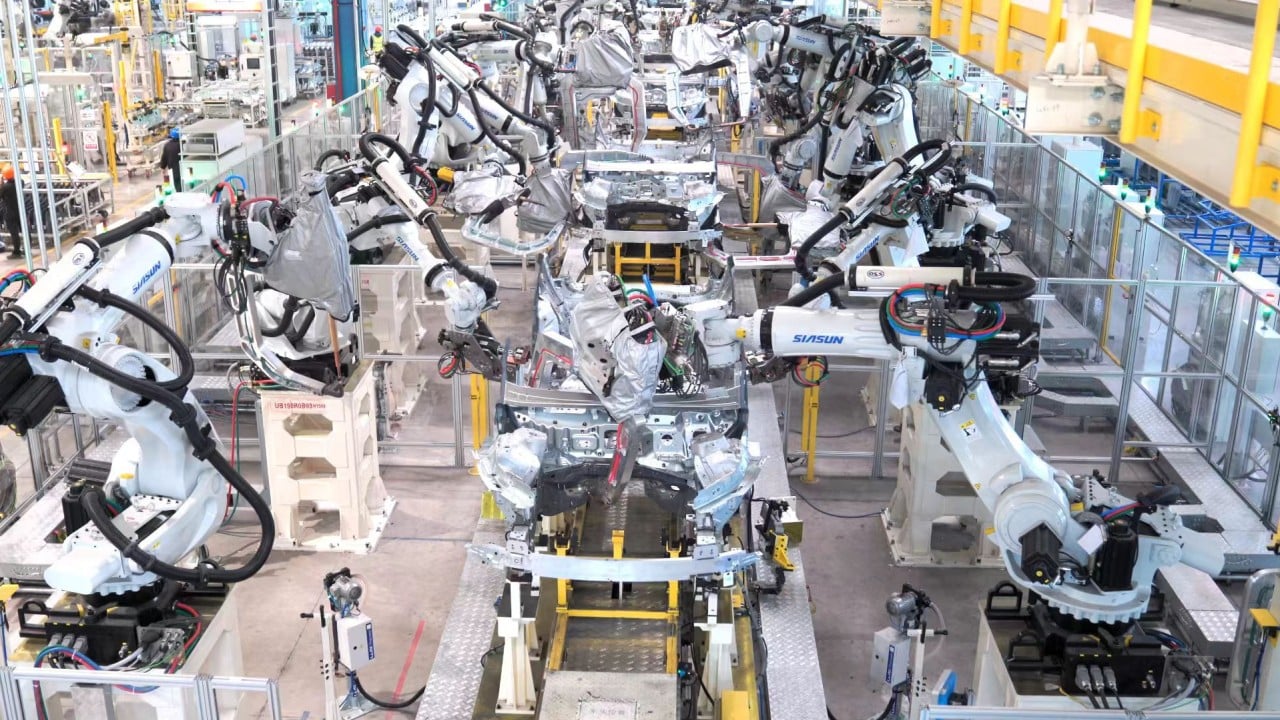
The heavy machinery sits waiting. Soon, the new tooling will arrive. Crates stamped with characters from across the globe will be unpacked by workers wearing blue coveralls. The smell of fresh paint and ozone will replace the stale scent of idling oil.
The plant will not look like it did in 1976. The cars rolling off the line will not sound like the loud, gas-guzzling sedans that built this town.
But as the first test chassis moves down the line, its metallic click echoing against the high concrete ceiling, one fundamental truth remains.
The spark is back on.