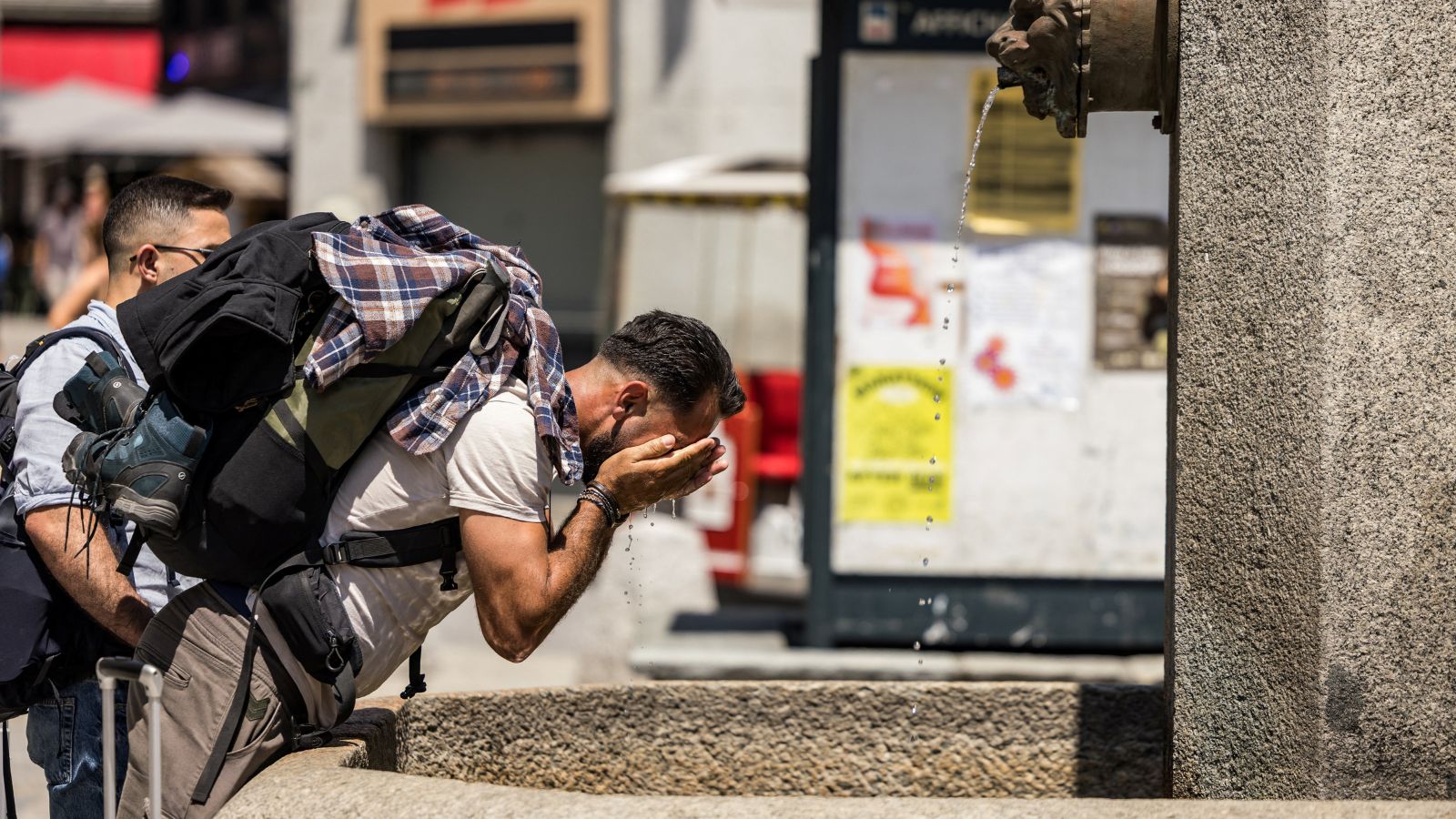
The air in Poznań does not move. By 10:00 AM, the pavement has already stopped feeling like stone and begun to feel like an iron skillet left too long on the burner. If you walk down the sidewalk, the heat hits you twice—once from the blank blue sky above, and once from the grey concrete beneath your boots.
We used to think of 40 degrees Celsius as a number reserved for holidays. It was the temperature of the Andalusian plains in July, or the deep, baked interior of Greece. It belonged to places where the houses are painted bright white to reflect the sun and the windows are built small to shut out the glare. It did not belong to the timber-framed villages of Saxony or the red-brick avenues of western Poland.
But numbers do not care about geography.
A massive ridge of high pressure is currently locking itself over Central Europe. It is dragging an invisible river of Saharan air directly across the continent, pinning it against the earth. By tomorrow afternoon, large swathes of Germany and Poland will hit 40 degrees. To understand what that actually means, you have to look past the red maps on the evening news. You have to look at how old European cities were built, and why they are uniquely unequipped to handle what is coming.
The Thermal Trap
Consider a typical apartment building in Berlin or Wrocław. Many of them were built a century ago, thick-walled and heavy, constructed from solid brick and mortar. In the winter, these buildings are a triumph. They hold the warmth of a radiator like a ceramic mug holds tea.
In a modern heatwave, that triumph becomes a trap.
Meteorologists call it the urban heat island effect, but for the people living inside it, it feels like an invisible weight. During the day, the brick absorbs the sun. It drinks the heat. For twelve hours, it stores that energy deep within its molecular structure. Then the sun goes down. In a normal summer, the night brings a cool breeze off the Oder or the Spree, washing the architecture clean.
Not this week.
When the nighttime temperature refuses to drop below 25 degrees, the brick cannot empty itself. It holds its breath. It continues to radiate heat inward, directly into the bedrooms where people are trying to sleep. The walls hum with warmth at 3:00 AM. The air grows thick and sour. Without air conditioning—which is still a luxury, not a standard, in over 90% of residential buildings across these two nations—the human body never gets a chance to reset.
Your heart rate stays elevated. Your core temperature refuses to drop. Sleep becomes a shallow, sweaty battle rather than a recovery period. By day three, the fatigue is no longer just tiredness; it is a physical ache.
The Invisible Toll
We are bad at understanding heat because we cannot see it. We see the aftermath of a flood or the blackened path of a forest fire. Heat leaves no broken glass. It makes no sound. It is a quiet predator that seeks out the vulnerable in their own living rooms.
Take a hypothetical resident, let us call her Janina, living on the fourth floor of a pre-war building in Łódź. She is seventy-four. Her mobility is limited, so she stays inside to avoid the midday glare. She closes her heavy curtains, just as the radio announcer suggested. But the air inside her apartment has already equalized with the brickwork. It is 36 degrees in her kitchen.
When the body gets too hot, it pumps blood to the skin to release heat. This means the heart has to work twice as hard, beating faster and harder to maintain blood pressure. If you are young and hydrated, you sweat, the moisture evaporates, and your temperature stabilizes. But Janina’s sweat glands do not work as efficiently as they used to. She does not feel thirsty until she is already dangerously dehydrated. Her kidneys begin to strain under the pressure of filtering thick, sluggish blood.
This is the real mechanism of a heatwave. It does not usually kill by sunstroke on a beach. It kills quietly, behind closed doors, by pushing existing frailties over the edge. A cardiovascular system that was managing perfectly well at 22 degrees simply runs out of fuel at 40.
The statistics back this up with brutal clarity. During the European heatwaves of recent decades, excess mortality figures showed that thousands of people died not from some exotic tropical illness, but from heart attacks and strokes that would have been preventable in a cooler climate. We look at the forecast and think about beer gardens and swimming pools. Public health officials look at the forecast and brace for an influx of elderly patients who simply cannot cool down.
Infrastructure Built for a Different Century
The crisis is not just biological; it is structural. The entire physical framework of Central Europe was engineered for a climate that is rapidly slipping away.
Consider the railways. Steel tracks are laid down with small gaps between them to allow for expansion when the weather warms. But those gaps were calculated based on twentieth-century maximums. When the air temperature hits 40 degrees, the steel itself can easily reach 50 or 60 degrees under direct sunlight. The metal expands past its limit. It twists. Tracks kink like old wire, forcing trains to halt or crawl at a fraction of their normal speed just when people are trying to escape the stifling cities.
Even the rivers, the historic arteries of German and Polish industry, are bucking against the heat. As the sun beats down on the Rhine, the Elbe, and the Vistula, the water levels drop while the water temperature rises. Power plants, which rely on these rivers for cooling water, are forced to dial back their output. They cannot dump hot water back into an already struggling ecosystem without killing off what remains of the fish populations.
It is a strange, cascading paradox: the hotter it gets, the more electricity we want to use, yet the less electricity our systems are capable of producing.
Learning to Live in the Soft Shadow
So, what do we do when the climate we built our lives around changes its face?
The temptation is to run to the nearest electronics store and buy a portable air conditioning unit. But that is a short-term fix that feeds the long-term problem, pumping hot air out onto the street while burning fossil fuels to keep a single room cool. The real shift has to be behavioral, historical, and architectural.
We have to look south. We have to learn the art of the midday pause, the deliberate slowing of life when the sun is at its highest. We have to accept that the old ways of working—relentless productivity through the heat of the afternoon—are not suited for a 40-degree world.
More than that, we have to change how our cities look. Berlin and Warsaw need more than just air-conditioned offices; they need vertical forests, pocket parks, and unpaved ground that can absorb water and provide shade. A mature oak tree provides the cooling power of ten industrial air conditioning units operating continuously, entirely for free, simply through the process of transpiration. We need to turn our concrete plazas back into spaces that breathe.
Until then, we watch the thermometer rise.
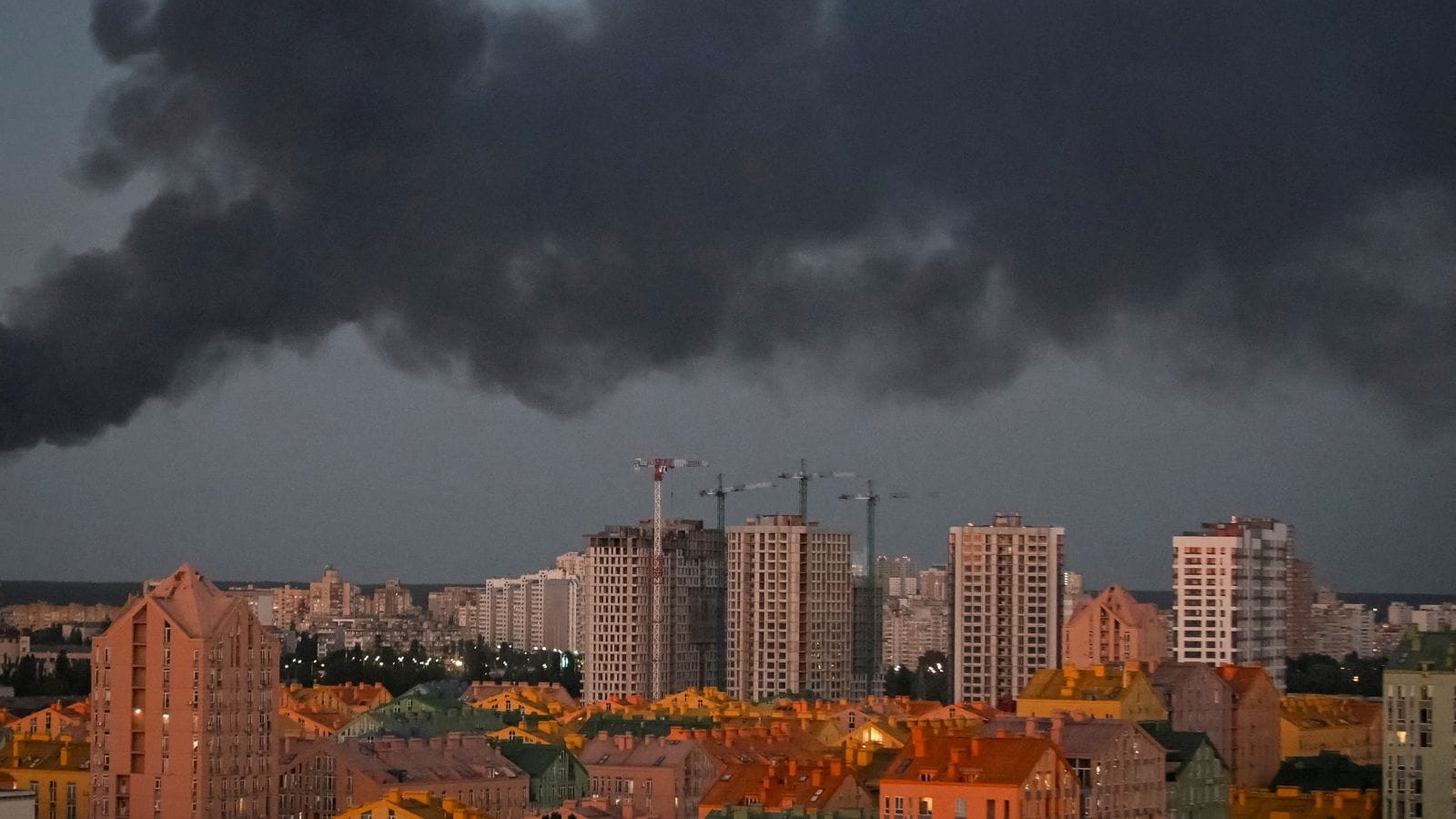
Tonight, the sun will set over the fields of Brandenburg and the hills of Silesia, leaving behind a sky the color of bruised plums. The light will fade, but the relief will not arrive. People will open their windows, hoping for a breeze, only to find the night air as warm and still as a exhaled breath. They will lie on top of their sheets, listening to the distant hum of traffic, waiting for a morning that promises only more of the same. The old brick buildings will hold onto their heat, keeping their secrets, until the sun climbs back over the horizon to light the furnace once again.