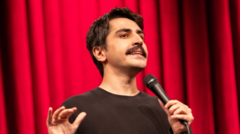
The arrest of stand-up comedians in Istanbul for jokes targeting President Recep Tayyip Erdogan and religious sensitivities marks a dangerous escalation in Turkey’s domestic policing of speech. This is no longer just about shutting down dissident newspapers or jailing veteran political reporters. The state security apparatus has moved into the smoky, late-night basement comedy clubs of Kadikoy and Beyoglu. By prosecuting comedians under ambiguous anti-insult laws, Turkish authorities are systematically erasing the final frontier of public dissent. The message from the palace is unmistakable. If you make an audience laugh at the state, you will find yourself in a jail cell.
The chilling effect across Turkey’s cultural sector is immediate and structural. Stand-up comedy, which experienced a massive boom in Istanbul over the last decade, has been forced to transform overnight. What began as a vibrant, raw space for young Turks to process economic hardship, political fatigue, and social friction has collided directly with the state's expanding definition of subversion.
The Mechanics of the Comedy Crackdown
To understand how a three-minute comedy set turns into an anti-terror investigation, one must look at the legal machinery of the modern Turkish state. Prosecutors do not need to prove a comic intended to incite a riot. They rely on broad statutes that criminalize the act of causing offense to state institutions or religious values.
The primary tool used by prosecutors is Article 299 of the Turkish Penal Code, which makes insulting the president a distinct criminal offense. Before Erdogan took office, this law was rarely invoked. It was a dusty legal relic. Under his administration, it has become an industrial-scale weapon for silencing critics. Tens of thousands of citizens have been investigated under this single article, ranging from high school students posting on Facebook to prominent actors speaking on talk shows.
When a comedian takes the stage, they face a double legal hazard. If a joke avoids the presidency, it can still trigger Article 216, which criminalizes provoking hatred and hostility among the public or insulting religious values. This dual legal framework ensures that almost any observation about contemporary Turkish life can be twisted into an indictable offense. A joke about hyperinflation can be framed as an attack on economic ministers. A satirical comment about conservative social norms is treated as an insult to Islam.
The process of arrest follows a predictable, terrifying pattern. A comic performs an experimental set at an open-mic night. A member of the audience records a snippet on a smartphone. The clip is uploaded to TikTok or X, formerly Twitter, often stripped of its context. Within hours, ultra-nationalist or conservative accounts spot the video, launching a coordinated harassment campaign. They tag the Ministry of Interior and local police departments, demanding action.
The state reacts with astonishing speed. Before the comedian can issue a clarification or delete the video, police arrive at their door in the early hours of the morning. Detentions are swift, public, and designed to maximize intimidation.
How Article 299 Became a Weapon of State
The transformation of Turkey’s legal system has shifted the boundaries of what is considered acceptable public discourse. Judges and prosecutors operate under intense political pressure. An acquittal in a high-profile free speech case can end a magistrate's career, leading to immediate reassignment to a remote province or worse.
This climate of fear inside the judiciary ensures that comedians rarely receive a fair hearing at the initial stages of their detention. The objective of the state is often not to secure a long-term prison conviction, though that remains a constant threat. The true goal is the process itself. The punishment begins the moment the handcuffs are applied.
A comic subjected to this system faces days in pre-trial detention, public defamation by state-aligned media outlets, and the immediate collapse of their professional life. Venues cancel their upcoming shows. Booking agents stop returning calls. Streaming platforms quietly remove their past specials from their libraries. The state effectively neutralizes the performer without ever needing a final verdict from a high court.
This strategy relies on the strategic weaponization of bureaucracy. Comedians find themselves trapped in a cycle of endless court appearances, travel bans, and weekly check-ins at local police stations. It is a slow, exhausting process designed to drain the financial resources and psychological resilience of the individual.
The Digital Trapdoors of Istanbul Comedy Clubs
The physical spaces where comedy thrives have changed dramatically, creating new vulnerabilities for performers. Ten years ago, the Turkish comedy scene was defined by large-scale television productions or highly polished, state-approved theatrical acts. The rise of American-style alternative stand-up changed everything.
Small, independent venues opened across Istanbul, offering a platform for unfiltered commentary. These clubs became sanctuaries for a generation that felt entirely unrepresented by the mainstream, government-controlled television networks. In these dark rooms, comedians spoke openly about the collapsing value of the Turkish Lira, the hypocrisy of bureaucratic elites, and the stifling pressure of religious conservatism.
The existential threat to this movement did not come from a lack of audience interest. It came from the digitization of the performance space. In the past, what happened in a comedy club stayed in the club. The intimacy of the venue protected both the performer and the audience.
That protection vanished with the ubiquity of smartphone cameras and short-form video platforms. Comedians themselves are caught in a brutal paradox. To build an audience and survive financially in a hyperinflationary economy, they must post clips of their routines online. Algorithms reward controversial or highly engaging content. Yet, the very clips that generate followers also serve as a digital paper trail for state prosecutors.
The clubs themselves are now forced to police their own patrons. Many venues in Istanbul have instituted strict no-recording policies, forcing guests to place their phones in sealed bags upon entry. Some club owners have gone further, vetting the material of younger comics before allowing them onto the stage. This defensive posture is a matter of commercial survival. If a club becomes associated with a controversial performance, local municipalities can revoke its alcohol license or find administrative excuses to shut the business down permanently.
The Business of Fear in Corporate Entertainment
The consequences of this crackdown extend far beyond the underground clubs of Istanbul. The entire economic ecosystem supporting independent artists in Turkey is fracturing under the weight of political risk.
Corporate gigs, which once provided comedians with a stable source of income, have completely dried up for anyone who steps near political commentary. Turkish corporations, many of which rely on government contracts or state regulatory approval to survive, are terrified of controversy. Human resource departments now conduct extensive social media audits of any performer considered for a company event. If a comic has ever liked a tweet critical of the administration, they are blacklisted.
This financial starvation forces a stark choice upon the creative community. Comedians must either scrub their acts of all meaningful social critique or accept a life of permanent economic precarity. Those who choose the path of safety turn to highly generalized, observational humor about relationships, family dynamics, and regional accents. While these topics can be funny, the forced retreat from political reality leaves the cultural landscape hollowed out.
The loss is felt deeply by the public. In a society where traditional journalism has been systematically dismantled, comedians often served as the only truth-tellers left. They articulated the absurdity of everyday life in a country undergoing profound political and economic mutations. When the state silences the comic, it silences the collective sigh of relief that comes with shared laughter.
Shifting Red Lines and the Informal Censorship Network
One of the most insidious aspects of the current environment is the unpredictability of the censorship. The red lines are constantly moving. What was permissible last month can trigger an arrest warrant today, depending on the current anxieties of the ruling coalition.
This instability is magnified by a network of informal censors. These are not government officials in uniforms, but hyper-partisan digital mobs and pro-government columnists who act as vigilantes. They actively hunt for content that can be framed as an attack on national dignity or religious sentiment.
When these groups target a comedian, they create a narrative that the state is forced to validate. The government reacts to the manufactured outrage of its core constituency by ordering arrests to signal strength and cultural purity. This feedback loop between digital mobs and the justice system means that comedians are effectively performing for an audience that includes thousands of hostile, invisible monitors.
The pressure is particularly intense for female comedians and performers from minority backgrounds. Their material is scrutinized not just for political subversion, but for violations of traditional gender roles and patriarchal expectations. A female comic discussing sexuality or challenging traditional family structures faces a double wave of condemnation from conservative media outlets, which frequently label such performances as immoral and un-Turkish.
The Price of a Punchline in the New Turkey
The international community often views these developments through the lens of abstract human rights violations. For the comedians living through it, the reality is a series of quiet, devastating compromises.
Some of the country's most talented performers have chosen exile, moving to Berlin, London, or Amsterdam to perform for the Turkish diaspora. In these foreign cities, they can speak without fear of the police knocking on their door at dawn. But comedy is deeply rooted in the immediate, lived experience of a place. Removed from the streets of Istanbul, the material can lose its edge, turning into nostalgia rather than sharp, relevant critique.
For those who remain, the pressure to self-censor is immense. Every time a writer sits down to draft a new bit, an invisible censor sits beside them. They must weigh the comedic value of a line against the potential cost of their freedom. They calculate the risks of specific words, wondering if a metaphor is too obvious or if an impression is too accurate.
This internal negotiation is the ultimate victory of the authoritarian state. It does not need to place a police officer in every theater or a censor at every microphone. By making the consequences of transgression so severe and unpredictable, it forces the artists to police themselves. The comedy that survives this process is inevitably diluted, stripped of the vital friction that makes the art form essential to a healthy society. The stage is left quiet, sterilized, and perfectly compliant.