A stack of manila folders sits on a desk in Montreal. Each folder is three inches thick, secured by a thick rubber band that has begun to dry and crack. Inside are not just papers, but the architecture of a childhood. Call logs. Police reports. Psychological evaluations. Emergency intervention orders. If you run your finger over the edge of the pages, you can feel the physical weight of a system trying, and often failing, to substitute for a family.
For years, the Quebec youth protection system, known locally as the DPJ (Direction de la protection de la jeunesse), has operated under this crushing weight.
To understand the current state of reform in Quebec, you have to look past the ministerial press conferences and Ministerial statements. You have to look at the quiet moments in the waiting rooms. Imagine a seven-year-old girl sitting on a vinyl chair, clutching a plastic bag filled with her entire life: a mismatched pair of pajamas, a headless Barbie, and a half-empty pack of wet wipes. She does not care about legislative amendments. She cares about whether the person walking through the door next is going to take her somewhere safe, or somewhere temporary.
The system is changing. But for the children caught in its gears, change moves at the speed of glaciers.
The Weight of the Backlog
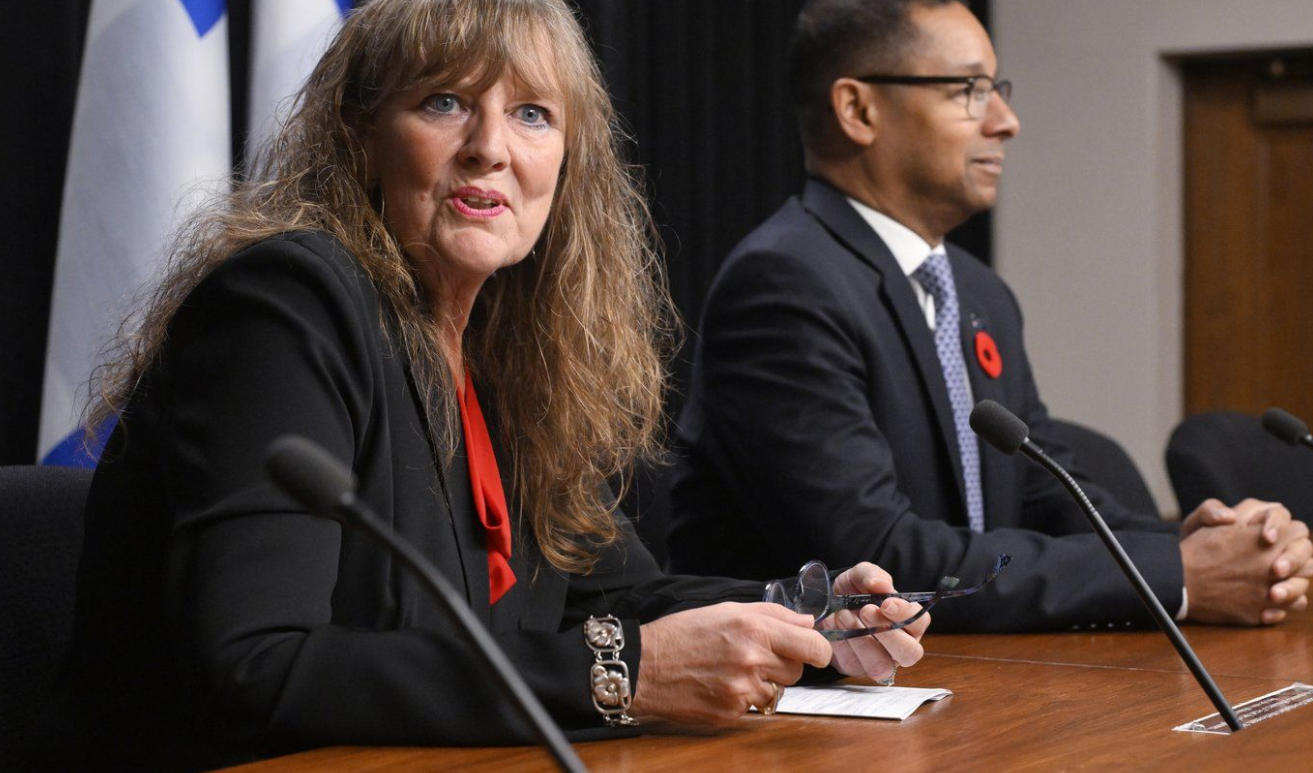
Recently, Lionel Carmant, Quebec’s Minister for Social Services, stood before the public to offer an update on the provincial youth protection overhaul. The tone was one of cautious optimism mixed with a stark admission of reality. Progress has been made. The numbers are moving, shifting downward in some critical areas. Yet, the foundational work is far from finished.
The core problem has always been time. In youth protection, time is not an abstract concept; it is a scar.
When a report is filed concerning a child at risk, a clock begins to tick. If the system takes weeks or months to evaluate that report, a child remains in an environment of neglect or abuse. Conversely, if a child is removed too quickly without proper assessment, a family is severed unnecessarily. Balance is incredibly difficult to achieve when the system is starved for oxygen.
Consider the data driving the current legislative push. For years, the waitlists for psychological evaluations and foster placements grew exponentially. The Laurent Commission, a massive public inquiry launched after the tragic death of a seven-year-old girl in Granby in 2019, exposed deep systemic fractures. It revealed a culture of bureaucracy that had grown so rigid it forgot its primary purpose: the immediate safety and emotional well-being of the human beings in its care.
The government’s response was a sweeping promise of reform. Funding was injected. Staffing models were reworked. The law was changed to prioritize the continuity of care and the voice of the child.
But a system is made of people, not just laws.
The Human Toll of Burnout
Talk to any caseworker in any region of Quebec, from the bustling streets of Quebec City to the remote communities of the Nord-du-Québec, and they will tell you the same thing. They are exhausted.
A caseworker is expected to be a investigator, a therapist, a legal expert, and a surrogate parent all at once. They carry caseloads that defy logic. When you have thirty open files, you do not have time to sit on the floor and play blocks with a traumatized toddler to see how they interact with their environment. You have time to check boxes. You have time to file the paperwork so you do not get sued if something goes wrong.
This leads to a vicious cycle. Burnout causes high turnover. High turnover means a single child might have four different caseworkers in the span of a year.
Every new caseworker means a new face, a new set of questions, and a new requirement for the child to repeat their trauma. "Tell me again what happened the night the police came." It is an interrogation disguised as help. The child learns quickly that adults are temporary fixtures, like the weather or a rental car.
Minister Carmant acknowledged this friction. The latest figures suggest that the number of children waiting for an initial assessment has decreased in several regions. This is a genuine victory. It means the immediate, acute pressure is lifting slightly from the top of the funnel. Fewer children are stuck in the limbo of the unexamined file.
Yet, the downstream problem remains. Once a child is assessed and deemed to need protection, where do they go?
The Illusion of Placement
The shortage of foster families in Quebec is a quiet crisis. In the past, the province relied heavily on a network of traditional foster homes—families who opened their doors out of a sense of civic duty or religious charity. Today, economic pressures and shifting societal structures mean fewer people are able or willing to take on the profound, complicated challenge of raising someone else’s traumatized child.
To fill the gap, the system has relied on group homes and institutional placements.
These are not inherently evil places. Many are staffed by deeply dedicated educators who work long shifts for modest pay. But a group home is not a family. It is an institution with a shift schedule. It is a place where the alarms go off at a certain time, where meals are prepared in industrial quantities, and where the person who tucks you in at night is replaced by a different person at midnight because the shift changed.
This is where the concept of "cultural safety" becomes vital, particularly for Indigenous and cultural minority communities within Quebec. For decades, the DPJ disproportionately removed children from Indigenous families, repeating the historical traumas of the residential school system.
The current reform efforts place a heavy emphasis on keeping children within their communities, transferring authority over child welfare to Indigenous nations wherever possible. It is a necessary, vital correction. But building that infrastructure from scratch takes time, resources, and a willingness by the provincial government to truly cede control.
Moving the Needle
The progress reported by the ministry isn't just about statistics; it's about shifting the philosophy of care. The system is slowly moving away from a reactive model toward a preventative one.
Historically, the DPJ intervened when the crisis had already erupted. The house was already on fire. The new approach attempts to identify families in distress long before the match is struck. This means integrating youth protection with community organizations, schools, and local health clinics. It means offering respite care to a single mother struggling with addiction before she reaches the point of abandonment.
It is a beautiful theory. In practice, it requires an unprecedented level of inter-departmental cooperation in a provincial bureaucracy not known for its agility.
The tension lies between the urgency of political cycles and the slow reality of human healing. A minister needs to show results before the next election. A child needs a stable environment for a decade to undo the damage of their first three years of life. These two timelines are fundamentally incompatible.
When we look at the reduction in wait times, we must ask what happens to the quality of the intervention. Is a faster assessment a better assessment? Not necessarily. If a caseworker is rushed to close a file to meet a regional target, the underlying vulnerability of that family may go unnoticed until the next crisis occurs.
The Long Road
The reform of the Quebec youth protection system is a project that will span generations. The current administration has taken steps that previous governments avoided, facing the realities of the system with a degree of transparency that was previously rare. They have admitted the system was broken. They have put money on the table.
But the work left to do is the hardest part. It is the granular, unglamorous work of retaining staff, supporting foster families, and rebuilding trust with communities that have been harmed by the state for decades.
It requires us to look at youth protection not as a budget line item or a political liability, but as a mirror reflecting our collective values. A society is judged by how it treats its most vulnerable, and there is no one more vulnerable than a child whose own family cannot keep them safe.
The folders will remain on the desks in Montreal and across the province. They will continue to fill with stories of pain, resilience, and survival. The success of the current reforms will not be measured by the graphs presented in the National Assembly. It will be measured by whether the next generation of children caught in the system have fewer pages in their folders, and more stability in their lives.
The sun sets over a group home in the suburbs. Inside, a teenager sits on the edge of a bed that isn't truly theirs, looking out the window at a street they don't know, waiting to see what tomorrow's shift change will bring.