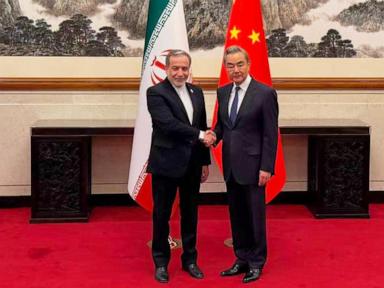
The diplomatic press is currently swooning over a scripted phone call. Beijing calls for a "comprehensive ceasefire" in the Middle East, Tehran nods in feigned agreement, and the world’s editorial boards rush to frame this as China finally stepping into the boots of a global mediator.
They are missing the point. If you found value in this post, you might want to look at: this related article.
China’s demand for a ceasefire is not a peace initiative. It is a risk-mitigation strategy for a commodity buyer that is terrified of a supply shock. Iran’s cooperation is not a sign of de-escalation; it is a calculated stall tactic while it maneuvers its regional proxies. When Wang Yi speaks to his Iranian counterpart, he isn't trying to save lives in Gaza or Lebanon. He is trying to protect the Belt and Road Initiative (BRI) from a fire it can’t put out and an energy bill it can’t afford.
The Myth of the Great Mediator
The "lazy consensus" suggests China is filling the vacuum left by the United States. This narrative relies on the 2023 Saudi-Iran rapprochement as proof of concept. But let’s be honest: China didn't build that bridge. It just cut the ribbon after the Saudis and Iranians had already spent two years exhausted by their own cold war. For another look on this story, check out the latest coverage from The Guardian.
China’s diplomacy is transactional, not transformational.
While Western powers often tie aid or trade to "values" or "governance," Beijing’s framework is strictly about the bottom line. This makes them a comfortable partner for Tehran, but it also makes them a useless peacemaker. A real mediator has to be willing to apply pressure. Beijing has no "carrots" to give that aren't already bought and paid for, and it has zero "sticks" because it cannot risk its energy security.
If China actually pressured Iran to rein in its proxies, it would jeopardize the 25-Year Strategic Accord. If it doesn't, it risks a regional war that spikes oil prices and shutters the Red Sea—a vital artery for Chinese exports to Europe. Beijing is paralyzed by its own dependency. The "comprehensive ceasefire" talk is a smoke screen for that paralysis.
Why a Ceasefire Is a Trap for Regional Stability
Everyone asks, "How do we get a ceasefire?"
Nobody asks, "What happens to the power vacuum the day after?"
The standard diplomatic line is that a ceasefire leads to a "two-state solution" or "regional stability." This is a fantasy. In the current Middle Eastern architecture, a ceasefire is simply a reloading period.
- The Proxy Paradox: A ceasefire without the total dismantlement of non-state actors (Hezbollah, Houthis) simply validates the Iranian "Forward Defense" doctrine. It signals that you can ignite a region, wait for international pressure to force a pause, and then keep your hardware for the next round.
- The Beijing Benefit: For China, a frozen conflict is better than a resolved one. A resolved conflict might involve a pro-Western security architecture (like an expanded Abraham Accords). A frozen conflict keeps the U.S. bogged down in the Levant, bleeding resources and political capital, while China continues to buy discounted Iranian oil.
When Wang Yi calls for a ceasefire, he is effectively asking to hit the "pause" button on a DVR so he can go get a snack. He has no intention of finishing the movie.
Follow the Oil Not the Rhetoric
To understand why China’s "peace" talk is theater, look at the flow of SIPC (Sinopec) and CNPC tankers.
China is the world's largest importer of crude. Iran is its "private gas station," often bypassing sanctions through "teaming" and ship-to-ship transfers in the South China Sea.
"Imagine a scenario where China actually forced Iran to stop its regional aggression. The immediate response from Tehran would be to threaten the flow of oil or demand higher prices to offset their lost leverage. China won't do it. They’d rather watch a dozen cities burn than pay $120 a barrel for Brent."
This is the "battle scar" of real-world geopolitics. I have seen analysts claim that China's "neutrality" is an asset. It isn't. It's a liability. True neutrality requires the ability to walk away from the table. China is chained to the table by its own industrial demand. They aren't "negotiating" with Iran; they are pleading for a stable environment to continue their extraction.
The PAA Dismantling: Why You’re Asking the Wrong Questions
People Also Ask: Is China replacing the US as the Middle East’s power broker?
No. Being a power broker requires a security guarantee. Will China send the PLA Navy to escort tankers in the Gulf? No. Will they put "boots on the ground" to enforce a buffer zone? Never. They are a security free-rider. They want the U.S. to maintain the freedom of navigation while they use their political capital to criticize the U.S. for doing it.
People Also Ask: Can Iran trust China?
Only as far as the next invoice. Iran knows China will dump them the second a cheaper, more stable energy source becomes available or if the U.S. offers a grand bargain that benefits Beijing’s domestic economy more. This isn't an alliance; it's a marriage of convenience where both parties have their bags packed.
The Unconventional Truth: We Don't Want China to "Succeed"
The "competitor" articles suggest that Chinese involvement is a hopeful sign.
It’s actually a warning.
If China successfully brokers a "peace" on its terms, it will be a peace that excludes human rights, ignores the proliferation of ballistic missiles, and cements a permanent Iranian hegemony in the northern Middle East. It would be a "Pax Sinica" where stability is bought through the silence of the oppressed and the guaranteed flow of cheap hydrocarbons to Shanghai.
We shouldn't be cheering for a "comprehensive ceasefire" brokered by a nation that views international law as a suggestion and regional proxies as "sovereign partners."
The Actionable Reality for Global Markets
Stop trading on the news of "diplomatic breakthroughs" between Beijing and Tehran.
If you are an investor or a policy analyst, look at the freight rates in the Suez and the insurance premiums for tankers in the Strait of Hormuz. Those numbers tell you the truth. If the people actually moving the world’s goods aren't buying the "peace" narrative, neither should you.
China’s "comprehensive ceasefire" is a desperate plea for a return to the status quo—a status quo that allowed them to grow their empire on the back of American-guaranteed security and Iranian-fueled energy. That era is over. The Middle East is no longer a place where you can buy stability with a phone call and a shipment of Huawei routers.
Beijing is playing a 20th-century diplomatic game in a 21st-century powder keg. They aren't leading. They are terrified. And a terrified superpower makes for a terrible peacemaker.
The next time you see a headline about China’s "rising role" in Middle East peace, remember: you don’t ask the guy buying the house for an unbiased appraisal of the foundation. You certainly don't ask him to fix the leaks while he’s trying to lower the closing costs.
China wants the oil. Iran wants the time. The "ceasefire" is just the packaging.
Stop looking for a savior in the East. Beijing isn't bringing peace; they’re bringing a bill.