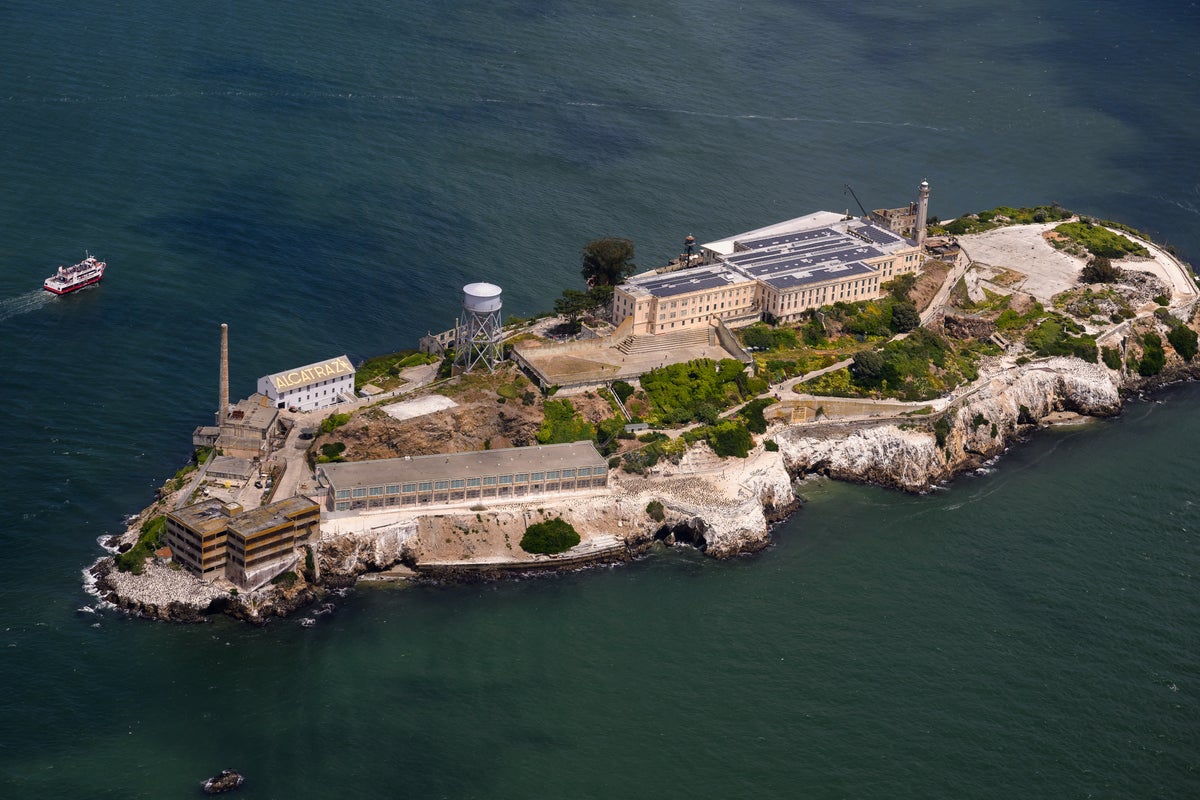
Wildlife experts thought they had the San Francisco Bay figured out. They assumed the frigid, high-velocity currents acted as a natural moat, keeping apex predators confined to the mainland or the sprawling greenery of the Presidio. Then a coyote showed up on Alcatraz.
This wasn't supposed to happen. Alcatraz is a desolate rock sitting over a mile and a quarter from the nearest shore, surrounded by some of the most treacherous shipping lanes on the planet. For a long time, people figured any coyote spotted on "The Rock" must have been a stowaway or a victim of a cruel prank. We were wrong.
The reality is much more impressive—and a little bit terrifying if you’re a nesting seabird. National Park Service biologists confirmed that these resilient canines are making the swim. They aren't just surviving the bay; they're conquering it. This isn't just a quirky animal story. It’s a loud wake-up call about how little we actually understand regarding the physical limits of urban predators.
The Physical Feat That Should Have Been Impossible
If you've ever looked at the water between Crissy Field and Alcatraz, you know it isn't a swimming pool. It’s a churning mess of 50-degree water moving at speeds that can sweep a human out to the Golden Gate Bridge in minutes. To make that two-mile crossing, a coyote has to fight relentless tides and avoid boat traffic in one of the busiest harbors in the world.
Biologists from the California Academy of Sciences and the National Park Service have been tracking these movements. While coyotes are known to be decent swimmers, a two-mile open-water trek in high-current conditions was previously considered outside their typical behavior profile. It's a high-risk, high-reward gamble. Most animals wouldn't dream of it. But coyotes aren't most animals.
They're built for endurance. Their thick double coats provide a layer of insulation, and their lean muscle mass allows for efficient movement. Still, the energy expenditure required for a crossing like this is massive. They aren't doing this for a scenic view. They're doing it because Alcatraz is a buffet.
The Alcatraz Buffet and the Ecological Impact
Why would a coyote risk drowning to reach a prison island? The answer is simple: food. Alcatraz is a sanctuary for thousands of nesting birds. You have Western Gulls, Black-crowned Night Herons, and Brandt’s Cormorants all crammed onto a small landmass with zero natural predators. Until now.
When a coyote lands on the island, the power dynamic shifts instantly. It’s no longer a protected sanctuary; it’s a closed-circuit hunting ground. Park rangers have documented the impact, noting that a single coyote can disrupt nesting patterns for an entire season. The birds have no instinctual defense against a mammalian predator on this specific rock. They didn't evolve for this.
This creates a massive headache for the National Park Service. On one hand, the coyote is a native species showing incredible adaptability. On the other, the seabird colonies are federally protected and highly vulnerable. It’s a conservation catch-22 that doesn't have an easy solution. You can't exactly put up a fence in the middle of the bay.
How Urban Coyotes Redefined Survival
We used to think of coyotes as "scavengers" that lived on the fringes of our cities. That's an outdated view. Today’s urban coyote is an elite athlete and a master of navigation. The swim to Alcatraz is just the latest piece of evidence.
In San Francisco, coyotes have become a permanent fixture of the urban landscape. They've learned to read traffic lights. They know the exact timing of when people leave their trash out in the Richmond District. They use the city's green corridors like a private highway system. This leap to the islands suggests they're looking at the entire Bay Area—water included—as their personal territory.
Experts like Janet Neilson from the National Park Service have pointed out that coyotes are increasingly comfortable in human-dominated spaces. They aren't "lost." They're expanding. This isn't a case of a confused animal taking a wrong turn at the pier. It's an intentional expansion into a new niche.
Why We Keep Underestimating Them
Most people still view wildlife through a lens of "wild" vs. "civilized." We think animals belong in the woods and we belong in the city. Coyotes don't care about our boundaries. They see a gap in the ecosystem and they fill it.
The shock felt by wildlife experts when the Alcatraz coyote was first spotted stems from a bit of scientific hubris. We assumed the physical barriers we see—like the bay—are the same barriers animals see. They isn't. To a hungry, motivated coyote, the water is just another path to a meal.
We’ve seen similar behavior in other parts of the country. In Chicago, coyotes have been tracked living in parking garages and eating mice in subway tunnels. In New York, they've crossed bridges to reach Manhattan. The Alcatraz swim is just the maritime version of this relentless drive to explore.
Managing the New Reality of the Bay
What happens next isn't exactly clear. The National Park Service generally tries to let nature take its course, but when a single predator threatens the survival of a massive bird colony, they have to step in. In the past, coyotes that reached the island have been trapped and relocated back to the mainland.
But relocation is often a temporary fix. Coyotes are territorial. If you move one, another will eventually take its place. The "vacancy" on Alcatraz is too tempting to stay empty for long.
The broader takeaway for anyone living in the Bay Area is that our environment is much more connected than we think. Your backyard in the Sunset District is linked to the cliffs of the Presidio, which are linked to the shores of Alcatraz.
Don't leave pet food outside. Keep your small dogs on a leash, even in areas you think are "safe." The coyote that can swim two miles through a freezing tide is a coyote that isn't intimidated by your backyard fence. We’re living in their world now, and they're proving every day that they're the ones making the rules.
If you see a coyote on the move, give it space. Report sightings to the local park authorities, especially if the animal is in a high-traffic area. We need to stop being surprised when these animals do something incredible and start respecting the fact that they've figured out how to beat us at our own game.
Check the local NPS bulletins if you're planning a trip to the island. They often post updates on wildlife activity and how it might affect your tour. Watch your step, keep your distance, and remember that the "Rock" isn't as isolated as it looks.