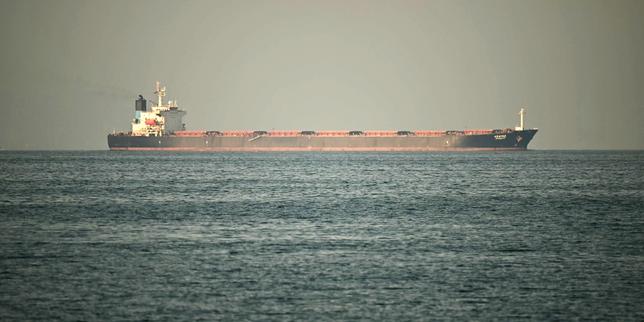
The closure of the Strait of Hormuz is not a binary event but a spectrum of kinetic and economic disruptions governed by the physics of maritime geography and the inelasticity of global energy markets. While traditional reporting focuses on the "turmoil" in Tehran, a structural analysis reveals that the Strait functions as a high-pressure valve for 21 million barrels of oil per day (bpd)—roughly 21% of global petroleum liquid consumption. Any disruption here does not merely raise prices; it breaks the physical continuity of the global supply chain, forcing a transition from market-based allocation to state-led rationing.
The Triad of Interdiction: How a Shutdown Functions
A total cessation of traffic in the Strait is technically difficult to maintain but strategically simple to initiate. Iran’s capability to shutter the waterway rests on three distinct operational layers, each with a different decay rate and economic impact.
- Asymmetric Saturation: The deployment of thousands of naval mines, specifically bottom-moored and influence mines (EM-52 variants), creates a "denial of entry" that requires months of slow-speed mine countermeasures (MCM) to resolve.
- Coastal Defense Cruise Missiles (CDCMs): Utilizing mobile launchers along the 600km coastline, Tehran can enforce a "no-sail zone" without ever putting a hull in the water. This forces insurance premiums to exceed the value of the cargo, effectively halting commercial traffic via financial blockade.
- Swarming and Seizure: The use of Fast Attack Craft (FAC) to board and divert tankers into Iranian waters serves as a psychological deterrent, signaling that even "protected" convoys are subject to boarding and delay.
The interaction of these three layers creates a Friction Coefficient. Even if the U.S. Navy’s Fifth Fleet can escort a single tanker, the aggregate throughput of the Strait drops because the required "clearing time" for safe passage increases by an order of magnitude.
The Inelasticity Trap: Why the Global Economy Cannot Pivot
The fundamental weakness of the global energy market lies in its inability to substitute 20% of its volume in real-time. Economics dictates that when supply is perfectly inelastic in the short term, price discovery becomes chaotic.
- Pipeline Divergence: The total bypass capacity—primarily the Saudi East-West Pipeline (Petroline) and the Abu Dhabi Crude Oil Pipeline (ADCOP)—is approximately 6.5 to 7 million bpd. This leaves a structural deficit of 14 million bpd that has no terrestrial exit.
- The Buffer Problem: Strategic Petroleum Reserves (SPR) in IEA member countries are designed for supply shocks, but they are localized. Releasing oil from the U.S. Gulf Coast does not solve the physical shortage of specific grades (like Arab Light or Murban) required by Asian refineries in Japan, South Korea, and China.
- Refinery Mismatch: Global refineries are calibrated for specific chemical "cocktails." The loss of Middle Eastern sour crudes cannot be instantly mitigated by an increase in U.S. light sweet shale oil. The resulting "Refining Gap" leads to localized fuel shortages even if the total global volume of oil appears sufficient on paper.
The Insurance and Legal Cascade
A closure initiates a series of "Force Majeure" declarations that ripple through the maritime and financial sectors. This is the "Paper Blockade" that precedes the physical one.
Once the Strait is declared a war zone by the London-based Joint War Committee (JWC), War Risk Insurance premiums surge. If the Strait is physically closed, "blocking and trapping" insurance clauses are triggered. Most commercial shipping contracts include a Liberty Clause, allowing the carrier to discharge cargo at any safe port if the intended destination becomes dangerous. This leads to a massive accumulation of stranded assets in ports like Fujairah or Singapore, creating a secondary logistical crisis as global container and tanker availability plummets.
Quantifying the Escalation Ladder
To analyze the duration of a closure, one must evaluate the MCM Clearing Rate. The U.S. and its partners utilize autonomous underwater vehicles (AUVs) and SeaFox systems to neutralize mines. However, the geographic bottleneck is so narrow—the shipping lanes are only two miles wide in each direction—that a single "leaked" mine can reset the risk assessment for the entire industry.
- Phase I (Days 1-7): Initial shock. Brent crude prices experience a "Fear Premium" of $30-$50 per barrel. Logistics firms freeze all movement in the Gulf of Oman.
- Phase II (Days 8-30): The "Inventory Drawdown." Refineries in China and India begin to eat into their 90-day stocks. Global GDP growth begins to contract as energy costs feed into the Producer Price Index (PPI).
- Phase III (Day 30+): The "Structural Break." If clearing operations take longer than four weeks, the global economy enters a forced decarbonization or "Demand Destruction" phase. Industries like aviation and plastics manufacturing face insolvency.
Strategic Realignment of the Energy Map
The long-term consequence of a Hormuz shutdown is not just a temporary price spike, but a permanent shift in how sovereign states value "Security of Supply" over "Lowest Cost of Delivery."
The failure of the Strait as a reliable artery forces a pivot toward the Trans-African and Arctic routes. We are already seeing the precursor to this in the expansion of the Northern Sea Route (NSR) and the acceleration of hydrogen-based industrial hubs in North Africa. These are not environmental choices; they are defensive diversions intended to bypass the Iranian chokepoint.
The critical vulnerability for Tehran in this scenario is the Import-Export Paradox. Iran remains dependent on the import of refined gasoline and the export of its own crude to maintain domestic stability. By closing the Strait, Tehran effectively blockades its own economy. This creates a "Time-Limited Lever": Iran can hold the world hostage only as long as its internal reserves can sustain its population. Once those reserves fail, the regime faces an internal existential threat that outweighs the external leverage gained by the closure.
The operational reality for any strategist is clear: the Strait of Hormuz is the single point of failure for the 20th-century energy model. The only viable counter-strategy is the aggressive decentralization of energy production. This includes the deployment of Small Modular Reactors (SMRs) and the localized production of synthetic fuels, which eliminate the need for the physical transit of liquid hydrocarbons through contested maritime corridors.
The most effective play for a global entity now is to hedge against the "Hormuz Variable" by diversifying sourcing toward the Atlantic Basin and the Eastern Mediterranean, where the transit risks are governed by different geopolitical calculus. Those who treat the Strait as a stable constant in their supply chain are operating on a legacy framework that no longer aligns with the kinetic realities of 2026.