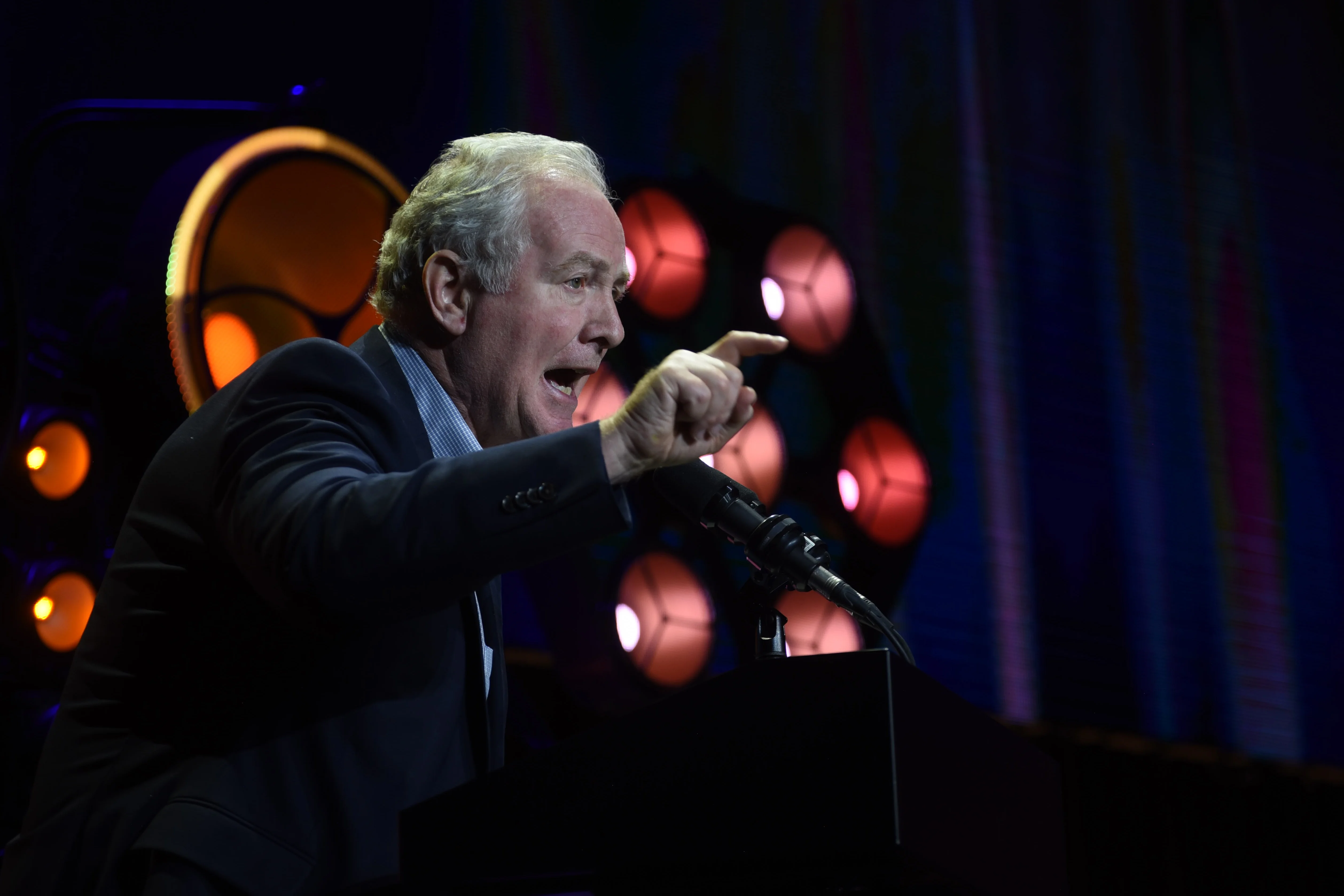
Maryland Senator Chris Van Hollen has launched a direct challenge against longtime Democratic leader Chuck Schumer for the role of Senate Majority Leader ahead of the December 1, 2026 secret-ballot vote. Van Hollen and his progressive supporters argue that Democrats regained the Senate majority in the 2026 midterm elections because voters demanded bold structural change rather than cautious Washington politics. Meanwhile, Schumer allies and political analysts point out that insider caucus dynamics, institutional seniority, and private ballot realities make unseating a sitting leader an uphill battle.
This leadership race isn't just a personality clash between two veteran lawmakers. It represents a deeper tug-of-war inside the Democratic Party over foreign policy, campaign finance, and how aggressively the Senate should confront the White House when the 120th Congress convenes in January.
Why Chris Van Hollen Entered the Race
For nearly a decade, Chuck Schumer has led Senate Democrats, first taking the helm in 2017 after serving in Congress since 1981. After Democrats won back control of the Senate in the November 2026 midterms, most observers expected Schumer to smoothly transition back into the majority leader's office. Van Hollen disrupted that script on November 12, 2026, when he formally announced his bid to lead the caucus.
In his announcement and subsequent interviews with outlets like ABC News and The Guardian, Van Hollen framed the midterm victories not as a validation of party leadership, but as a grassroots revolt against the status quo. He argued that voters rejected "business as usual" and "a corrupt political system," insisting that Democrats can't meet the moment with "poll-washed and pundit-rinsed and donor-dried messages".
Several prominent progressives quickly lined up behind Van Hollen's bid. Vermont Senator Bernie Sanders announced his support early, alongside incoming lawmakers like Michigan Senator-elect Abdul El-Sayed and Minnesota Senator-elect Peggy Flanagan. El-Sayed stated that while the public rejected Trumpism at the ballot box, Democrats still haven't earned a lasting mandate and need bolder leadership to deliver it.
The Core Policy and Strategic Divides
To understand why Van Hollen believes he can make a persuasive case to his colleagues, you have to look at the sharp contrasts in how the two senators have approached major legislative and political battles over the past two years.
Foreign Policy and the U.S.-Israel Relationship
Perhaps the starkest divide centers on Middle East policy and the future of the U.S.-Israel relationship. According to reporting from The Guardian and The Times of Israel, this leadership contest has become a proxy fight over how Democratic leaders handle Israel, Gaza, and the broader conflict involving Iran.
- Van Hollen's approach: Although he ran as a traditional pro-Israel Democrat during his 2016 Senate campaign, Van Hollen has emerged as one of the sharpest critics of the Israeli government inside the caucus. He has supported efforts to restrict U.S. weapons transfers to Israel, urged Democratic candidates to reject campaign contributions from AIPAC, and advocated for Americans killed by Israeli soldiers and settlers. He also drew headlines for meeting with Columbia University student Mahmoud Khalil following Khalil's release from ICE detention.
- Schumer's approach: As the highest-ranking Jewish elected official in American history, Schumer has maintained a longstanding commitment to the U.S.-Israel alliance. Critics on the left, including commentators in The Guardian, have faulted him for continuing to accept pro-Israel PAC support and for issuing a statement saying he abhorred Khalil's views at the time of Khalil's arrest, even while noting that peaceful speech is constitutionally protected. Supporters of Schumer argue in outlets like The Times of Israel that his steady approach preserves bipartisan backing for a key American ally.
Confrontation Versus Legislative Compromise
Van Hollen's allies also point to differences in political temperament and legislative tactics. Advocacy groups such as Movement Voter Project (MVP) have highlighted several flashpoints where Van Hollen pushed for a more aggressive posture than Schumer:
- Spending and healthcare fights: Progressive critics argue Schumer conceded too much during federal spending negotiations, missing opportunities to extend Affordable Care Act subsidies or place tighter restrictions on Immigration and Customs Enforcement. Van Hollen pushed for a harder line during those standoffs.
- Immigration visibility: While Schumer reportedly advised Democrats to downplay immigration as a campaign issue, Van Hollen traveled directly to San Salvador in April 2025 to meet with Kilmar Abrego Garcia, a Maryland resident who had been wrongfully deported by the Trump administration.
- Primary endorsements and party building: Critics note that Schumer backed establishment recruits like Haley Stevens in Michigan's Senate primary—who lost to Abdul El-Sayed—while withholding endorsements from progressive primary winners like New York mayoral candidate Zohran Mamdani. Van Hollen, by contrast, was the second sitting senator to endorse El-Sayed.
Generational Shift or Insider Reality
Van Hollen's campaign leans heavily on the idea of renewal, yet critics point out that the demographic contrast between the two men isn't quite as dramatic as it sounds. Schumer is 75 years old and has served in the Senate since 1999. Van Hollen is 67 and has served in Congress since 2003, entering the Senate in 2017. An eight-year age gap hardly makes Van Hollen a political newcomer.
Still, polling suggests younger voters view the two leaders differently. A post-election survey from The Economist and YouGov found that 28 percent of Generation Z respondents held a favorable opinion of Van Hollen, compared with 14 to 19 percent across older age brackets. Youth political organizations had previously pressured Schumer in a 2025 open letter urging him to fight harder or step aside.
Inside the Capitol, however, public polling carries far less weight than personal relationships among the 56 members of the Democratic caucus who will cast secret ballots on December 1.
Political analysts who know the Senate well are skeptical of Van Hollen's math. Jim Kessler, executive vice president of policy at the centrist think tank Third Way and a former Schumer aide, told The New Republic that he hadn't spoken to anyone in the Senate who believes Van Hollen can actually win. According to Kessler, many senators avoid taking public sides in internal leadership races simply because they don't want the political headache when the actual vote happens behind closed doors.
Democratic strategist Adam Rabin-Havt echoed that point in The New Republic, describing the race as a "clubhouse election" where ideology is only one factor among many. Committee assignments, fundraising support, regional loyalties, and personal trust often decide secret-ballot contests long before activists make their final phone calls.
What Happens Leading Up to the December 1 Vote
Even if Van Hollen remains an underdog on paper, progressive organizers argue that simply forcing a contested election shifts the political calculus inside the caucus. Running a visible challenge pressures every Democratic senator—and Schumer himself—to answer tough questions about filibuster reform, corporate influence, and how aggressively the new majority will use its subpoena and legislative power in 2027.
If you're following how this leadership fight plays out before the December 1 vote, watch three concrete indicators:
- Uncommitted Senate endorsements: Keep an eye on whether high-profile senators like Elizabeth Warren or members of the incoming freshman class break their silence publicly before the Thanksgiving recess ends.
- Policy commitments on Senate rules: Listen for whether either candidate makes explicit promises regarding filibuster changes or committee chairmanships to lock down wavering votes.
- Grassroots and donor pressure: Track whether outside advocacy groups manage to turn a quiet internal caucus vote into a major public accountability test for swing-state Democrats.