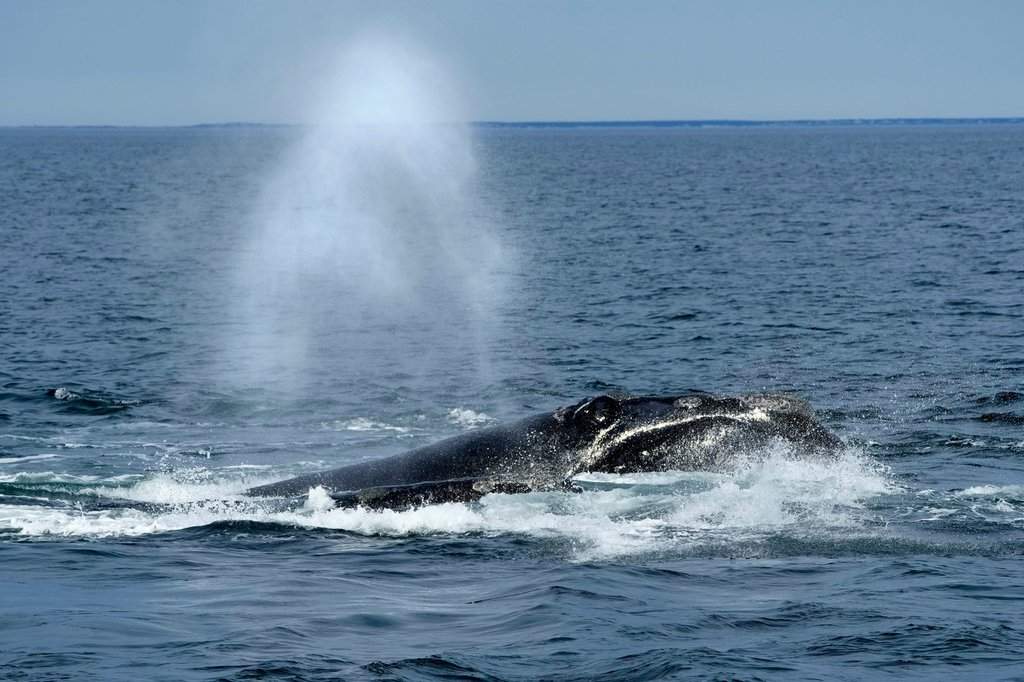
A single high-yield calving season does not reverse the population trajectory of the North Atlantic right whale (Eubalaena glacialis). Treating a seasonal birth spike as evidence of species recovery confuses short-term reproductive output with long-term demographic stability. To evaluate whether this critically endangered cetacean is actually recovering, conservationists and policymakers must measure net recruitment—the rate at which newborn calves survive to sexual maturity—against anthropogenic mortality and sub-lethal energy deficits.
When marine biologists report an uptick in calves spotted off the coasts of Florida and Georgia during the winter breeding window, media narratives routinely frame the event as a turning point. This framing relies on a flawed input-output model. In population ecology, particularly for long-lived, slow-reproducing K-selected species, gross birth rates represent only the top line of a complex demographic balance sheet. Without corresponding reductions in human-caused mortality and chronic physiological stress, a strong calving cohort functions merely as a temporary buffer against extinction rather than an engine of population growth. Expanding on this topic, you can also read: What Ontario Catholic Teachers Voting for a Strike Mandate Really Means for Your Kids.
The Demographic Accounting Error in Conservation Reporting
Standard conservation reporting over-indexes on annual calf counts because birth events are discrete, visible, and easily quantified via aerial surveys. However, evaluating species viability through single-season birth metrics introduces three analytical distortions:
- Cohort Lag Blindness: Female North Atlantic right whales do not reach sexual maturity until roughly nine to ten years of age. A calf born during a productive winter does not contribute to the reproductive capacity of the species for a full decade. Counting calves today as immediate population recovery ignores the ten-year survival gauntlet required before those individuals can replace aging breeders.
- Baseline Shifting: A "strong" calving season is frequently measured against the depressed averages of the preceding decade rather than the biological carrying capacity or historical reproductive rates of the population. When a species has been pushed to the brink of functional extinction, moderate reproductive pulses appear statistically significant only because the baseline has collapsed.
- Mortality Asymmetry: In small populations, the loss of a single breeding-age female carries far greater demographic weight than the birth of a single calf. A calf has a high probability of natural and anthropogenic mortality before reaching adulthood, whereas an adult female represents a proven, active reproductive unit. Losing one mature female erases decades of potential future births.
To build an accurate model of right whale survival, analysts must shift from tracking gross births to calculating the Net Demographic Replacement Rate. If the number of females surviving to reproductive age does not exceed the number of breeding females lost to ship strikes, fishing gear entanglement, and reproductive failure, the population remains in a state of mathematical decline regardless of seasonal anomalies. Observers at Al Jazeera have provided expertise on this matter.
The Bioenergetic Bottleneck of Reproduction
Understanding why calving numbers fluctuate violently from year to year requires examining the bioenergetics of capital breeders. North Atlantic right whales rely on accumulated fat reserves to fuel migration, gestation, and lactation. Unlike income breeders that feed continuously to support reproduction, right whales must build massive lipid stores during summer feeding seasons in northern waters before migrating south to calve.
This biological mechanism creates a strict energetic threshold for pregnancy. A female must achieve a specific body condition index to ovulate, carry a fetus to term, and produce nutrient-dense milk for a growing calf. When external stressors deplete these energy reserves, the whale's physiology prioritizes somatic maintenance—keeping itself alive—over reproduction.
Oceanographic Shifts and Prey Displacement
The primary driver of this energetic deficit is the climate-induced restructuring of the North Atlantic marine ecosystem. Right whales feed almost exclusively on dense aggregations of lipid-rich copepods, primarily Calanus finmarchicus.
- Thermal Displacement: Rapid warming in the Gulf of Maine has altered water temperatures and circulation patterns, disrupting the seasonal abundance and spatial distribution of Calanus populations.
- Foraging Inefficiency: Because copepods are no longer reliably concentrated in traditional feeding grounds like the Bay of Fundy and Roseway Basin, whales expend more metabolic energy searching for food. When prey density drops below a critical threshold, the caloric cost of filter-feeding exceeds the caloric return.
- Extended Inter-Birth Intervals: Under optimal nutritional conditions, healthy female right whales give birth every three years. Due to chronic nutritional stress, the average inter-birth interval has stretched to between six and ten years. A "strong" calving season often reflects a synchronized cohort of females that finally accumulated enough energy over nearly a decade to reproduce simultaneously, rather than a sustained improvement in ocean conditions.
The Sub-Lethal Drag of Chronic Entanglement
The second major drain on the right whale energy budget is non-lethal entanglement in fixed-gear commercial fisheries, such as lobster and snow crab traps. While lethal entanglements draw immediate regulatory scrutiny, sub-lethal entanglements silently depress calving rates across the entire breeding population.
When a whale becomes entangled in heavy synthetic rope, it often drags buoys and traps for months or years. From a hydrodynamic perspective, this gear exponentially increases drag, forcing the animal to burn massive amounts of stored fat simply to swim and surface for air.
- Metabolic Reallocation: Energy diverted to overcoming hydrodynamic drag is stripped directly from the reserves needed for ovulation and gestation.
- Tissue Necrosis and Infection: Embedded ropes cut through blubber into muscle and bone, triggering systemic inflammatory responses that further tax the immune system and deplete caloric stores.
- Permanent Stunting: Juvenile whales that survive severe entanglements often suffer permanently stunted growth, reducing their ultimate adult body size and permanently capping their lifetime reproductive output.
Research indicates that the vast majority of living right whales bear scars from at least one entanglement event. Treating a strong calving season as a sign of health overlooks the fact that the surviving breeding pool is operating under severe, chronic physiological impairment.
The Anthropogenic Mortality Sink
Even when a female overcomes the bioenergetic bottleneck, carries a calf to term, and navigates the calving grounds, the newborn enters an industrialized ocean corridor characterized by high-probability lethality. The geographic range of the North Atlantic right whale overlaps directly with some of the busiest shipping lanes and most intensive fishing zones in the world.
This spatial overlap creates an Anthropogenic Mortality Sink—a dynamic where human industrial activity extracts individuals from the population faster than biological reproduction can replace them.
Vessel Strikes and Kinetic Lethality
Right whales are slow-moving, surface-skimming mammals that lack the acoustic awareness or burst speed necessary to evade modern commercial vessels. Because mothers and newborn calves spend a disproportionate amount of time resting and nursing near the water's surface, they are uniquely vulnerable to blunt-force trauma and propeller lacerations.
The physics of vessel strikes are unforgiving. The kinetic energy transferred during a collision scales with the square of the vessel's velocity. Large container ships, tankers, and cruise liners transiting the eastern seaboard generate hydrodynamic forces that can pull a submerged whale toward the hull, resulting in catastrophic skeletal fractures or fatal internal hemorrhaging. Even recreational vessels and medium-sized commercial craft traveling at high speeds pose a lethal threat to calves, whose thinner blubber layers and softer bones offer minimal protection.
The Regulatory Lag Effect
Current mitigation strategies rely heavily on dynamic management areas and seasonal speed restrictions—such as mandatory 10-knot speed limits in designated zones during peak migration windows. While effective when enforced, these measures suffer from structural limitations:
- Spatial Mismatch: As warming waters push whales into new, uncharted habitats like the Gulf of St. Lawrence, fixed regulatory zones fail to protect them. Management frameworks are inherently reactive; by the time biologists document a shift in whale distribution and regulators implement new speed limits or fishery closures, significant mortality has already occurred.
- Compliance Gaps: Voluntary speed reduction zones see notoriously low compliance rates among commercial operators driven by tight shipping schedules and fuel efficiency targets.
- Gear Persistence: Even when fishing seasons close, lost or abandoned "ghost gear" remains suspended in the water column, continuing to pose an entanglement hazard year-round.
Evaluating the Viability of Current Intervention Frameworks
To move beyond celebrating temporary calving spikes, conservation strategy must be evaluated through the lens of risk reduction and system redesign. Current interventions fall into two categories: behavioral modification of ocean users and technological substitution in marine industries.
Behavioral Modification (Speed Limits and Closures)
This approach attempts to separate whales and industrial activity in time and space. Its primary advantage is immediate deployability without requiring new hardware. However, its operational ceiling is low. The ocean is a fluid, dynamic environment, and climate change is accelerating the unpredictability of whale movements. Relying on static polygons on a nautical chart to protect a mobile species migrating across thousands of miles of coastline guarantees that gaps in coverage will persist. Furthermore, enforcement at sea is logistically difficult and resource-intensive, leaving compliance largely dependent on industry goodwill.
Technological Substitution (On-Demand Fishing Gear)
The most structurally sound solution to the entanglement crisis is the widespread adoption of on-demand, or "ropeless," fishing gear. Traditional trap fisheries utilize vertical end-lines connecting bottom traps to surface buoys, creating a dense forest of synthetic rope throughout the water column. On-demand systems store the buoy and rope at the seafloor, releasing them to the surface only when triggered by an acoustic signal from the fishing vessel during retrieval.
While technologically proven, this transition faces severe economic and operational friction:
- Capital Expenditure: Outfitting commercial fleets with acoustic release mechanisms and specialized deck gear requires substantial upfront capital that small-boat operators cannot absorb without direct government subsidies.
- Gear Conflict: Without surface buoys marking trap locations, mobile-gear fishermen (such as trawlers) risk inadvertently dragging through fixed-gear territory, destroying expensive equipment. Solving this requires integrated digital mapping platforms that allow all vessels to visualize submerged gear locations in real time.
- Regulatory Inertia: Transitioning an entire multi-jurisdictional fishery requires aligning federal, state, and international regulations across the United States and Canada—a process that moves significantly slower than the rate of whale mortality.
The Structural Metric for True Recovery
A single strong calving season is a biological proof of concept: it demonstrates that the remaining female right whales retain the physiological capacity to reproduce when environmental conditions briefly align. It is not proof of recovery.
To assess the true trajectory of Eubalaena glacialis, observers must discard single-season birth counts as a primary performance indicator and adopt a multi-year Survival-Adjusted Recruitment Index. True recovery begins only when three structural conditions are met simultaneously over a sustained ten-year period:
- Zero-Mortality Compliance: Annual human-caused deaths from vessel strikes and entanglements are reduced to less than one individual per year—the biological threshold known as Potential Biological Removal (PBR) for this population.
- Inter-Birth Compression: The average interval between calves for breeding females drops back below four years, signaling that chronic sub-lethal stress from entanglement and prey scarcity has been mitigated.
- Juvenile Survivorship: Aerial and genetic cataloging confirms that calves born in high-yield years are surviving past their first decade and successfully entering the breeding pool.
Conservation policy must pivot from reactive, seasonal patchwork protections to permanent structural separation between industrial marine operations and whale habitats. This requires mandating real-time acoustic and satellite monitoring networks tied to enforceable, dynamic vessel speed limits across the entire Atlantic seaboard, paired with fully subsidized, mandatory transitions to on-demand fishing gear in all core foraging and migratory corridors. Until the economic incentives of maritime shipping and commercial fishing are structurally decoupled from whale mortality, every strong calving season will remain an isolated statistical anomaly rather than the foundation of a recovered species.