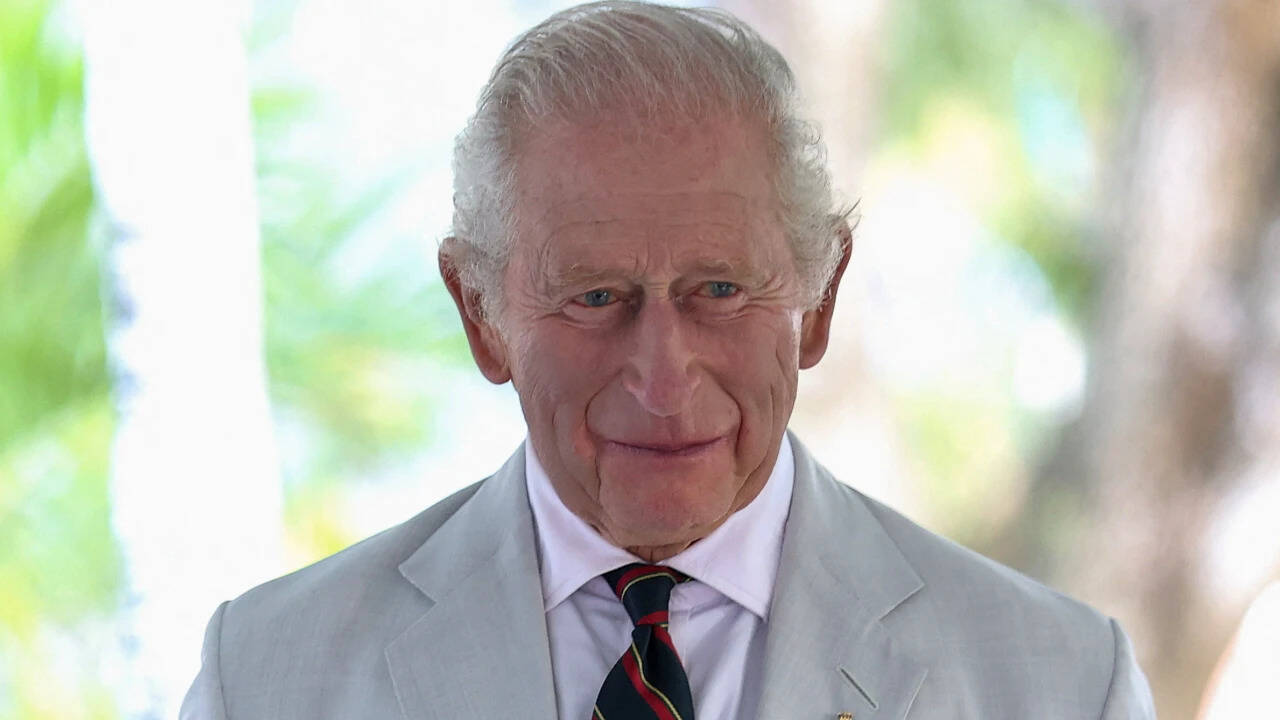
Modern royal diplomacy operates on a razor-thin margin between institutional preservation and geopolitical obsolescence. When the British monarch publicly acknowledges the atrocities of the transatlantic slave trade during a Caribbean tour, the gesture is rarely a spontaneous moral awakening. It is a calculated risk-mitigation maneuver designed to stall republican momentum across the Commonwealth realms while sidestepping the trillion-dollar legal liability of formal reparations.
To understand the mechanics of this diplomatic pivot, analysts must strip away the emotional theater of state visits and examine the underlying power dynamics. A royal tour in the Caribbean functions as an asymmetrical negotiation. The Crown seeks symbolic legitimacy and continued constitutional relevance as head of state. Caribbean nations, conversely, seek tangible economic redress, debt restructuring, and sovereign autonomy. When the monarchy offers verbal recognition of historical crimes without accompanying financial restitution, it creates a structural imbalance that accelerates, rather than arrests, the dissolution of the Commonwealth's traditional hierarchy.
The Architecture of Strategic Regret
In institutional crisis management, public apologies follow a strict hierarchy of liability. Organizations deploy lower-tier acknowledgments to absorb public pressure without triggering legal or financial obligations. The British monarchy's rhetoric surrounding slavery relies on a precise linguistic firewall designed to separate moral empathy from legal culpability.
The Three Tiers of Institutional Acknowledgment
- Expression of Sorrow and Regret: The speaker acknowledges that an event occurred and caused suffering, framing it as an impersonal historical tragedy. This carries zero legal weight and implies no direct agency by the current institution.
- Recognition of Historical Complicity: The institution admits that its predecessors participated in or profited from the system. While closer to accountability, this tier isolates the guilt in the past, treating the modern entity as structurally distinct from its historical counterpart.
- Formal Apology with Restitution: A direct admission of institutional wrongdoing paired with a binding commitment to financial, territorial, or structural repair.
Standard coverage of royal tours often misinterprets movement from Tier 1 to Tier 2 as a breakthrough. In practice, Tier 2 remains firmly inside the liability firewall. By recognizing the horrors of slavery while avoiding a formal apology, the Crown attempts to satisfy domestic and international demands for historical honesty without establishing a legal precedent that could be weaponized in international courts.
This distinction is critical because under international law, a formal apology by a head of state can serve as an evidentiary foundation for reparations claims. If the Crown admits direct, continuous institutional culpability for chattel slavery, the argument against financial settlement collapses. The rhetoric of regret is therefore a defensive perimeter, engineered to concede the moral narrative in order to protect the sovereign balance sheet.
The Cost Function of Commonwealth Retention
Maintaining the British monarch as head of state in Caribbean realms incurs significant operational and political costs for both London and the host nations. Historically, the arrangement survived on soft power, shared legal frameworks, and post-colonial inertia. Today, that equilibrium has broken down due to shifting demographic realities and acute economic pressures in the region.
For Caribbean governments, the cost of retaining the monarchy is measured in domestic political capital. Younger electorates view the constitutional link to Buckingham Palace not as a stabilizing force, but as an anachronistic reminder of subjugation. Following Barbados's transition to a republic in 2021, a clear contagion effect emerged across the region. Jamaica, Belize, and the Bahamas have all initiated varying degrees of constitutional review aimed at removing the monarch.
From London's perspective, the cost function is inverted. Retaining these realms provides minimal direct economic return, as trade relationships are governed by bilateral agreements and multilateral blocs rather than royal patronage. The value of the Caribbean realms to the British state is entirely geopolitical. A shrinking Commonwealth diminishes Britain's post-Brexit diplomatic footprint and signals declining global influence.
When a royal tour is deployed to shore up these relationships, it faces a diminishing return on investment. High-profile visits require massive security expenditures, generate intense media scrutiny, and provide a global stage for anti-colonial protests. If the centerpiece of the tour is a carefully hedged statement of regret, the event often backfires, highlighting the exact power disparity the visit was meant to smooth over.
The Reparations Ledger and Legal Mechanisms
To evaluate why verbal recognition fails to pacify regional critics, one must examine the specific demands on the table. Caribbean leaders, coordinated largely through the CARICOM Reparations Commission (CRC), do not view slavery as a closed chapter of history. They analyze it as an ongoing economic distortion that actively suppresses regional development.
The CRC's Ten-Point Action Plan provides a concrete framework for what these nations define as justice, moving entirely beyond symbolic gestures:
- Full Formal Apology: Explicitly rejecting statements of mere regret in favor of unambiguous institutional accountability.
- Repatriation and Indigenous Peoples Development: Funding programs for descendants of displaced populations and surviving indigenous communities.
- Cultural Institutions and Public Health: Capital transfers to build museums, research centers, and healthcare infrastructure specifically targeting chronic diseases linked to historical nutritional deprivation and generational trauma.
- Illiteracy Eradication and Knowledge Transfer: Direct investment in educational systems and technological infrastructure to close the development gap created during the colonial extraction era.
- Psychological Rehabilitation and Debt Cancellation: Writing off sovereign debt owed to former colonial powers, arguing that these debts were incurred to fund basic infrastructure that Britain failed to build during centuries of wealth extraction.
The friction between the Crown and CARICOM stems from a fundamental mismatch in currency. The monarchy is attempting to pay a hard-currency macroeconomic debt with soft-currency emotional validation.
The Sovereign Immunity Bottleneck
A frequent counterargument to reparations claims involves the concept of non-retroactivity in international law—the principle that actions cannot be judged by legal standards that did not exist at the time they were committed. Defenders of the British establishment argue that because the transatlantic slave trade was legal under British and international law prior to 1807, no legal liability exists today.
Caribbean legal strategists bypass this bottleneck by reframing the issue around unjust enrichment and continuing harms. The economic wealth generated by unpaid slave labor was systematically absorbed into British financial institutions, aristocratic estates, and the Crown itself. When Britain abolished slavery in 1833, it paid £20 million—roughly 40 percent of the national budget at the time—in compensation to slave owners, a debt British taxpayers only finished paying off in 2015. Enslaved people received nothing.
This historical asymmetry forms the core of the modern Caribbean critique. When the British monarch expresses sorrow over slavery while sitting atop an institution whose historical wealth and global prestige were directly subsidized by that system, the contradiction becomes operationally untenable.
Institutional Exposure and the Archives
Beyond public rhetoric, the British monarchy faces an acute archival vulnerability. For decades, Buckingham Palace maintained strict opacity regarding its historical links to the Royal African Company and other state-backed slaving enterprises. Independent academic research, however, has steadily eroded this firewall, uncovering direct financial investments by monarchs in the slave trade and the use of enslaved labor on royal properties.
In response to mounting evidentiary pressure, the Palace has occasionally signaled support for independent historical research into the monarchy's ties to slavery. While framed as transparency, this tactic serves a specific strategic purpose:
- Time Dilation: Academic inquiries take years to complete, effectively pushing the political reckoning past immediate news cycles and current leadership tenures.
- Compartmentalization: By treating the research as an academic exercise rather than a forensic audit, the institution maintains control over the framing and avoids quantifying the financial value of the historical extraction.
- Narrative Preemption: Voluntary disclosure blunts the impact of investigative journalism, allowing the Palace to curate the release of damaging archival documents.
The primary limitation of this strategy is that once archival validation is established, the moral barrier to financial restitution drops significantly. If an official Palace-backed study confirms that the Crown directly profited from the sale and exploitation of human beings, maintaining a refusal to pay reparations shifts from a legal defense to a pure exercise in realpolitik.
The Geopolitical Vacuum and Great Power Competition
The decline of British royal influence in the Caribbean does not occur in a vacuum. As traditional Commonwealth ties fray, external powers are aggressively expanding their footprint in the region, fundamentally altering the leverage available to Caribbean states.
China has emerged as a dominant infrastructure financier across the Caribbean basin through its Belt and Road Initiative. Unlike Western institutions that attach governance conditions or offer symbolic historical reflections, Beijing provides immediate capital for ports, highways, and energy grids. For cash-strapped Caribbean nations facing existential threats from climate change and rising sea levels, tangible infrastructure outweighs constitutional tradition.
This geopolitical shift strips the British monarchy of its primary historical advantage: the assumption that Caribbean nations have nowhere else to turn for international standing and diplomatic alignment. Caribbean leaders now recognize that severing ties with the Crown carries minimal economic penalty and actually enhances their negotiating leverage with other global powers.
Strategic Forecasts and Operational Imperatives
The trajectory of the British monarchy in the Caribbean is mathematically predictable. Incremental rhetorical concessions—moving from silence to sorrow, and from sorrow to recognition—will not stabilize the Crown's position. Each concession validates the underlying grievance without resolving the structural demand, thereby accelerating the timeline toward full republicanism across the remaining realms.
To navigate this transition without triggering a catastrophic collapse in bilateral relations, the British establishment must abandon the playbook of symbolic royal tours and execute a structural pivot:
- Decouple the Monarchy from Foreign Policy: The British government must cease using the royal family as diplomatic shock absorbers for post-colonial grievances. State visits to the Caribbean should be suspended until constitutional questions are settled locally, eliminating the optics of royal pageantry colliding with anti-colonial protests.
- Shift from Royal Rhetoric to Bilateral Development Finance: Downing Street must replace Palace statements of regret with concrete, depoliticized capital mechanisms. Structuring climate resilience funds, green technology transfers, and targeted debt-for-nature swaps allows Britain to address the economic vulnerabilities of the Caribbean without conceding the legal precedent of formal reparations.
- Facilitate Orderly Republican Transitions: Rather than resisting constitutional reform through diplomatic pressure, London should actively provide technical and legal support to realms transitioning to republics, preserving their membership in the voluntary Commonwealth of Nations on equal footing with nations like India and Barbados.
If Buckingham Palace and the British government continue to rely on calibrated expressions of royal regret, the outcome is certain. Within a decade, the British monarch will cease to be head of state across the entire Caribbean region, leaving behind a fractured diplomatic landscape defined not by shared history, but by unresolved financial and moral debt.