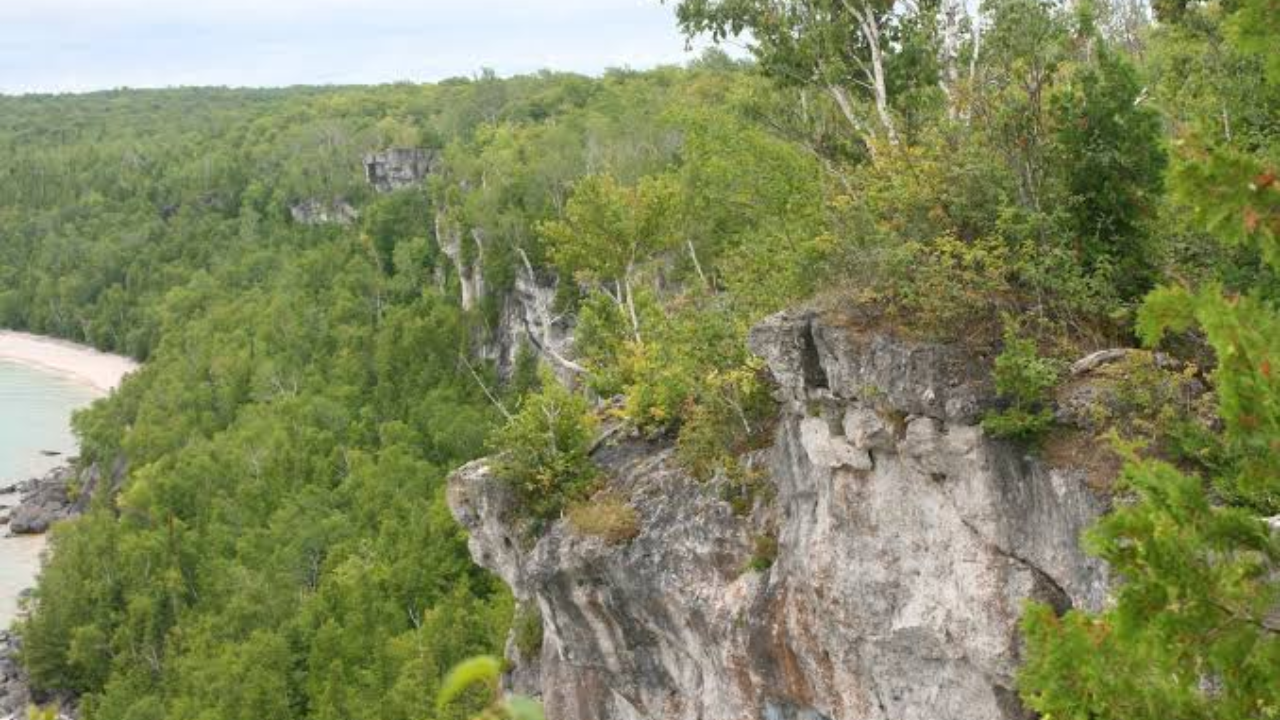
The acquisition of a defunct Canadian ski resort via a $7.5 million philanthropic capital raise illustrates a fundamental shift in alpine land valuation: the market price of distressed recreational infrastructure has fallen below its conservation value. When an alpine operation loses operational viability—driven by rising capital expenditure requirements, shrinking winter seasons, and high fixed overhead—its highest and best use transitions from commercial extraction to ecological restoration. This transition requires executing a complex, multi-stage capital stack to retire commercial liabilities, remediate industrial footprints, and place permanent legal encumbrances on the title to prevent speculative redevelopment.
The Structural Failure of Mid-Tier Alpine Assets
Mid-tier and low-elevation ski resorts operate under severe structural constraints that distinguish them from high-altitude destination resorts. Understanding why a property moves from a commercial enterprise to a $7.5 million conservation target requires examining the unit economics of snow-based recreation.
- Fixed-Cost Rigidity vs. Revenue Volatility: Ski operations carry high fixed costs before a single lift ticket is sold. Grooming fleets, lift maintenance, liability insurance, property taxes, and baseline staffing must be funded regardless of precipitation. Revenue, conversely, is concentrated within a narrow 100-to-130-day operating window. A two-week warm spell during peak holiday periods can erase an entire fiscal year's operating margin.
- The Snowmaking Capital Trap: As natural snowpack reliability declines at lower elevations and latitudes, resorts must invest heavily in automated snowmaking infrastructure. This introduces a dual cost penalty: upfront capital expenditure for high-pressure piping, pumps, and fan guns, followed by massive variable operating expenses in electricity and water pumping during marginal wet-bulb temperatures.
- Maintenance Debt Accumulation: When operating margins compress, management defers non-essential capital maintenance. Over a decade, this creates an insurmountable maintenance backlog—aging chairlift haul ropes, obsolete electrical switchgear, and deteriorating base lodge envelopes. At a certain threshold, the cost to bring the infrastructure into regulatory compliance exceeds the enterprise value of the business.
Once a resort enters insolvency or ceases operations, the land becomes an orphaned asset. Developers frequently eye these parcels for low-density luxury real estate subdivisions, which fragments wildlife corridors and increases municipal service burdens. Conservation organizations step into this vacuum when the distressed valuation aligns with philanthropic fundraising capacity.
Mechanics of the $7.5 Million Conservation Capital Stack
Raising $7.5 million to acquire and restore a former ski hill is rarely accomplished through a single funding source. In Canadian land conservation, transactions of this scale rely on a blended finance model designed to de-risk the acquisition for institutional donors while maximizing tax efficiency for private contributors.
Blended Funding Architecture
- Public-Private Matching Grants: Federal and provincial conservation funds—such as Canada’s Nature Smart Climate Solutions Fund or regional habitat conservation trusts—typically require a 1:1 or 2:1 match from non-governmental sources. The $7.5 million figure represents the total capital requirement needed to unlock these matching tranches.
- Ecological Gifts Program (Ecogifts): Under Canadian tax law, donors of ecologically sensitive land or conservation easements receive enhanced tax benefits, including zero capital gains inclusion on the donated property and a non-refundable tax credit (for individuals) or deduction (for corporations) for the fair market value. If the former resort owners sold the land below market value in a "bargain sale," the difference between the appraised value and the $7.5 million purchase price can be structured as a charitable gift, bridging the valuation gap.
- Bridge Financing: Real estate sellers operate on commercial timelines, whereas philanthropic capital arrives in uneven tranches. Conservation buyers frequently utilize low-interest bridge loans from conservation finance institutions to close the transaction immediately, retiring the debt as pledged donations and government grants clear escrow.
Valuation Beyond Timber and Real Estate
Standard commercial appraisals value mountain land based on residual land value—what a developer could pay after deducting construction costs and profit margins from projected real estate sales. Conservation valuation prices externalized ecosystem services: watershed filtration, carbon sequestration in old-growth or regenerating boreal/montane forests, and connectivity between existing protected areas. When a ski resort sits as an inholding—a privately owned parcel surrounded by provincial parks or Crown land—its strategic value to conservationists increases exponentially. Removing a single commercial inholding eliminates edge effects, road fragmentation, and human-wildlife conflict across a much larger landscape.
Industrial Remediation and Ecological Succession
Returning a ski resort to nature is not a passive exercise of locking the gates and letting vegetation grow. Decades of ski hill engineering fundamentally alter mountain hydrology, soil composition, and vegetative structure. Without active intervention, a defunct ski run remains an ecological scar for centuries.
Decommissioning Hard Infrastructure
The first operational phase involves physical extraction and hazardous material abatement.
- Lift Infrastructure: Chairlift towers are anchored in massive reinforced concrete footings poured into bedrock or deep glacial till. Removal requires heavy rigging, helicopter lifts in steep terrain, and pneumatic demolition of concrete pads down to grade level so native soil can be re-established. Haul ropes, sheaves, and terminal bullwheels are dismantled and sold for scrap metal to offset demolition costs.
- Subsurface Utilities: High-voltage power lines feeding lift terminals and pump houses, along with buried ductile iron snowmaking water mains, must be isolated, drained, and either excavated or capped to prevent frost heave from pushing metal debris to the surface over future freeze-thaw cycles.
- Contaminated Soils: Maintenance shops, fuel storage tanks for snowcats, and hydraulic fluid leaks around lift terminals inevitably leave hydrocarbon footprints. Phase II Environmental Site Assessments dictate soil excavation and bioremediation before restoration begins.
Hydrological Re-engineering
Ski runs are graded to create smooth, wide fall-line corridors. To achieve this, builders strip topsoil, blast rock outcrops, and install cross-slope drainage ditches (water bars) to divert snowmelt away from the ski surface. Left unmanaged, these artificial channels concentrate runoff, causing severe gully erosion and sediment loading in downstream fish-bearing creeks.
Restoration teams must re-contour the slope geometry. Heavy excavators—often spider excavators capable of operating on steep gradients without building access roads—pull side-cast material back into the cut slopes, obliterating service roads and re-establishing natural dendritic drainage patterns. Subsoil is decompacted using mechanical ripping to reverse decades of compression caused by heavy snow-grooming equipment.
Soil Microbiome and Native Revegetation
Ski runs are routinely seeded with aggressive, non-native agronomic grasses (such as creeping red fescue or orchard grass) to prevent summer erosion. These turf grasses form dense root mats that outcompete native alpine and subalpine seedlings, arresting natural forest succession.
To restart ecological succession, restoration practitioners employ specific interventions:
- Topsoil Inoculation: Applying salvaged forest floor duff containing native mycorrhizal fungi, which are essential for conifer root establishment in nutrient-poor mountain soils.
- Coarse Woody Debris Placement: Scattering downed logs and root wads across cleared runs to create microclimates that trap windblown snow, retain soil moisture, shield seedlings from extreme solar radiation, and provide immediate cover for small mammals and amphibians.
- Targeted Planting: Introducing early-seral native shrubs (such as willow, alder, and buffaloberry) that fix atmospheric nitrogen, gradually rebuilding soil fertility so climax conifer species can eventually reclaim the canopy.
Legal Permanence and Governance Frameworks
Acquiring the land is an operational failure if a future board or government entity can reverse the decision during a fiscal crisis. To guarantee permanence, the $7.5 million investment must be locked behind layered legal instruments.
The primary mechanism is a Conservation Covenant (or Conservation Easement, depending on the province). This is a voluntary, legally binding agreement registered directly on the property title. The landowner transfers specific development rights—the right to subdivide, log commercially, extract minerals, or construct recreational infrastructure—to a qualified third-party holder, such as a provincial ministry or an accredited land trust. Because the covenant runs with the land in perpetuity, it binds all future owners.
The governance model also requires establishing a dedicated Stewardship Endowment. A common failure mode in land conservation is raising 100% of the acquisition capital while budgeting 0% for ongoing management. Even a "rewilded" property requires annual monitoring to enforce easement terms, manage invasive plant species along former road corridors, maintain perimeter fencing, and oversee low-impact public access trails. Best-practice conservation finance allocates 15% to 20% of the total capital raise—roughly $1.1 million to $1.5 million of a $7.5 million campaign—into an invested endowment fund. At a conservative 4% annual draw, this generates $45,000 to $60,000 per year in perpetuity to fund baseline ecological monitoring and liability insurance.
Limitations and Trade-Offs of Conservation Conversions
While converting defunct commercial assets into protected areas delivers measurable biodiversity gains, this strategy introduces distinct economic and operational trade-offs that practitioners must manage.
- Municipal Tax Base Erosion: Removing a commercial property from the tax rolls and transferring it to a tax-exempt non-profit or Crown agency reduces local municipal revenue. Rural mountain municipalities already operate with narrow tax bases; losing a commercial assessment without an offsetting provincial grant-in-lieu of taxes can strain local infrastructure budgets.
- Recreational Displacement: Closing a local ski hill eliminates an accessible entry point for winter sports. When community hills close, local residents are forced to travel further to larger destination resorts, increasing vehicle miles traveled (carbon emissions) and raising the financial barrier to entry for youth and lower-income families.
- The "Green-Washing" Asset Dump: Distressed corporate owners occasionally use conservation sales to offload severe environmental liabilities onto non-profits. If due diligence fails to account for buried fuel tanks, unstable tailings, or failing earthen dams built for snowmaking reservoirs, the conservation organization inherits millions of dollars in unfunded remediation mandates.
Strategic Execution for Alpine Land Transitions
For conservation organizations, municipal planners, and impact investors evaluating distressed alpine infrastructure, executing a successful acquisition and rewilding program requires strict adherence to sequence and risk allocation:
- Discount Infrastructure to Zero or Negative Value: Never pay a premium for existing lifts, lodges, or snowmaking systems during acquisition negotiations. Treat all standing structures as net liabilities on the balance sheet, deducting estimated demolition and haul-away costs directly from the appraised raw land value.
- Ring-Fence Remediation Liabilities Before Closing: Require the seller to fund an escrow account for known environmental remediation—specifically hydrocarbon abatement around maintenance yards and dam decommissioning—prior to title transfer, or execute a purchase price holdback sufficient to cover 150% of engineering estimates.
- Capitalize the Endowment Upfront: Structure the fundraising campaign so that the stewardship endowment is funded concurrently with the acquisition price. Do not close on the real estate until at least 80% of the long-term stewardship capital is secured in cash or binding multi-year pledges.
- Maintain Selective Trail Corridors: Rather than imposing a total human exclusion zone, retain a narrow, single-track non-motorized trail network along the lowest-impact former service roads. Maintaining controlled, low-impact public access preserves local political support, deters illicit off-road vehicle trespass, and builds a local constituency invested in protecting the restored landscape.