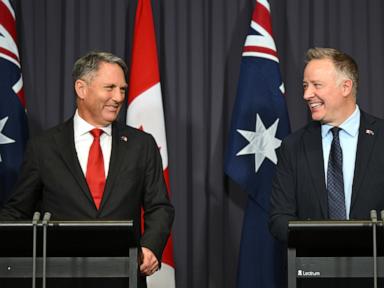
The razor-thin electoral margin in Colombia's 2026 presidential runoff—where Abelardo de la Espriella secured 49.65% of the vote against Iván Cepeda’s 48.70%—establishes an immediate governance bottleneck rather than a clear mandate. While U.S. Secretary of State Marco Rubio’s public endorsement signals an immediate realignment between Washington and Bogotá, the structural execution of De la Espriella’s platform faces deep domestic resistance. Moving from diplomatic rhetoric to operational policy requires navigating a deeply polarized legislature, an ongoing legal challenge from the Pacto Histórico coalition involving 33,000 contested ballot boxes, and the economic realities of a nation shifting from negotiated peace to military confrontation.
To evaluate the operational viability of this transition, the administration's proposed strategies must be assessed through quantitative frameworks across security, trade, and energy.
The Security Paradigm: The Megaprison Cost Function
De la Espriella’s core campaign pillar relies on an iron-fist model reminiscent of El Salvador’s security strategies, centered on building 10 maximum-security megaprisons and renewing full-scale military engagements. However, the operationalization of this security matrix introduces a severe fiscal and logistical cost function that differs significantly from Central American precedents.
Total Security Cost = C_cap + C_ops + C_m + C_e
Where:
- $C_{cap}$ represents the initial capital expenditure of building high-capacity detention centers.
- $C_{ops}$ represents the recurring operational costs of prison maintenance and personnel.
- $C_m$ represents the heightened military deployment expenditures required for territorial re-entry.
- $C_e$ represents the economic friction of rural destabilization and supply chain disruptions during active conflict.
Colombia's geography and the scale of its armed factions introduce unique structural barriers. Unlike urban gang structures, Colombia's irregular forces—such as the Ejército de Liberación Nacional (ELN) and Segunda Marquetalia—operate as deeply entrenched rural cartels with sophisticated military capabilities and decentralized financial networks tied to illicit economies.
Terminating the previous administration's "total peace" negotiations creates an immediate security vacuum in rural corridors. Without an immediate, high-density state presence to replace negotiated ceasefires, the short-term outcome is a predictable spike in territorial violence as competing factions fight for control of supply routes. The proposed strategy to seek U.S. support for aerial spraying and airstrikes on coca plantations assumes a linear relationship between eradication and security, neglecting the historical substitution effects where cartel operations simply shift deeper into frontier regions or neighboring states.
The Bilateral Trade Matrix: Realignment and Capital Flows
The explicit backing from the Trump administration introduces an immediate pivot in U.S.-Colombia economic relations. The bilateral agenda is poised to concentrate on three definitive leverage points:
- Conditioned Development Aid: Reallocating U.S. financial support away from rural crop-substitution programs and directly into tactical military intelligence, hardware acquisition, and counter-narcotics interdiction infrastructure.
- Nearshoring Incentives: Utilizing Washington's legislative frameworks to incentivize American supply chains to relocate from East Asia to allied Latin American hubs, positioning Colombia's Caribbean ports as primary beneficiaries.
- Migration Enforcement Integration: Aligning Bogotá’s border policies with U.S. southern border objectives, structurally reducing the transit of undocumented migrants through the Darién Gap via joint interdiction task forces.
While these initiatives offer significant macroeconomic upside, they expose Colombia to asymmetric diplomatic dependencies. If the incoming administration fails to hit specific counter-narcotics metrics, it risks triggering statutory U.S. aid cuts or certification penalties. This vulnerability is compounded by the current domestic legal gridlock; as Cepeda challenges the validity of roughly 250,000 votes, international institutional investors are likely to price in political risk premiums, delaying large-scale foreign direct investment until the National Civil Registry issues its legally binding final count.
Supply-Side Economics: Fiscal Expansion vs. Legislative Constraints
De la Espriella’s economic blueprint hinges on supply-side theory: lowering corporate tax rates and expanding oil and gas exploration to stimulate private sector growth.
The Hydrocarbon Acceleration Strategy
The immediate lifting of restrictions on new exploration contracts for oil and gas serves as a direct reversal of the Petro administration's green transition policies. This pivot aims to stabilize Colombia's fiscal deficit by boosting state revenues from state-owned energy company Ecopetrol. However, global energy markets present an exogenous constraint. Increased domestic production requires significant multi-year lead times before generating taxable export volume, leaving short-term revenues highly sensitive to global crude price volatility.
The Legislative Bottleneck
Executing tax cuts requires passing a comprehensive tax reform bill through a heavily fractured Congress. Given that nearly half the electorate voted for the continuation of social welfare programs, the opposition holds a formidable legislative block. The new administration faces an optimization dilemma: it must either dilute its free-market reforms to build consensus with centrist factions or rely on executive decrees that will face immediate constitutional challenges in the courts.
The strategy of downsizing state agencies to offset tax cuts faces structural inertia. Public sector layoffs and department consolidations generate immediate political friction and union resistance, which can manifest as urban civil unrest, further disrupting economic output.
Operational Execution Risk Assessment
The primary vulnerability of the incoming administration's strategy lies in the execution timeline. Structural reforms in security and energy require sustained capital and political stability over a multi-year horizon, whereas the political cost of ending peace talks and initiating fiscal austerity will be realized immediately.
The operational roadmap requires a phased execution: stabilizing territorial corridors to protect existing agricultural supply chains before initiating aggressive rural campaigns, and securing legislative coalitions for pro-business reforms before attempting large-scale public spending cuts. Failure to manage these sequences will result in stagflationary pressures—where heightened rural instability blocks domestic supply chains while political gridlock stalls capital inflows.