The Viral Obsession With "Lucky Fools" Misses the Point Entirely
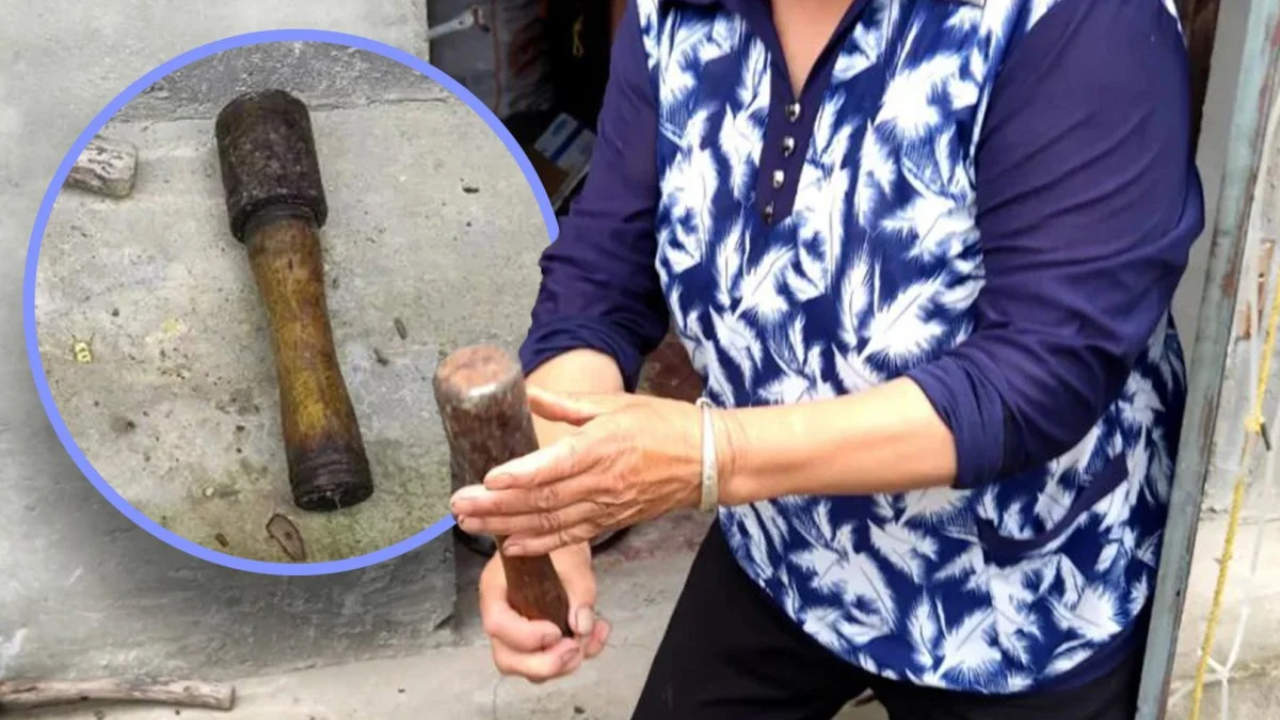
Every few months, the internet falls in love with a sensational headline about someone accidentally using an explosive device as a household tool. The recent tale of an elderly Chinese woman who spent twenty years pounding red peppers and cracking walnuts with a live hand grenade is the latest entry in this tired genre.
Media outlets cover these incidents with a mix of condescending amusement and lazy awe. They paint a picture of miraculous luck and baffling ignorance.
They are asking the wrong question.
Instead of chuckling at rural ignorance or marveling at cosmic fortune, we ought to be scrutinizing the brutal reality of ordnance engineering and the catastrophic failure of post-conflict cleanup. The story is not a lighthearted miracle. It is a sobering case study in industrial military design and systemic safety failures that persist decades after the guns go silent.
Why Old Explosives Do Not Just "Go Off"
The popular narrative assumes that a hand grenade is a fragile glass bulb waiting to shatter at the slightest bump. I have worked alongside munitions disposal technicians who have hauled unexploded ordnance out of mud, concrete, and backyards. The public perception of how explosives work is completely disconnected from chemical reality.
Modern military ordnance—and by modern, I include mid-20th-century design—is engineered to survive extreme violence without detonating prematurely.
- Secondary Explosives Are Inherently Stable: The main charge in military grenades typically uses compounds like TNT or Composition B. These chemicals are remarkably insensitive. You can strike them with a hammer, shoot them with a small-caliber bullet, or even set them on fire, and they generally will not detonate. They require a high-velocity shockwave from a primary detonator to initiate their reaction chain.
- The Fuse Mechanism Is Built to Resist Abuse: A grenade relies on a multi-stage ignition system. The fuse mechanism contains a small, sensitive cap (the primary explosive) that sets off a booster, which then sets off the main charge. If that initial spring-loaded striker mechanism was never tripped, or if the friction fuse was never pulled, pounding a metal casing against a wooden chopping board will rarely exert the specific force vector required to ignite the primer.
When media commentators gush over "twenty years of daily luck," they betray their ignorance of chemical stability. The woman was not defying the laws of physics every time she crushed a nut. She was simply demonstrating that 1960s steel casing and stable military propellant do exactly what they were engineered to do: remain inert until deliberately armed.
The Dangerous Myth of the Innocent Scrap Metal
Calling this a funny quirk of rural life glosses over a massive, deadly global problem: unexploded ordnance (UXO) contamination.
When war ends, weapons do not vanish. Millions of explosive remnants lie scattered across former battlefields, training grounds, and rural villages worldwide. To an untrained civilian, a cast-iron grenade handle looks like a convenient iron weight or a pestle.
"When civilians start using military hardware as kitchen utensils, it is not a testament to human resilience—it is a catastrophic failure of risk communication and demilitarization."
Imagine a scenario where a village child finds a similar rusted object in a field. Seeing an elder use one around the house normalizes contact with lethal scrap. The next object might not be a stable Chinese Type 67 grenade with an intact safety cap; it might be an unstable cluster submunition or a degraded fuse ready to blow at a touch.
By framing these events as heartwarming human-interest bits, media outlets trivialize the ongoing threat of legacy ordnance.
The Real Breakdown: How UXO Persists for Decades
Why do weapons remain in civilian hands for twenty to thirty years without being identified? The breakdown happens across three distinct layers:
- Ergonomic Deception: Military hardware is designed for human hands. A stick grenade offers a natural grip and balanced head weight. It inherently feels like a tool. Without explicit visual indicators—which fade after decades of rust and wear—the physical shape invites practical reuse.
- Failure of Local Reporting Structures: Rural communities often lack straightforward, risk-free channels for reporting suspicious metal items. If reporting an object brings security personnel, police harassment, or administrative delays, citizens simply keep the useful metal.
- Inadequate Civilian Risk Education: Mine action programs focus heavily on active conflict zones, but long-settled areas slip through the cracks. Education campaigns often fail to teach people what degraded, armless, or modified weapons actually look like after fifty years of weathering.
Stop Laughing at the Headline and Fix the Structural Issue
We need to stop treating these stories like quirky internet trivia. They are alarm bells sounding decades too late.
If we want to address the actual threat posed by lingering military debris, the playbook must change completely:
- Demilitarize the Supply Chain at the Source: Local governments in former conflict zones must run no-questions-asked buyback programs specifically targeting scrap metal and legacy tools.
- Shift Risk Training to Recognize Weathered Artifacts: Stop showing civilians pristine, factory-new diagrams of weapons. Teach people to recognize pitted, handle-less, rusted iron shapes that have lost their original paint.
- Demand Responsible Reporting from Media Outlets: News organizations must stop treating deadly weapons in homes as viral feel-good content. Every report on domestic UXO discovery should clearly highlight the protocol for contacting local bomb disposal units.
The old woman in China did not survive twenty years because of a divine miracle. She survived because military chemists make stable explosives, and because nobody ever taught her that the lump of iron in her drawer was built to kill. The next person who picks up an unidentified piece of iron might not be so fortunate.