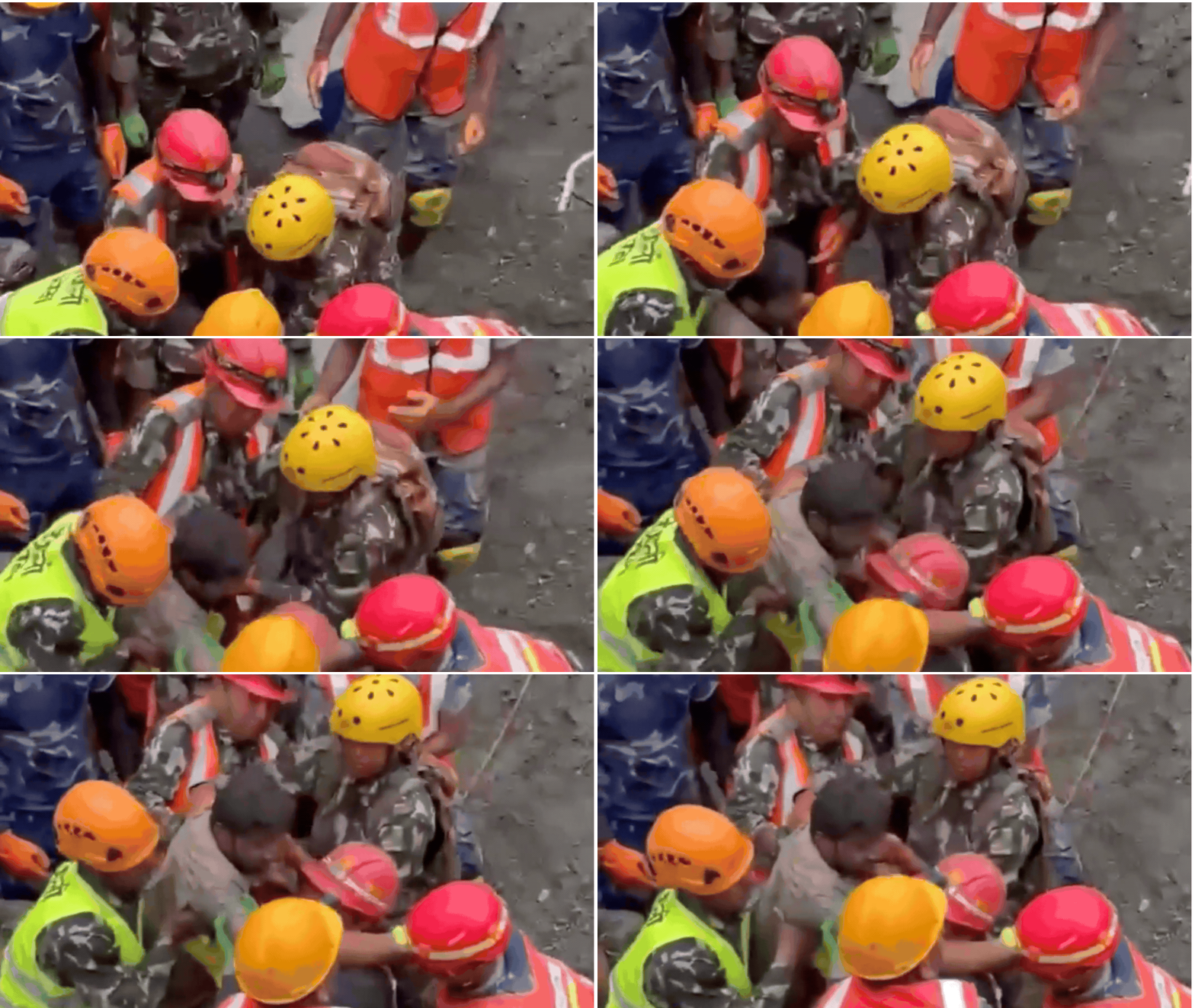
Nine days after a catastrophic glacial collapse unleashed a wall of water and debris across the Trishuli River valley, two workers were pulled alive from a choked hydropower tunnel at the Trishuli 3A construction site in Nepal. The miraculous extraction of mechanical foreman Sanjay Sah and mechanical supervisor Kabir Maharjan shattered a grim silence that had settled over families waiting at makeshift camps and hospital gates. Yet, beneath the immediate wave of relief lies a brutal operational reality. Roughly 500 construction workers remain sealed inside subterranean tunnels across a dozen crippled hydropower projects in the Himalayas.
The August 26 disaster began long before the first torrent breached the portals. High-altitude glacial lake outbursts carry an immense volume of dense sediment, transforming a river system into a rolling wall of concrete-like slurry. When the flash flood hit the Trishuli 3A site, the sheer kinetic force of the mud-laden wave overwhelmed diversion channels and surged directly into subterranean adits and tunnels. Workers deep underground had mere seconds to react. Those who sprinted toward the main portals stood a chance. Those deeper inside found themselves sealed behind millions of tons of heavy, compacted debris.
Engineering underground rescue operations under these conditions requires specialized heavy equipment and meticulous structural assessment. Heavy machinery cannot simply clear the portal without risking secondary collapses of unstable rock faces and mudpacks. Specialized search teams have had to inch forward, pumping air and listening for faint acoustic signatures against the drone of diesel engines and shifting gravel. When rescuers finally heard voices echoing from deep within the Trishuli 3A main tunnel, it confirmed what families had desperately clung to for over a week: air pockets exist.
The logistics of survival inside a flooded Himalayan conduit defy ordinary biology. Trapped workers face extreme darkness, plunging temperatures, high humidity, and limited oxygen supplies that degrade with every passing hour. Dehydration poses an immediate threat, though moisture seeping through rock fissures can sometimes buy crucial days. Medical experts point out that human endurance in a closed subterranean chamber depends entirely on the volume of the trapped air pocket and whether toxic gases like carbon monoxide or methane are pooling from nearby geological faults or stagnant equipment.
Criticism has mounted swiftly regarding the structural warning systems and corporate accountability across these remote construction sites. Survivors have spoken out about the lack of advance warning when the glacier broke upstream, pointing fingers at operating firms and supervisory staff. Infrastructure projects financed and built under international partnerships in the Himalayas frequently race against tight construction deadlines, sometimes at the expense of comprehensive downstream early-warning telemetry. When an ice wall shatters miles upstream, automated sensors tied to acoustic river gauges represent the only viable margin between evacuation and entombment.
As military engineers and specialized civilian crews push deeper into the remaining blocked systems—such as the Rasuwagadhi plant where dozens more are believed alive in sealed chambers—the operation transitions from a rescue mission to a race against systemic exhaustion. The physical toll on the ground teams matches the psychological weight carried by the relatives lingering outside the gates of Tribhuvan University Teaching Hospital in Kathmandu. Every cleared meter of mud offers a statistical gamble on human resilience against the unforgiving geology of the roof of the world.