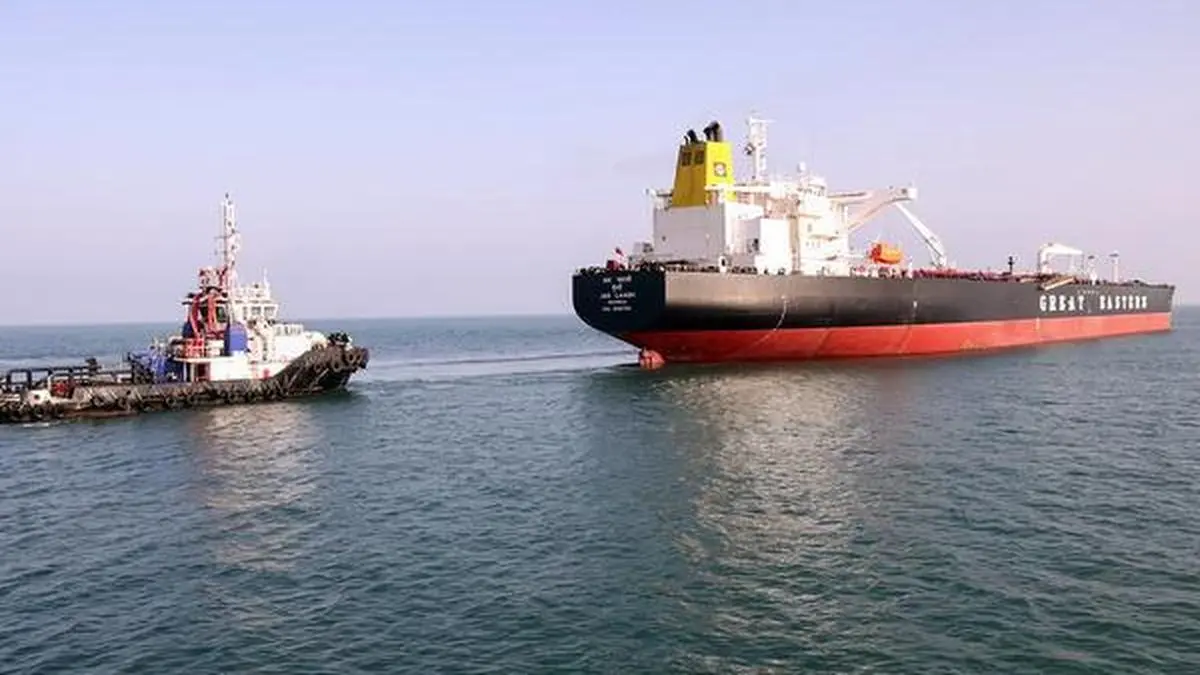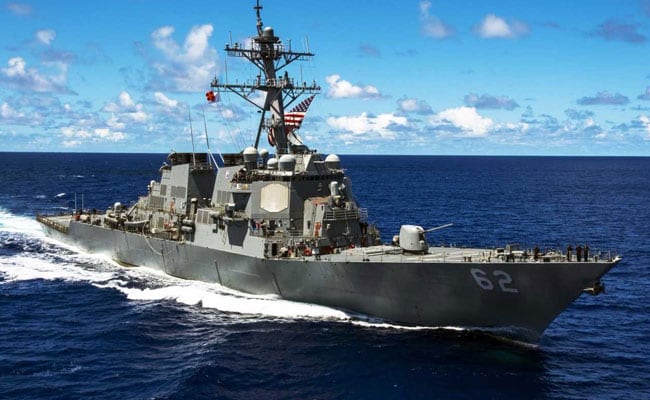
The recent advisory from the U.S. Navy regarding naval mine threats in the Strait of Hormuz is not merely a routine safety warning. It is an admission of a blind spot. For decades, the global economy has relied on the assumption that Western naval dominance ensures the free flow of oil through this narrow corridor. However, the Navy’s latest assessment reveals a sobering reality. We do not fully understand the scope, sophistication, or placement of underwater explosives in these waters. This lack of clarity transforms one of the world's most vital maritime arteries into a gamble for every tanker captain and insurance underwriter involved in the trade.
The Blind Spot Beneath the Surface
Modern naval warfare often focuses on the spectacle of anti-ship missiles and drone swarms. These are visible, trackable, and frequently intercepted. Mines are different. They are the "weapons that wait," and in the silty, high-traffic environment of the Hormuz, they are becoming increasingly difficult to detect. The U.S. Fifth Fleet has spent years mapping the seabed, yet the shifting sands and dense maritime traffic create a chaotic acoustic and visual environment.
When the Navy says the threat is not fully understood, they are referring to a gap between historical mining tactics and a new era of "smart" seabed weaponry. We are no longer just looking for spiked iron spheres floating on the surface. We are looking for sensors buried in the muck that can distinguish the acoustic signature of a specific class of tanker from a passing fishing boat.
The intelligence community is playing catch-up. Satellite imagery can track a missile battery being moved in the desert. It cannot see what a small dhow dropped overboard under the cover of a moonless night. This asymmetric advantage allows a regional power to exert massive psychological and economic pressure without ever firing a shot. The mere suspicion of a minefield is often as effective as a real one. It drives up insurance premiums, reroutes shipping, and forces military assets to divert from other critical missions.
The Evolution of the Low Cost Threat
The cost-to-damage ratio of a naval mine is arguably the most efficient in any military arsenal. A mine costing a few thousand dollars can cripple a vessel worth hundreds of millions and disrupt billions in trade.
In the Strait of Hormuz, the geography works in the favor of the miner. The shipping lanes are narrow. The water is relatively shallow. These conditions are ideal for bottom mines, which sit on the seafloor and wait for a pressure or magnetic change. Unlike moored mines that can be spotted by sonar or even the naked eye in clear water, bottom mines are easily obscured by the natural debris of a busy waterway.
Technical Sophistication Outpacing Detection
Traditional minesweeping involves towing a sled that mimics a ship's signature to trigger an explosion. Newer mines, however, are programmed with "ship counters." They might let the first three minesweepers pass and only detonate when the fourth vessel—the high-value target—sails over.
This logic-based weaponry makes clearing a path a grueling, slow-motion process. It is not a matter of simply "cleaning" the water. It is a mathematical puzzle where the stakes are human lives and global energy stability. The Navy’s advisory suggests that the algorithms governing these modern mines may be more complex than previously estimated, or that the sheer variety of triggers in the water has reached a level of saturation that defies standard clearing protocols.
The Economic Shrapnel
Markets hate uncertainty. The shipping industry operates on razor-thin margins and tight schedules. When the U.S. Navy issues a warning about "unquantified" threats, it triggers a chain reaction in the boardrooms of London and Singapore.
Insurance companies are the first to react. "War risk" premiums are not static. They are calculated based on the perceived ability of naval forces to guarantee safe passage. If the Navy admits it doesn't fully understand the threat, the risk enters a "black box" category. This leads to surcharges that are eventually passed down to the consumer at the gas pump.
Shipping Latency and Global Supply Chains
The ripple effect goes beyond oil. While energy is the primary cargo, the Strait is a conduit for liquefied natural gas and bulk commodities. A mine scare forces ships to slow down or wait for escort. This creates a backlog that can take weeks to clear.
In a hypothetical scenario, if a single mine were to detonate against a crude carrier today, the immediate closure of the Strait for "surveying" would remove roughly 20 percent of the world's daily oil supply from the market. The global economy is not built to absorb that kind of shock. The "just-in-time" delivery model for global energy means there is very little buffer.
Why Conventional Deterrence is Failing
For years, the presence of a carrier strike group was enough to keep the peace. The logic was simple: if you attack a ship, we will destroy the source of the attack. Mines break this logic. They provide plausible deniability.
A mine can be planted weeks or months before it is triggered. It can be laid by a civilian vessel that looks no different from a thousand others in the region. By the time an explosion occurs, the culprit is long gone. This makes the traditional "proportional response" difficult to justify on the international stage.
The U.S. Navy is shifting its focus toward unmanned underwater vehicles (UUVs) to counter this. These autonomous drones are designed to scout the seafloor without risking human divers. However, the technology is still in its infancy when compared to the vast area that needs to be monitored. The Strait of Hormuz is roughly 21 miles wide at its narrowest point, but the "choke" area extends for much longer. Patrolling this with drones is like trying to mow a massive lawn with a hand trimmer while someone is constantly throwing new rocks into the grass.
The Intelligence Gap and Local Actors
The advisory also points to a failure in human intelligence. Knowing what is in the water requires knowing what went into the water. If the Navy is surprised by the level of threat, it means the supply chains and deployment methods of regional actors are more clandestine than previously thought.
We are seeing a shift in how regional powers view maritime denial. They are no longer aiming for a total blockade, which would invite an overwhelming military response. Instead, they are practicing "managed instability." By keeping the threat level high but undefined, they maintain leverage over global powers. They can dial the tension up or down to suit their diplomatic needs, using the seabed as a deck of cards that only they can see.
The Role of Commercial Technology
The democratization of technology has played a role here. Commercial-grade sonar, GPS, and off-the-shelf underwater propulsion systems have made it possible for non-state actors or smaller navies to deploy sophisticated mine-like devices. The line between a professional naval mine and a sophisticated "improvised" underwater explosive is blurring. This makes the Navy's job of categorization nearly impossible. Every "object of interest" detected on sonar must be treated as a lethal threat until proven otherwise.
The Reality of Clearing Operations
If the threat were to escalate from an advisory to an active engagement, the world would see the most difficult maritime operation of the modern era. Minesweeping is unglamorous, dangerous, and incredibly slow.
The Navy’s current fleet of Avenger-class mine countermeasures ships is aging. While there is a push to integrate mine-hunting capabilities into the Littoral Combat Ship (LCS) program, those systems have faced years of delays and technical hurdles. The gap between the threat and our ability to neutralize it is widening.
The Human Element
Even with the best drones, the final identification often falls to Navy divers. These individuals work in high-current, low-visibility environments where one mistake is fatal. The psychological pressure of clearing a path for a waiting fleet of tankers cannot be overstated. The Navy's admission of a lack of understanding is, in many ways, a protective measure for these sailors—a way of saying that the old rules and expectations of "clearing the way" may no longer apply in a theater this volatile.
The Strategic Re-Evaluation
The United States and its allies must decide if they are willing to continue the current strategy of reactive patrolling or if a fundamental shift is required. Relying on an "advisory" to warn off shipping is a temporary fix for a structural problem.
The real solution involves a massive investment in persistent subsea surveillance—a "sonar curtain" that can monitor the Strait in real-time. This would require cooperation from regional partners who are often hesitant to align too closely with Western military objectives. Until such a system exists, the Strait of Hormuz remains a place where the world's most advanced navy is effectively being held at bay by technology that dates back to the 19th century, updated with 21st-century logic.
The threat isn't just that there are mines in the water. The threat is that we have lost the ability to say with certainty where they aren't. In the world of high-stakes shipping, the absence of certainty is the same thing as the presence of danger.
Industry analysts should stop looking at the Strait as a monitored highway and start seeing it as a frontier where the map is constantly being erased. The U.S. Navy's warning is the first honest map we've had in years, and it shows a lot of blank spaces where the monsters are supposed to be.
Focus your attention on the development of synthetic aperture sonar and the deployment of long-endurance UUVs. These are the only tools that can close the intelligence gap. Without them, the global energy market is flying blind through a canyon of its own making.
Prepare for a period where "freedom of navigation" is a goal rather than a given. The invisible chokepoint is tightening.