You think you're safe inside a quiet residential neighborhood, away from major city centers. Then someone knocks on a door, a trigger gets pulled, and an innocent life ends in seconds.
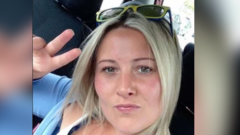
That's the brutal reality of what happened to Joanne Penney. The 40-year-old woman was shot directly through the heart at point-blank range on a flat doorstep in Talbot Green, South Wales. She had absolutely nothing to do with drug networks, turf wars, or organized crime groups. She simply answered a door at the wrong place and the wrong time.
Cardiff Crown Court just wrapped up sentencing for the six individuals responsible for this tragedy, handing down a combined total of 157 years in prison. The details exposed during the trial reveal how far county lines drug operations will go to protect their profits, and why ordinary citizens are increasingly caught in the crossfire.
The Anatomy of a Senseless Murder
The violence stemmed from a bitter rivalry between local operators and an incoming gang known as the RICO group, originating from Leicester. In the weeks leading up to March 2025, the RICO group faced what prosecutors described as a series of humiliations. Local rivals chased a RICO member out of the Llys Illtyd property, rammed his getaway car, and physically assaulted another associate.
Seeking to re-establish dominance, the gang planned a violent show of strength. They didn't target Joanne Penney specifically. They just wanted to shoot whoever opened the door to send a message.
On March 9, 2025, a five-person convoy drove into Talbot Green. Melissa Quailey-Dashper walked up and knocked on the door of the flat while Jordan Mills-Smith stood watch. When Joanne Penney opened it, 21-year-old Marcus Huntley fired a single fatal shot into her chest using a .38 Smith & Wesson revolver.
The mechanics of joint enterprise laws mean everyone involved carries the weight of that bullet. South Wales Police tracked down the entire crew, proving that pulling the trigger is only one part of a murder conspiracy.
Blood Money Orchestrated from a Prison Cell
The most chilling aspect of the investigation is how the weapon arrived in South Wales. The entire plot was facilitated by Renaldo Baptiste, a 39-year-old man who was already serving a life sentence with a 25-year minimum for a completely separate murder in Leicester.
Using an illicit prison phone, Baptiste coordinated the supply of the firearm and ammunition. Investigators found text records where he referred to the gun as "the Welsh ting" and shared details about a ".38 Smith Wesson 10 sweets," meaning ten bullets. When a contact messaged him suggesting "leg shots only," Baptiste replied with a laughing emoji.
The case highlights a massive vulnerability in the prison system. Secure walls mean nothing if a convicted murderer can still operate as an arms broker on the streets.
The Six Convicted Killers and Their Sentences
Mr Justice Fordham distributed heavy sentences across the entire group, acknowledging that every member played a vital role in bringing about serious injury or death.
- Marcus Huntley (21): Admitted to pulling the trigger on the second day of the trial. Sentenced to life in prison.
- Joshua Gordon (28): The leader of the RICO organized crime group who organized the hit convoy. Sentenced to life in prison.
- Renaldo Baptiste (39): Coordinated the weapon logistics from inside his prison cell. Found guilty in a subsequent trial and handed another life term.
- Jordan Mills-Smith (34): Acted as the lookout during the doorstep confrontation. Found guilty of murder.
- Melissa Quailey-Dashper (40): The person who knocked on the door to lure out the victim. Her defense argued she was heavily addicted to crack cocaine and heavily exploited by the gang leaders.
- Kristina Ginova (22): Stayed at a separate location using Gordon’s phone to send decoy messages, attempting to create alibis and scrub the digital trail.
Two other women, Donna James and Laura John, were convicted of assisting an offender, while Molly Ruth Cooper was found guilty of supplying ammunition without a certificate.
Understanding the Real Threat of County Lines
This wasn't an isolated back-alley dispute. It’s the direct result of a business model where big-city syndicates expand into smaller towns, using vulnerable local addicts as shields and foot soldiers.
When regional operations get squeezed, the violence escalates rapidly. If you live in a town targeted by these groups, their battleground becomes your front porch. The South Wales Police investigation relied heavily on public CCTV and mobile phone data to stitch the timeline together, proving that community surveillance is often the only way to break through gang silence.
To protect neighborhoods from this kind of spillover violence, look out for the warning signs of local drug dens, frequently called trap houses. Watch for a sudden increase in brief, frequent visitors at odd hours, unfamiliar cars waiting outside properties, or vulnerable neighbors suddenly disappearing from view while strangers move into their homes. Reporting these changes to local authorities or crime-stoppers isn't just about policing behavior, it's about preventing the next random knock on a door from turning fatal.
The tragic reality of this case is available to view in detail through regional video reports covering the police investigation. For a closer look at the security footage and evidence used to convict the gang, you can watch the Welsh police reveal CCTV of drugs gang, which outlines how the convoy tracked their target before the shooting.