Silence in the Persian Gulf is never actually empty.
If you have ever stood on the corniche in Manama at three in the morning, staring out across the black water toward the Strait of Hormuz, you know that quiet is just a holding pattern. The air hangs thick with salt and diesel. Out beyond the harbor lights, the massive steel silhouettes of naval vessels sit anchored in the dark, waiting. When the headlines go quiet for weeks at a time—when the cable news chyrons move on to domestic elections or interest rate hikes—people thousands of miles away assume the crisis has cooled. They mistake a pause for peace. Meanwhile, you can find related events here: The Strategic Calculus of Nepal PM Balendra Shah’s Pending India Visit.
Down on the ground, nobody makes that mistake.
Consider a hypothetical night shift inside the logistics hub near Mina Salman, just a short drive from the headquarters of the United States Navy’s Fifth Fleet. Let us call the watch officer Tariq, a composite of the thousands of local contractors and naval personnel who keep the gears turning in Bahrain. For weeks, Tariq’s nights have been defined by routine: manifest checks, fuel transfers, the hum of air conditioning fighting back the desert humidity. There have been no alerts. No scrambled jets tearing open the night sky. The lull has stretched long enough that even seasoned sailors start to let their shoulders drop a fraction of an inch. To understand the bigger picture, we recommend the recent analysis by The New York Times.
Then the radar screens shift.
When Iran targets American sites in Bahrain after a prolonged lull in action, the event is rarely just a sudden burst of aggression. It is the violent punctuation mark at the end of a long, invisible sentence written in deterrence, miscalculation, and regional proxy pressure. Understanding why those missiles or drones fly after weeks of stillness requires looking past the sterile military briefings and examining the human and strategic anatomy of a shadow war that never truly stops.
The Illusion of the Quiet Period
To understand why a lull breaks, you first have to understand what happens inside the lull itself.
In international conflict, especially the decades-long friction between Washington and Tehran, quiet periods are the most dangerous phases of all. Think of a tectonic fault line. When small tremors happen every week, pressure releases incrementally. When a fault goes completely silent for months, geologists do not celebrate; they start reinforcing bridges because energy is accumulating underground without an outlet.
In the Gulf, that accumulated energy takes very specific forms. During a pause in direct strikes, diplomacy stalls behind closed doors in Muscat or Doha. Economic sanctions tighten their grip on Iranian oil exports, squeezing the rial until a loaf of bread in Tehran costs twice what it did the previous autumn. Meanwhile, regional proxies—from the Houthi movement in Yemen to militias in Iraq and Lebanon—watch closely to see whether Tehran still possesses the will to project power directly.
If Iran waits too long to respond to perceived provocations, whether covert cyberattacks, targeted assassinations, or naval interdictions, it risks looking weak to the very network of allies it spent forty years building. The strike against American assets in Bahrain becomes a signal sent in multiple directions at once. It tells Washington that distance and time do not erase a ledger. It tells regional partners that the umbrella is still open. And it tells the domestic hardliners in Tehran that restraint has an expiration date.
Why Bahrain Sits at the Center of the Crosshairs
Look at a map of the Middle East, and Bahrain appears almost microscopic—an archipelago roughly the size of New York City tucked into a bay between Saudi Arabia and Qatar. Yet in the calculus of global security, those three hundred square miles carry the weight of a continent.
Bahrain is home to Naval Support Activity Bahrain, the operational nerve center for the U.S. Fifth Fleet. Every tanker carrying crude oil through the Strait of Hormuz—roughly a fifth of the world’s petroleum supply—passes under the watchful eye of commands coordinated from this tiny island. When you heat your home in Europe, fill your tank in the American Midwest, or buy manufactured goods shipped from East Asia, the price you pay is quietly stabilized by the radar arrays and patrol craft operating out of Manama.
That strategic importance makes Bahrain an irresistible pressure point.
Iran does not need to defeat the United States Navy in a conventional battle to achieve its goals; Tehran’s military planners abandoned that fantasy decades ago. Instead, they rely on what strategists call asymmetric deterrence. By demonstrating the capability to reach American installations in Bahrain—whether through ballistic missiles, low-flying one-way attack drones, or maritime harassment—Iran raises the psychological and financial cost of the American presence in the region.
For the people living in Juffair, the bustling Manama neighborhood surrounding the base where American service members rent apartments alongside Bahraini families and expatriate workers, geopolitics is not an abstract chessboard. It is the sudden vibration in the windowpanes. It is the text message chain lighting up at midnight asking if everyone made it to the stairwell.
The Anatomy of a Sudden Escalation
When news breaks that Iranian forces or their aligned networks have targeted American sites in Bahrain after a quiet spell, the immediate question from the outside world is always the same: Why now?
The answer almost always lies in a chain of events that began weeks earlier, far from television cameras.
First comes the covert exchange. A cargo ship suspected of carrying weapons components is seized in the Arabian Sea. Or a munitions depot tied to the Islamic Revolutionary Guard Corps suffers an unexplained explosion. Neither side claims full responsibility, maintaining the thin veneer of plausible deniability that keeps full-scale war at bay.
Second comes the calibration phase. Military planners in Tehran calculate a response that is loud enough to restore deterrence, yet calibrated carefully enough to avoid triggering an overwhelming American retaliation that could devastate Iran’s domestic infrastructure. Targeting sites in Bahrain—or attempting to penetrate the layered air defenses protecting the Fifth Fleet—fits squarely into this doctrine of measured escalation.
Third comes the execution. Unlike the massive, televised barrages of conventional warfare, these operations often rely on saturation and ambiguity. Drones launched from coastal launch sites or maritime vessels hug the surface of the Gulf to slip beneath radar horizons. Ballistic trajectories are plotted to test the reaction times of Patriot and THAAD missile defense batteries stationed across the region.
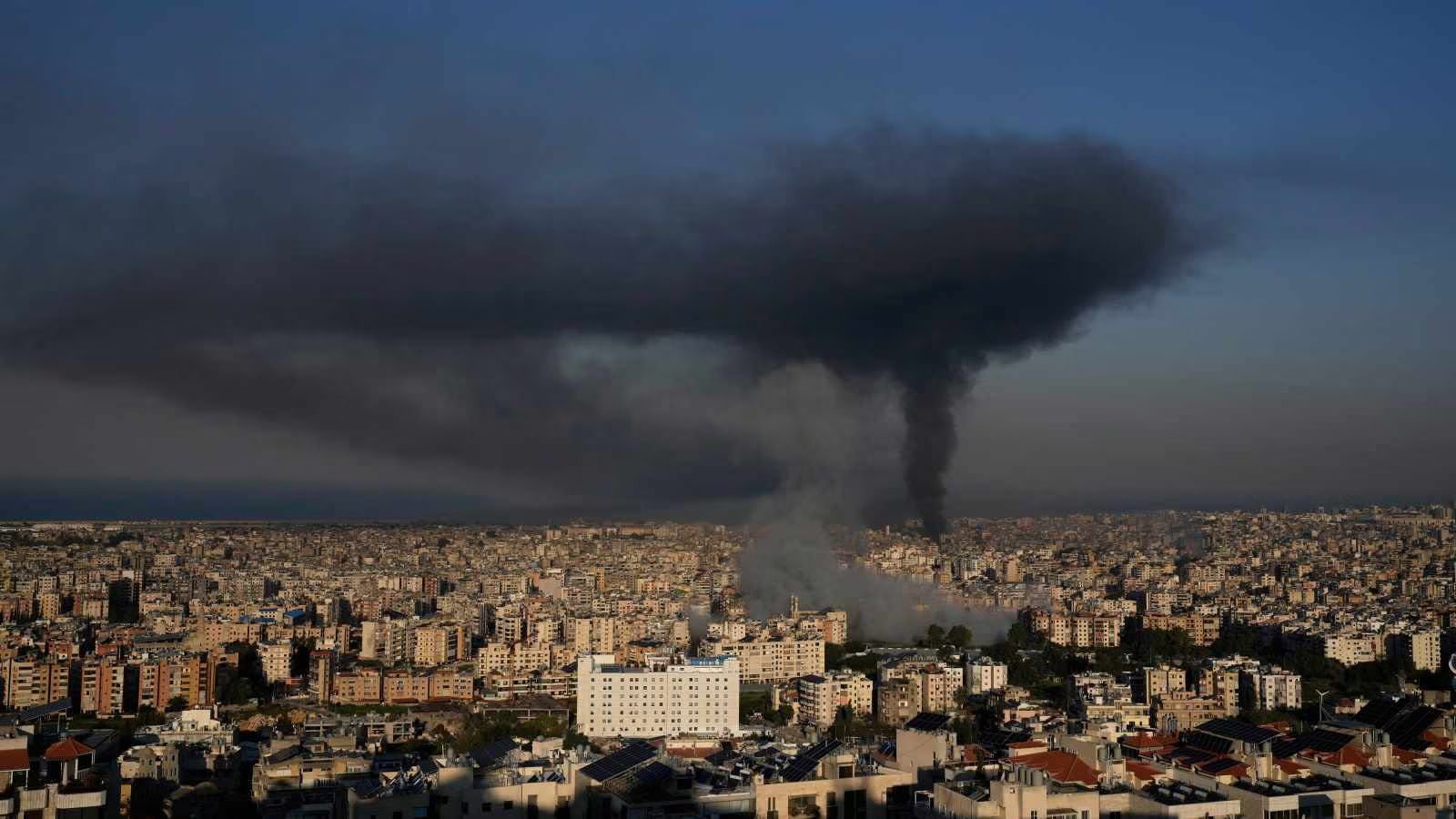
Even when air defenses intercept incoming threats—turning lethal hardware into harmless streaks of smoke high above the water—the psychological objective has already been partially achieved. Every interceptor fired costs millions of dollars. Every alert forces bases into lockdown, disrupts commercial shipping lanes, and reminds global energy markets just how fragile the peace in the Persian Gulf truly is.
Living Under the Umbrella
There is a particular kind of exhaustion that settles into communities living next to strategic targets. It is not panic. Panic burns hot and fast; nobody can sustain panic for years on end. Instead, it is a low-grade, chronic vigilance.
Walk through the cafes near the Bahraini waterfront the morning after an alert. You will see businessmen checking currency fluctuations on their phones, fishermen mending nets along the stone breakwaters, and off-duty sailors grabbing coffee before heading back through the security gates. Life resumes with stubborn speed because commerce and survival demand it.
Yet beneath the surface, the calculus has shifted. Insurance premiums for tankers entering the Gulf tick upward within hours of an incident. Airlines quietly adjust flight paths to skirt contested airspace. Families stationed overseas have quiet, rehearsed conversations at the kitchen table about where the go-bags are kept and which interior hallway has no windows.
The tragedy of modern geopolitical reporting is that it reduces this lived reality into sterile box scores: number of projectiles launched, percentage intercepted, statements issued by defense spokespersons in Washington and Tehran. Those numbers matter, of course. They tell us whether deterrence held or failed. But they miss the invisible erosion that happens every time a lull is shattered.
Each cycle of quiet and strike normalizes a higher baseline of risk. What would have triggered an emergency session of the United Nations Security Council twenty years ago is now absorbed by financial markets before lunch. The danger is not that one side wakes up wanting an all-out regional war—neither Washington nor Tehran desires a conflict that would burn down the global economy and destabilize the entire Middle East. The danger is that both sides become so confident in their ability to manage the threshold that they misjudge where the edge actually is.
What History Tells Us About the Next Move
If we look back at the patterns of Gulf brinkmanship over the past four decades—from the Tanker War of the 1980s to the drone and missile exchanges of the 2010s and 2020s—one lesson stands out with uncomfortable clarity. Lulls do not resolve underlying conflicts; they merely disguise them.
When American sites in Bahrain come under threat after a period of calm, Washington faces a familiar dilemma. Respond too forcefully, and you risk igniting the very regional conflagration you stationed the Fifth Fleet to prevent. Respond too softly, and you invite the next wave of strikes, signaling to Tehran that the cost of testing American defenses is negligible.
Usually, the response unfolds across multiple domains simultaneously. Visible shows of force—carrier strike groups repositioning, bomber task forces flying long-range deterrent missions over the Gulf—pair with invisible counterstrikes in cyberspace and financial networks. Back-channel messages pass urgently through regional intermediaries in Oman or Qatar, drawing clear red lines while leaving just enough diplomatic space for both sides to step back from the brink without losing face.
For the sailor standing watch on a pier in Manama, however, high-level diplomacy is just static on a distant frequency. What matters is the horizon.
The sirens eventually stop wailing. The all-clear signal echoes across the compound, and the heavy blast doors swing open to let in the humid morning air. Across the water, the sun rises red and hazy over the Gulf, illuminating the tankers moving slowly toward the open sea. For a few days, or perhaps a few weeks, the headlines will fade again, and the world will turn its attention elsewhere.
Out on the pier, someone checks their watch, looks out toward the eastern horizon where the haze meets the water, and starts counting the quiet minutes all over again.