The headlines are predictable. The panic is rehearsed. Every few years, when measles clusters flare up and bureaucratic designations wobble, legacy media outlets dust off the same apocalyptic script about erasing decades of medical progress.
They are selling you a comforting lie. The lie is that "elimination status" meant we were safe, and losing it means the sky is falling.
In reality, that shiny certificate from the World Health Organization was always a statistical illusion. Treating a bureaucratic label as a force field made public health institutions lazy, arrogant, and completely unprepared for the realities of modern global travel and localized vaccine hesitancy.
The Bureaucratic Illusion of "Elimination"
Most people—and frankly, most journalists—do not understand what disease elimination actually means. They confuse it with eradication.
Eradication means a pathogen is dead everywhere on Earth, like smallpox. You do not need to vaccinate against smallpox anymore because the virus exists only in high-security freezers.
Elimination simply means zero continuous endemic transmission within a specific geographic border for at least twelve months. It does not mean the virus is gone. It means that when someone flies into JFK or LAX carrying the virus from abroad, the resulting outbreak burns out before hitting the 365-day mark.
That is a timer, not a trophy.
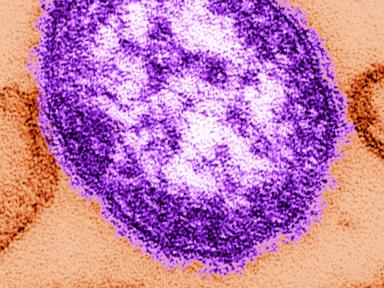
When the United States earned measles elimination status in 2000, the public health establishment threw a victory lap that lasted twenty years. Meanwhile, the virus never stopped knocking on the door. Because measles has a basic reproduction number ($R_0$) between 12 and 18—making it one of the most contagious human pathogens ever documented—it does not care about diplomatic borders or WHO press releases.
To stop a virus that contagious, you need roughly 95 percent community immunity. Yet for years, officials looked at national vaccination averages hovering around 91 or 92 percent and patted themselves on the back.
National averages are mathematically useless against a hyper-contagious airborne virus.
If a state has 94 percent coverage overall, that sounds great on a spreadsheet. Until you realize that 94 percent is achieved by blending neighborhoods with 99 percent coverage and isolated pockets sitting at 65 percent. Measles does not infect national averages. It infects classrooms, waiting rooms, and zip codes.
Why the Legacy Narrative Fails
The standard media coverage frames measles outbreaks as a simple morality play: enlightened science versus ignorant parents. That framing feels good if you want clicks, but it is terrible epidemiology.
I have spent years watching public health communications teams burn millions of dollars on top-down campaigns that treat hesitant parents like defective calculators. They throw charts at people who are operating on fear, tribal identity, and deep institutional distrust.
Here is the uncomfortable truth nobody in the health department wants to admit: the messenger is broken.
During the COVID-19 pandemic, public health agencies traded long-term credibility for short-term compliance. They overpromised on transmission blocking, shifted goalposts without explaining the evolving data, and censored legitimate scientific debate about secondary interventions. When you burn your institutional capital on nuanced policy debates, nobody listens to you when you ring the alarm bell on an undisputed killer like measles.
Parents who are skeptical of federal health mandates today are not necessarily anti-science extremists. Many are exhausted consumers who watched officials get basic messaging wrong for years and decided to take a wait-and-see approach with every shot on the pediatric schedule.
Calling them idiots on cable news does not raise immunization rates. It hardens the trenches.
The Real Math of Herd Immunity
Let us look at the mechanics of how an outbreak actually takes root, without the hysterical rhetoric.
Imagine a scenario where an unvaccinated traveler returns from a country experiencing a major measles surge. They walk through an airport terminal, stop at a coffee shop, and attend a community event. Because the measles virus can linger in the air for up to two hours after an infected person leaves a room, that single traveler can expose dozens of strangers without ever speaking to them.
If that traveler walks into a community with 96 percent two-dose MMR (measles, mumps, rubella) coverage, the transmission chain hits a brick wall. The virus finds almost no susceptible hosts. One or two immunocompromised people or infants too young for their first dose might get sick, contact tracers lock down the perimeter, and the outbreak dies in three weeks.
Now put that exact same traveler in a tightly knit community where exemptions have pushed coverage down to 75 percent.
The virus explodes. Every infected child passes it to five or six classmates. Those classmates bring it home to younger siblings. Within six weeks, local pediatric wards are overwhelmed, and the chain of transmission easily stretches past twelve months.
Notice what changed in that scenario. The virus did not mutate into a super-strain. The vaccine did not stop working. The only variable that changed was geographic clustering.
By obsessing over maintaining a national elimination badge, health authorities prioritized aggregate state data over granular, school-by-school vulnerability mapping. They were watching the macro scoreboard while losing the micro game.
Dismantling the Top Myths
When headlines scream that decades of progress have been erased, the public starts asking the wrong questions. Let us tear down the three biggest misconceptions driving the current panic.
Myth 1: Losing elimination status means we are back in the 1950s
Before the measles vaccine was introduced in 1963, roughly 3 to 4 million Americans caught measles every year. Between 400 and 500 died annually, 48,000 were hospitalized, and 1,000 suffered permanent brain damage from encephalitis.
Even in a bad outbreak year today, cases number in the hundreds or low thousands, not millions. Over 90 percent of the American population remains immunized. Losing the WHO designation is a technical failure of containment duration, not a return to the pre-vaccine dark ages. Pretending otherwise destroys public trust through sheer exaggeration.
Myth 2: Outbreaks are purely driven by domestic anti-vaccine activists
Domestic vaccine refusal provides the dry kindling, not the spark. Almost every single U.S. measles outbreak begins with an international importation.
Global measles vaccination rates plummeted during the pandemic years because routine childhood immunization programs were suspended across dozens of developing nations. When global supply chains and health clinics stalled, millions of children missed their shots. Today, massive outbreaks are burning across Europe, Asia, and Africa. In an era of cheap international flights, an outbreak in London or Manila is a six-hour flight away from becoming an outbreak in New York or Chicago.
Myth 3: Stricter mandates are the only solution
Whenever outbreaks spike, politicians immediately reach for the legislative hammer: eliminate all non-medical exemptions, ban unvaccinated kids from public spaces, and fine parents.
It feels decisive. It also backfires spectacularly.
When states abruptly strip religious or philosophical exemptions without doing the groundwork of community engagement, they trigger a massive backlash. Parents pull their kids out of public schools entirely, forming underground homeschool pods and private co-ops where vaccination rates drop to near zero. Congratulations—you just engineered an even denser, completely unmonitored incubator for the virus, while radicalizing a whole new cohort of voters against public health infrastructure.
The Contrarian Fix That Actually Works
If losing elimination status forces public health leaders to abandon their obsession with shiny trophies and fix their broken playbook, it will be the best thing that happened to American epidemiology in a quarter-century.
Here is what an actual, adult strategy looks like.
1. Stop defending the badge and start auditing the zip codes
Health departments need to stop hiding school-level vaccination data behind bureaucratic red tape. Parents have a right to know if their child's elementary school has an 82 percent immunization rate—especially parents of kids undergoing chemotherapy or infants who rely on community immunity to survive. Transparency creates natural social pressure without requiring heavy-handed state coercion.
2. Decouple routine pediatric vaccines from pandemic politics
Public health agencies must explicitly acknowledge that a two-dose MMR vaccine—backed by sixty years of safety data, providing 97 percent lifelong protection against a known airborne killer—is fundamentally different from novel, annually updated respiratory boosters. Lumping all vaccines into a single ideological bucket forces hesitant parents into an all-or-nothing choice. Give them permission to say "yes" to the foundational shots even if they said "no" to recent ones.
3. Deploy trusted local clinicians, not federal spokespeople
Nobody changes their mind about their child's health because a bureaucrat on television told them to. People change their minds during fifteen-minute, judgment-free conversations with a pediatrician they actually know. Instead of spending millions on glossy billboard campaigns, route that funding directly to local clinics to reimburse pediatricians for extended consultation time with hesitant families.
The Trade-Off You Have to Accept
There is an obvious downside to dropping the coercive, top-down approach: it is slow, messy, and requires patience.
You cannot pass a law on Tuesday and expect vaccination rates to jump by Friday. Rebuilding trust block by block, clinic by clinic, means accepting that localized flare-ups will continue to happen in the short term. It means accepting that epidemiologists might not get their neat little WHO certificate back next year, or the year after that.
Public health officials hate this reality because it does not look good in an annual report. Politicians hate it because it does not generate soundbites.
But viruses do not read annual reports.
Measles did not defeat modern medicine. Modern medicine defeated itself by mistaking a streak of good luck and an arbitrary twelve-month timer for permanent victory. The badge is gone. Good. Now get to work on the neighborhoods that actually need help.